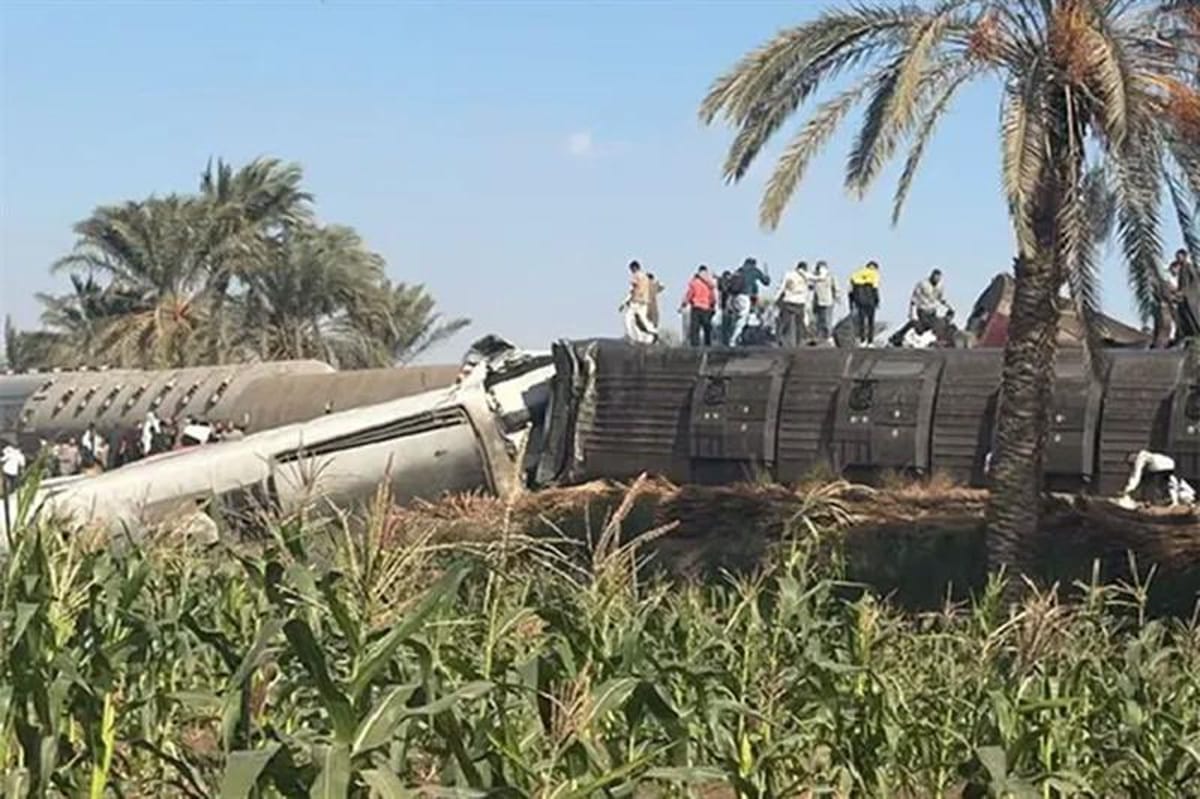
A source at Egypt's railway authority said the crash involved a collision between two trains near al-Raqqa station: one train derailed, and a second train traveling behind it struck the wreckage. That account has not been officially confirmed, and no full explanation for the derailment has been released.
Gap between official count and field reports
The official picture remains unclear. The health ministry reported 64 injured, with 54 evacuated to al-Wasta Hospital and 10 to al-Ayyat Hospital. At the same time, security and emergency sources reported a rapidly rising toll: first over 100 injured, then around 140, and later as many as 150, most with fractures and trauma.
The discrepancy appears to stem from the fact that evacuation and counting are still underway, and some of the injured were taken to hospitals by private means. At this stage there is no official confirmation of fatalities. A railway authority source said no deaths had been recorded, though several international reports raised the possibility of deaths not yet confirmed.
The health ministry initially dispatched 20 ambulances to the scene and placed hospitals in Giza and Beni Suef on alert. Later reports said around 52 ambulances were involved in evacuating and transporting the injured. Rescue forces, police, civil defense and railway crews arrived with cranes and heavy equipment to extract victims, lift the carriages and clear the track.
A security cordon was placed around the scene to allow the extraction of casualties and rescue operations. Following the crash, train traffic on the Cairo-Aswan line was halted in both directions near al-Raqqa station. Service to southern Egypt was also suspended, affecting large numbers of passengers traveling between Cairo and cities in the south of the country.
The railway authority is working to lift the four derailed carriages and restore the track, but no timetable for resuming service has been announced. The circumstances of the crash remain unclear. Authorities have opened an investigation, and Egypt's prosecutor general ordered a team from the public prosecution to go to the scene, conduct a professional inquiry, assess the damage and count the casualties.
At the same time, testimony is being gathered from passengers, eyewitnesses and train crew, and various possibilities are being examined — from a technical failure to a problem with the track or operations. As of now, no official finding has been released on the precise cause of the derailment.
Train accidents in Egypt repeatedly raise questions about the maintenance of tracks, the safety of equipment and the management of traffic on the country's aging rail network. Sunday's incident occurred on one of the country's most important lines, connecting Cairo with Aswan and southern Egypt, and its closure disrupts travel on a wide scale.