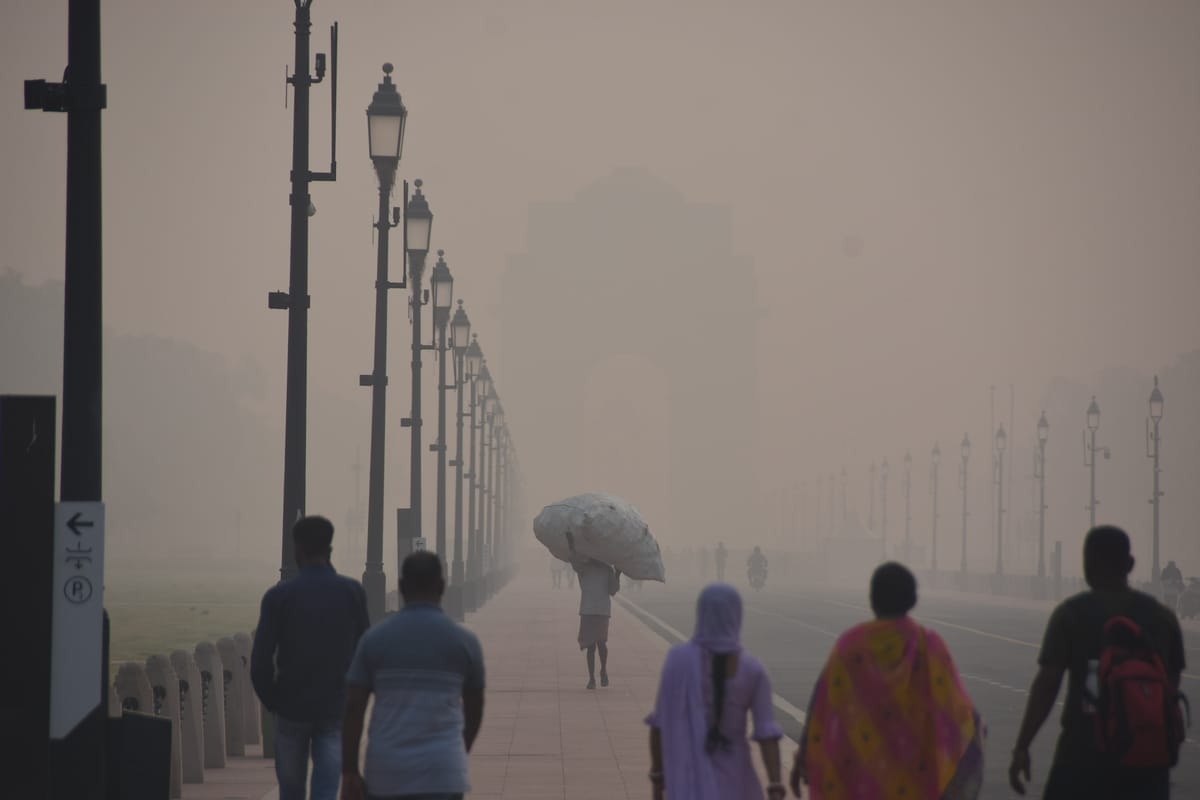
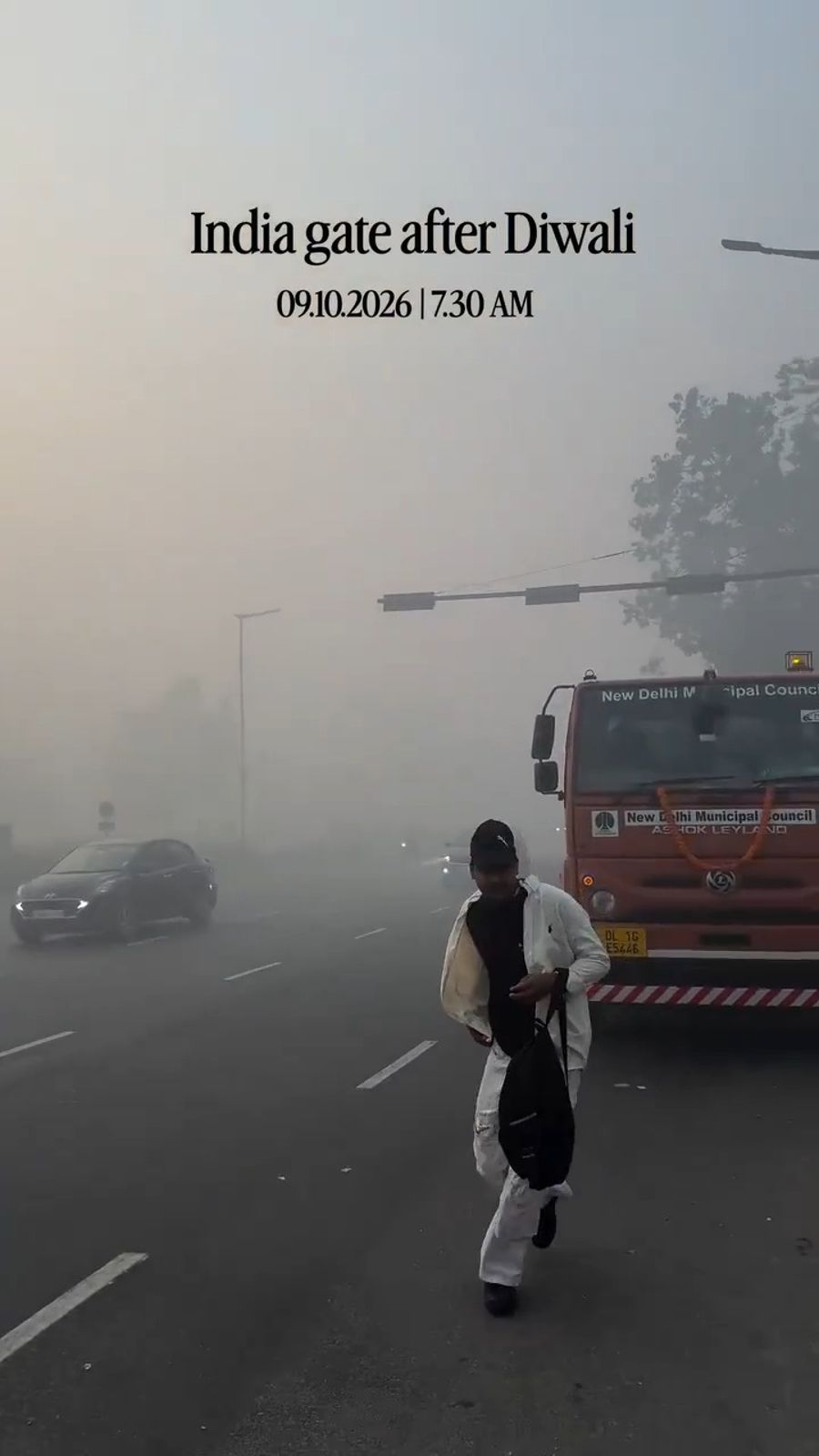
New Delhi woke up under a thick blanket of smog on Monday after a night of Diwali fireworks, with the city’s air quality reaching levels considered dangerous to health.
India’s Central Pollution Control Board said Delhi’s Air Quality Index stood at 370 at 9 a.m., in the “very poor” range. Many parts of the city recorded readings above 400, the “severe” category.
According to the Swiss monitoring firm IQAir, Delhi was the third most polluted city in the world on Monday morning, Reuters reported. Lahore, Pakistan, topped the list with a reading of 563, classified as “hazardous.”
Limits ignored
Ahead of Diwali, India’s Supreme Court eased a ban on fireworks in the capital region, allowing only certified “green” firecrackers, which are designed to emit fewer pollutants, and only on November 7 and 8, between 6 and 7 a.m. and 8 and 10 p.m.
The limits did little to stop the celebrations. Residents of Delhi and Mumbai reported fireworks going off late into the night. Footage on Monday showed a thick haze over India Gate, one of the capital’s best-known landmarks, near government offices and parliament.
Even green firecrackers release pollutants, and when millions of people set them off at once, the cumulative effect is substantial.
A yearly crisis
Delhi, a city of about 20 million people, faces a pollution crisis every winter. Cold temperatures and weak winds trap pollutants close to the ground instead of letting them disperse.
Beyond fireworks, the main sources are vehicle exhaust, industry, construction dust, and smoke from farmers burning crop stubble in the neighboring states of Punjab and Haryana to clear their fields after the rice harvest. The smoke drifts toward the capital and mixes with local pollution.
The city’s air has been poor for more than a week. On Friday, authorities imposed emergency restrictions under a graded action plan, including moving schools to online classes.