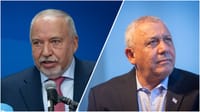
At the same time, the president was careful not to intervene publicly in the coalition negotiations and acknowledged he is not involved in the fine details of Israeli politics. "I don't follow closely everything that happens there," Trump clarified. "Obviously there's political competition here between him and Bibi Netanyahu. We'll see what happens in the end, whoever it is. What's certain is that they have very similar views, and both strongly support what I'm doing."
Trump's comments come on the heels of the unequivocal support he showered on Netanyahu during the election campaign. Days before the campaign ended, Trump published a forceful statement on Truth Social in which he claimed that his backing of Netanyahu was what brought about the turnaround at the polls:
"When President Trump expressed his support for Bibi Netanyahu, the whole trend changed. And now, instead of a crushing defeat for a distinguished prime minister, it looks like a big tie after an impressive comeback, and maybe even a Netanyahu victory. All this happened thanks to President Trump's support, who wants only what's good for the Middle East, for Israel and for the United States."
Now, facing the new reality in which the mandate has been placed in Eisenkot's hands, Trump is making it clear that from Washington's perspective, policy coordination with Jerusalem is expected to remain close under any political constellation built on these leaders.
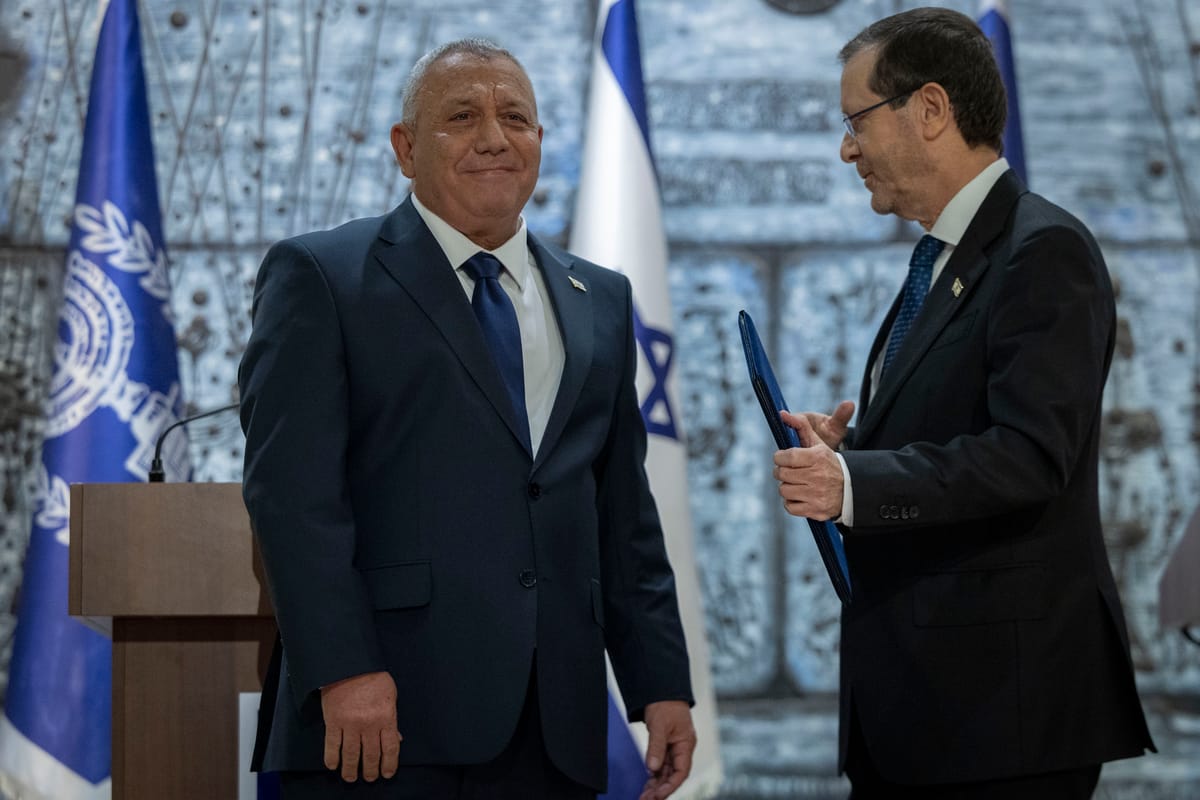
President Herzog granted the mandate to form a government to Yisrael Beiteinu chairman Gadi Eisenkot yesterday (Sunday), after receiving the recommendation of 67 Knesset members. According to law, Eisenkot has 28 days to form a government, with the final deadline for presenting a government set for December 6, 2026. If additional time is needed, the president is authorized to grant an extension of up to 14 additional days, meaning the final deadline for presenting a government would be December 20, 2026.