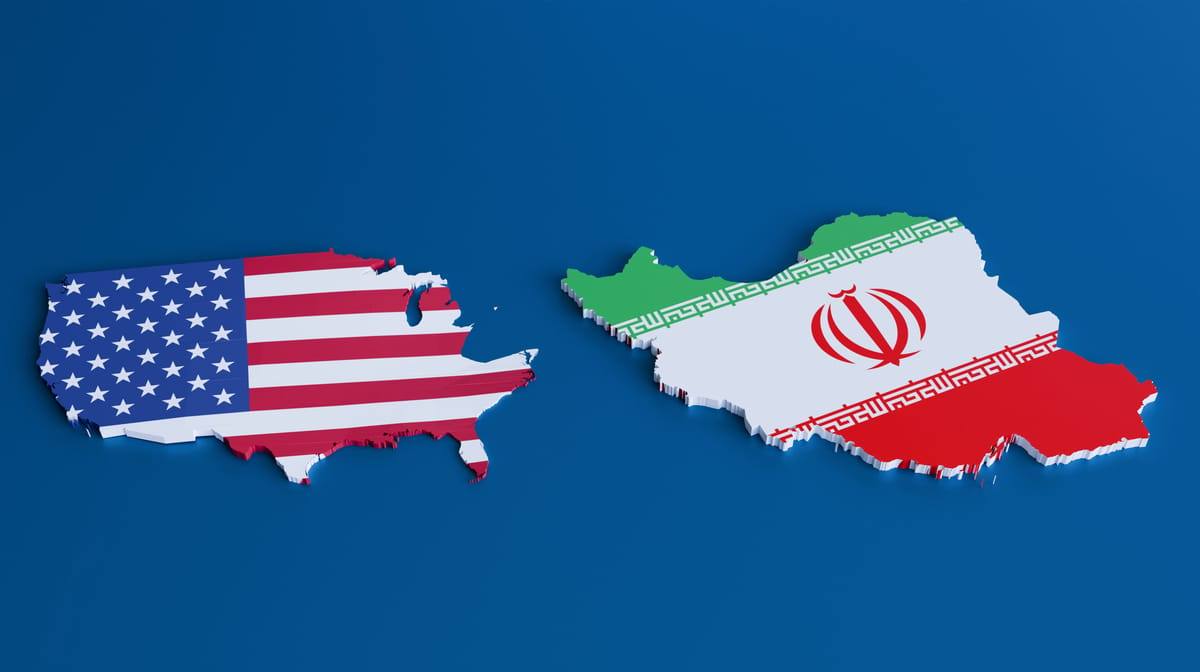
The Trump-Iran MOU is not a treaty. It has not been ratified by the Senate. It has not been submitted to Congress for review. One senior U.S. official described it to CNN as "a political document," adding, with stunning candor, that "what's more important than the actual document is the understandings we have with each other."
Here is the legal reality that nobody in the White House victory lap is advertising: Donald Trump could withdraw from this deal tomorrow morning before his second Diet Coke. A Truth Social post, a presidential memorandum, maybe a press conference where he says the Iranians weren't acting in good faith, and it's gone. No Senate vote. No congressional override. No international tribunal.
We know this because Trump has done it before. In May 2018, he withdrew the United States from the JCPOA, the Obama-era Iran nuclear deal, with exactly that mechanism: a presidential memorandum directing federal agencies to reimpose all sanctions within 180 days. The whole architecture of years of multilateral diplomacy, unwound by one signature.
The MOU he just signed is structurally weaker than the JCPOA was. At least the JCPOA had multilateral buy-in, European co-signatories, a UN Security Council resolution (UNSCR 2231) embedding it in international law, and a formal verification architecture. This MOU has a Pakistani mediator, a signing ceremony in Switzerland that Iran says it wants to delay, and a set of "back-channel commitments" that apparently didn't make it into the actual document.
Iran has not even made a definitive public commitment, instead releasing a statement saying that "final negotiations will be postponed." Postponed. They haven't fully signed on to what Trump is already calling a historic deal.
Sen. James Lankford, R-Okla., put it plainly: executive agreements last only as long as the president who signs them. That is a constitutional fact, not a partisan talking point. And it means that everything Trump is currently celebrating, the reopened Strait, the ceasefire extension, the 60-day nuclear negotiation window, exists at the pleasure of his own continued enthusiasm for it.
Which, given this president's track record, is not a guarantee anyone should bank on.
What Congress Can (and Can't) Do
Congress retains some leverage. Lawmakers can conduct oversight hearings, pass legislation affecting sanctions, impose reporting requirements, restrict funding for implementation, and seek votes expressing support or opposition to the agreement. That's real but limited. They can make noise. They can subpoena documents. They can pass non-binding resolutions. What they cannot easily do is legally compel Trump to maintain an executive agreement he signed.
The key legal question may involve the Iran Nuclear Agreement Review Act, INARA, passed in 2015 with overwhelming bipartisan support, which gives Congress a formal review process for certain nuclear agreements with Iran. If the eventual nuclear deal that emerges from the 60-day negotiation window triggers INARA's definitions, Congress gets a formal review period. That matters. But even then, blocking Trump would require veto-proof majorities in both chambers, a very high bar.
Senate Minority Leader Chuck Schumer said the "devil is in the details" and criticized Trump for not yet revealing the substance of the MOU. Which is a reasonable criticism, except that the details may not exist in the form we normally expect from international agreements, because, again: one official called it a political document whose most important elements are unwritten understandings.
**What Israel Is Watching**
A majority of IDF and Mossad officials oppose the MOU, believing Iran should remain under sanctions. Israeli security officials had hoped the deal would also address Tehran's ballistic missile program and its support for proxy groups — and argue that the damage inflicted on Iran during the 2026 war, combined with the Hormuz blockade, could have succeeded where sanctions alone had failed.
That is the Israeli security establishment's judgment: we had Iran on the mat. The blockade was working. The sanctions were biting. The regime was genuinely stressed. And Washington chose this moment to offer relief.
The fragility of the MOU cuts in two directions simultaneously. Yes, Trump could tear it up. But Iran could also simply walk away, or, more likely, do what it has always done: comply with the letter of an agreement while violating its spirit, running out the clock on the 60-day window while quietly rebuilding, rearming, and re-enriching.
The MOU also provides for the eventual release of an estimated $24 billion of Iranian funds frozen in bank accounts around the world, though Iran publicly insists the funds be released immediately upon signing. The Iranians want the money now. The Americans want to tie it to progress. That negotiation alone could consume the entire 60-day window and produce nothing.
The Bottom Line
This deal is real enough to move oil markets, futures dropped sharply on the announcement, and fragile enough to evaporate before the Geneva signing ceremony happens. It is being held together by presidential enthusiasm, Pakistani diplomacy, and a set of private understandings that reportedly didn't make it into the actual document.
The irony is almost too rich. Trump spent his entire first term hammering Obama for the JCPOA, a deal he called disastrous, weak, and dangerous, which at least had the virtue of being a formal, multilateral, publicly documented agreement with verification mechanisms. What Trump has produced in its place is an MOU that one of his own officials is calling a political document.
Legal durability: none.
Strategic depth: unclear.
Verification mechanisms: apparently to be determined in 60 days of talks with a regime that has spent 47 years treating negotiations as a tool of statecraft rather than a path to resolution.
Executive agreements last only as long as the president who signs them.
The president who signed this one also withdrew from the last Iran deal, the Paris Agreement, and the WHO --- twice.
The only thing in the way of this is Trump. And that's becoming a grave concern.