A high-stakes diplomatic "war of versions" has erupted between Washington and Tehran. Hours after President Donald Trump announced a five-day freeze on strikes to pursue a "total resolution" to Middle East hostilities, the Iranian government issued a scathing denial, prompting an immediate counter-response from the U.S. President.
Trump: "It Could Happen Within 5 Days"
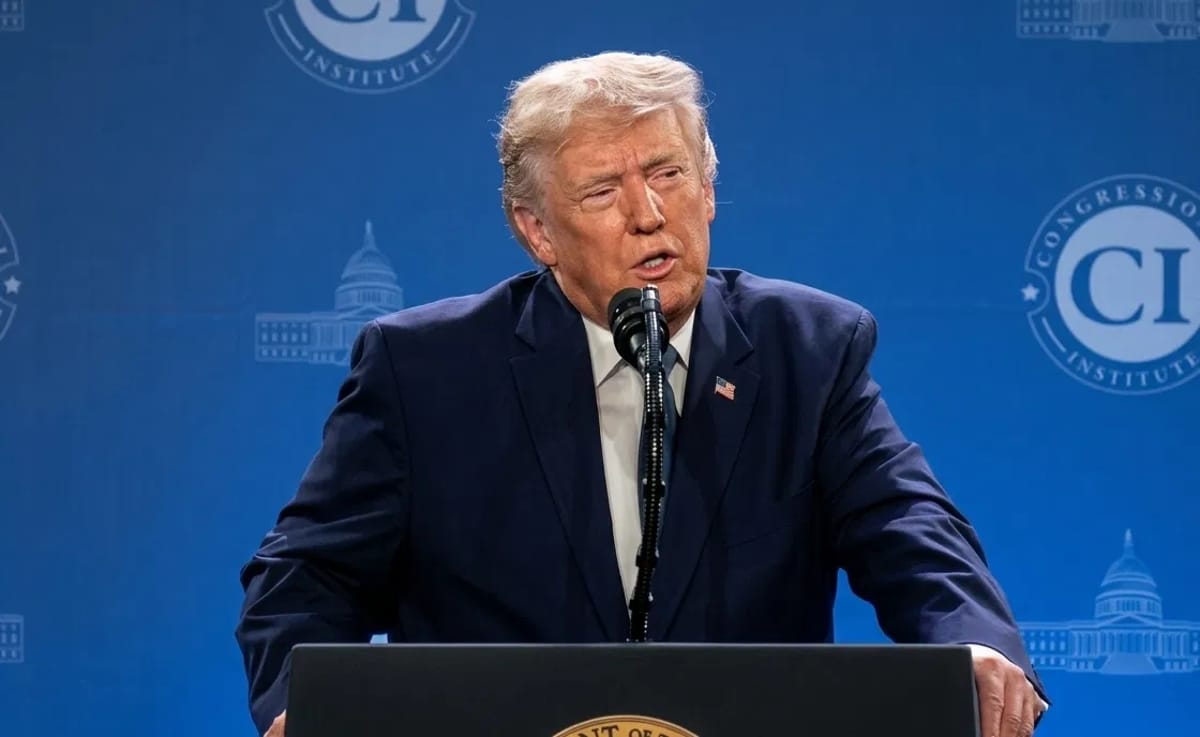
Speaking to American media outlets on Monday afternoon, President Trump doubled down on his claim that breakthrough negotiations are underway. "Iran wants a deal very badly," Trump asserted, dismissively addressing the conflicting reports coming out of the Islamic Republic. "I’m not sure what the Iranian media is talking about."
The President revealed that the most recent round of discussions took place as recently as Sunday night. "This could happen within five days, or even sooner," he claimed, referring to a potential diplomatic settlement.
Tehran’s Official Denial: "A Trick to Lower Oil Prices"
The Iranian Foreign Ministry earlier released a formal statement flatly contradicting the White House. "We deny the words of U.S. President Donald Trump regarding negotiations taking place between the United States and the Islamic Republic of Iran," the statement read.
Tehran emphasized that it maintains its stance against "any form of negotiation" until its military objectives are met. Iranian officials further characterized Trump’s announcement as a psychological maneuver designed to "lower oil prices and gain time to realize his military plans."
The Five-Day Ultimatum Pause
The friction follows Trump’s surprise announcement that he has ordered the Department of War to postpone any military action against Iranian power plants and energy infrastructure for a period of 120 hours.
This pause, which Trump described as the result of "very good and productive talks" over the last 48 hours, is conditional on the progress of ongoing discussions scheduled throughout the week. The shift is particularly notable given that only days ago, Trump issued a 48-hour ultimatum threatening to dismantle Iran's energy grid if the Strait of Hormuz was not reopened.
Market and Political Fallout
While the two nations clash over whether talks are actually happening, the global economy has already reacted, with oil prices dropping significantly on the news of a potential de-escalation. Meanwhile, inside Israel, some analysts are questioning if the leak of these "talks" was a strategic move to box in regional actors or a genuine pivot toward ending the month-long conflict.