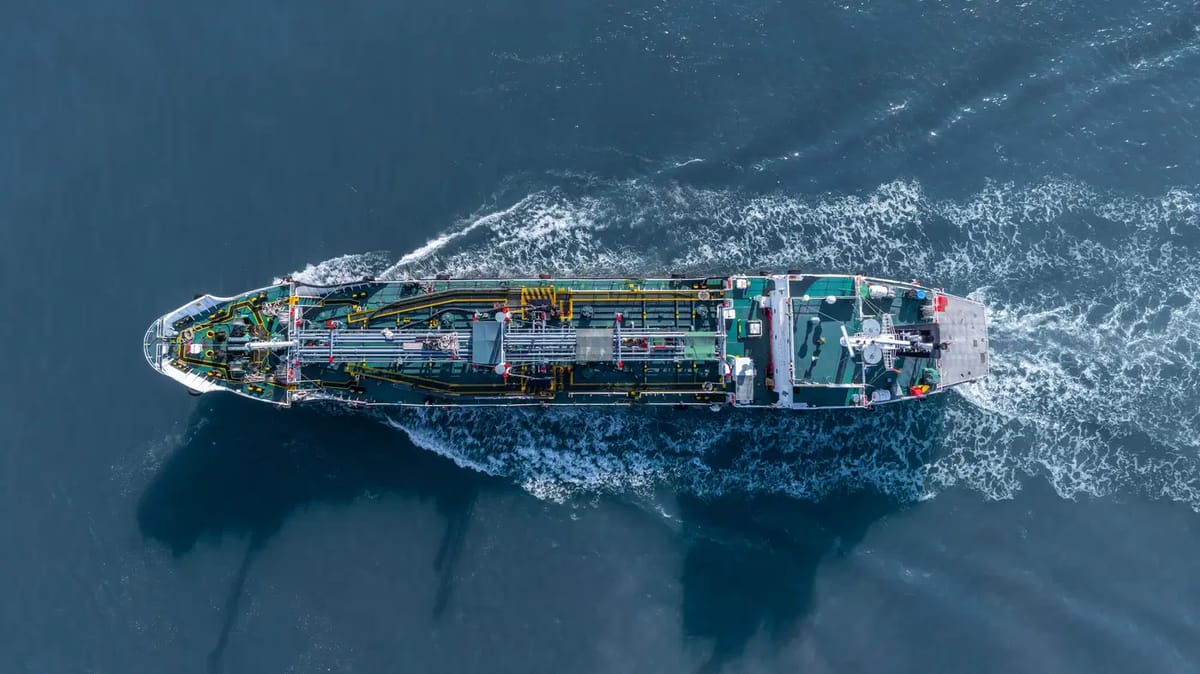
Oil tankers are moving through the Strait of Hormuz in complete darkness. Their transponders, the maritime equivalent of a plane's black box beacon, broadcasting position to satellites and coastguards around the world, have been switched off. The ships are running silent, hoping Iranian forces cannot find what they cannot track.
This is how the UAE is keeping its oil flowing in 2026.
According to maritime tracking data published by Reuters, Abu Dhabi National Oil Company (ADNOC) and other Gulf buyers have resorted to the high-risk tactic of disabling Automatic Identification System (AIS) transponders on laden crude tankers transiting the strait. The goal is to slip past Iranian Revolutionary Guard naval patrols, which have been attacking commercial vessels since Iran declared the strait effectively closed following the February 28 U.S.-Israeli strikes on Iranian territory.
"They switch off the lights and hope for the best. It is the most dangerous shipping run on earth right now and they are still doing it."
The volumes are a shadow of what once flowed through the channel. Before the war, ADNOC shipped roughly 3.1 million barrels per day through Hormuz. Since late February, that figure has fallen by more than a million barrels daily. Yet in April alone, the company managed to export at least 6 million barrels, 4 million of Umm Zakum grade crude and 2 million of Das crude, loaded onto four tankers that crept out of Gulf terminals under radio silence.
The logistics of evasion
Moving oil through a war zone without being detected requires improvisation on a scale the global energy industry has rarely attempted. ADNOC and its buyers are using at least three distinct methods to get the cargo to market.
In the most complex maneuver, tankers conduct ship-to-ship transfers in open water, pulling alongside a second vessel beyond the immediate danger zone and pumping their cargo across before the receiving ship continues on to refineries in Southeast Asia, particularly Malaysia. The original tanker, now empty, turns around and heads back into the Gulf for another load.
In other cases, crude is offloaded into storage facilities in Oman, which sits on the southern side of the strait and has maintained a cautious neutrality, before being reloaded onto separate vessels for onward shipment. Still other cargoes have sailed directly to South Korean refineries, with large tanker loads broken into smaller parcels to allow the vessels to return to Gulf terminals more quickly for reloading.
The scramble for supply has produced extraordinary price moves. Umm Zakum crude, a UAE benchmark grade, recently sold to an Asian refinery at a record premium of $20 per barrel above its official selling price, a measure of just how desperate buyers are for any barrel that can actually be delivered.
How the Gulf's producers are responding
The UAE's willingness to run the risk sets it apart from its neighbors. Iraq, Kuwait, and Qatar have taken a far more conservative approach, either halting export sales entirely or cutting prices so sharply that the discount itself signals the dysfunction. Saudi Arabia, which has an alternative, the East-West pipeline connecting its eastern fields to Red Sea terminals at Yanbu, has pivoted its exports there entirely, avoiding the strait altogether.
Gulf producers - how each is responding
- UAE: Running dark tankers through Hormuz; ship-to-ship transfers; Oman offloading
- Saudi Arabia: Rerouting all exports via Red Sea; bypassing the strait entirely
- Iraq / Kuwait / Qatar: Sales halted or prices cut sharply to attract buyers
- Iran: Strait declared closed; own exports blockaded by U.S. Navy since April 13
The result is a two-tier oil market: crude that can physically reach buyers commands extraordinary premiums, while landlocked Gulf barrels pile up at terminals with nowhere to go. Global oil prices have surpassed $100 per barrel — a level not seen since the years before the shale revolution transformed American energy production, driven by the simultaneous loss of Iranian export capacity under U.S. blockade and the near-paralysis of Gulf shipping through Hormuz.
The risks of running dark
Disabling AIS transponders is not, by itself, illegal under international maritime law. It is, however, a significant red flag, the practice is most commonly associated with vessels evading sanctions, and maritime insurers treat it as a major risk indicator. For UAE tankers doing it openly, the calculus is blunt: the risk of being detected and attacked by Iran is judged to be lower than the cost of keeping oil in the Gulf indefinitely.
That calculus could change quickly. Iran has attacked more than a dozen vessels in and around the strait since early March, according to the UK Maritime Trade Operations Centre. Insurance war-risk premiums for Gulf transits have made the economics of routine commercial shipping almost impossible.
The UAE's dark-tanker runs are not a solution to the Hormuz crisis. They are a workaround, one that works, for now, at a price the world is paying at the pump.