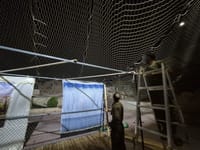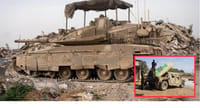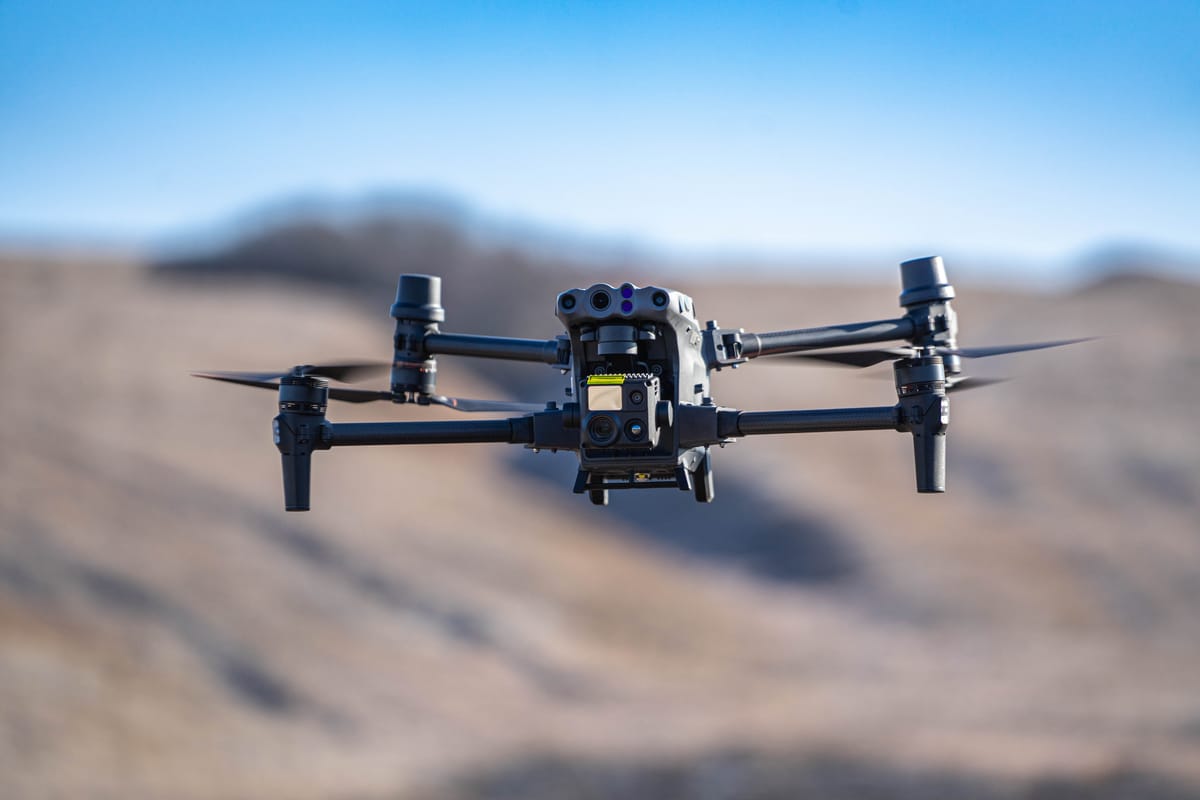
As Hezbollah continues to refine its use of explosive-laden suicide drones in southern Lebanon, the Israel Defense Forces Ground Forces have entered a phase of rapid technological experimentation. A senior officer revealed today that the military is accelerating tests of various defense systems designed specifically to repel these low-altitude threats. While some of these technologies are currently undergoing rigorous trials, others have already been deployed to active units operating within Lebanese territory to provide immediate protection.
The current focus of the engineering and technological wings is on countering drones equipped with fiber-optic controls, which are harder to jam using traditional electronic warfare. The goal is to create a multi-layered shield that protects both frontline soldiers and civilians in northern communities. The military's leadership understands that the "low-altitude" war has become a primary challenge in the current phase of the regional war, necessitating a shift in defensive doctrine.
Despite rumors of internal friction between the Ground Forces and the Air Force over budget and responsibility, senior commanders are insisting that cooperation is at an all-time high. A high-ranking officer dismissed reports of "ego issues," stating that while healthy professional disagreements exist, the two branches are breaking historical records for joint operations. He cited the construction of 42 housing units specifically for battalion and brigade commanders as a symbol of this integrated partnership.
The division of labor regarding drone defense is clearly defined between the branches to ensure maximum efficiency. The Air Force’s "Magen" directorate handles the broader procurement of interceptors and sensors, while the Ground Forces maintain and operate a significant portion of the weaponry on the battlefield. These systems are then unified through a shared command and control network, allowing for real-time identification and destruction of incoming suicide drones.
This collaborative model was previously utilized to combat smuggling operations along the borders with Jordan and Egypt. By building a joint team of experts from the technology department and the border administration, the military has been able to create comprehensive solutions for complex threats. The current mission in the north is seen as the next evolution of this "unity of effort," focusing on providing a complete response to the aerial tactics favored by Iranian-backed groups.
As the testing continues, the IDF remains committed to staying one step ahead of the terrorists’ technological advancements. The deployment of experimental hardware in an active war zone is a high-stakes endeavor, but commanders believe it is the only way to ensure the safety of Israeli troops against an enemy that is constantly adapting. For the soldiers in the north, these new technologies represent a vital lifeline against a silent and lethal aerial threat.