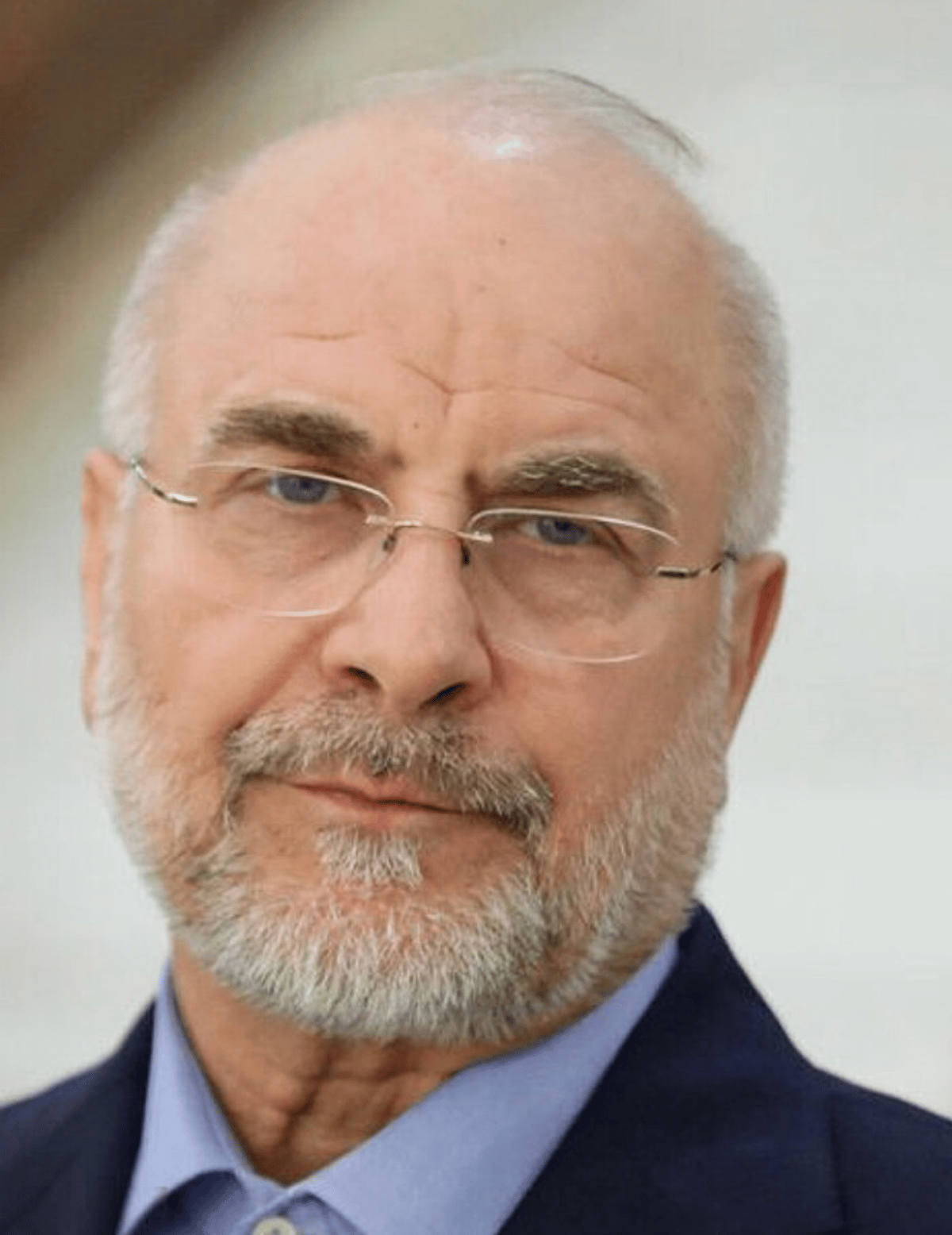
When Donald Trump told the world he was negotiating with a "very respected" senior Iranian figure, someone "very solid," someone "moderate" - he was either being deceived, or he was hoping you would be. Because the man the world has now identified as his interlocutor, Mohammad Bagher Ghalibaf, speaker of Iran's parliament and lifelong pillar of the Islamic Revolutionary Guard Corps, is not a moderate. He has never been a moderate. He is, by his own proud admission, the man on the motorcycle with a stick, beating students in the street.
In a leaked audio recording from 2013, Ghalibaf was heard saying: "Photographs of me are available showing me on the back of a motorbike… beating them with wooden sticks… I was among those carrying out beatings on the street level and I am proud of that." This was not a slip. Not a youthful indiscretion he renounced. This was a boast, offered during a presidential campaign as a credential. A résumé line.
During the July 1999 student protests, Ghalibaf was among the signatories of a letter from IRGC commanders to the government, warning of direct military intervention if the protests were not contained. Those protests ended with students thrown down stairs and out of windows, beaten until bones broke, some blinded, one fatally shot. Ghalibaf was not a bystander to this. He was an architect.
Canada and the United Kingdom have imposed sanctions on him in connection with his role in serious and ongoing human rights violations, including the suppression of protests. The United States sanctioned him in 2010 for his role overseeing the violent suppression of the 2009 protests. America, Trump's own government, sanctioned this man. Now that same government calls him moderate.
The word "moderate" in the context of the Islamic Republic has always been a Western fantasy, a comfort blanket stitched from hope rather than evidence. The familiar Western narrative of "moderates versus hardliners" within the regime reflects Western hopes, not Iranian reality. Mistaking expediency for moderation is exactly the kind of Western error that regimes such as Iran's have learned to exploit with consistency.
Ghalibaf has spent decades mastering the costume changes. In 2005, he plastered the streets of Tehran with campaign posters of himself in a pilot's uniform, credentialed and modern, distinct from the clerical establishment and the ideological firebrands. By 2013, the uniform had given way to fitted suits, and his messaging shifted toward a more explicitly managerial register. Different suits, different slogans, same man. During one presidential campaign he referred to himself as an Islamic version of Reza Shah, a modernizing strongman. The appeal to strength, the aesthetics of competence, these are performances designed precisely for Western consumption.
And on X, the platform Trump himself built into a personal megaphone, Ghalibaf has been performing something altogether different. He warned Trump that "your reckless moves are dragging the United States into a living HELL for every single family, and our whole region is going to burn because you insist on following Netanyahu's commands." He copies Trump's own rhetorical aggression back at him, plays to antisemitic tropes about Israeli control over American foreign policy, and taunts the president publicly while allegedly negotiating with him privately. This is not diplomacy. It is theater and Ghalibaf knows exactly who the audience is.
Meanwhile, throughout the conflict, he has regularly used social media to goad Trump and demonstrate a hard line on Iran's conditions for ending the war, declaring: "Certainly we aren't seeking a ceasefire. We believe the aggressor must be punished and taught a lesson." He even had the audacity to deny that any talks were happening at all. He rejected the suggestion outright, writing on X that such reports were being circulated "to manipulate financial and oil markets." A man supposedly negotiating with you is telling the world you're lying about it. And Trump calls him "reasonable."
Ghalibaf himself put it plainly in a statement on X: "There are no radicals or moderates" in Iran. "We are all 'Iranian' and 'revolutionary,' and with the iron unity of the nation and government, with complete obedience to the Supreme Leader of the Revolution, we will make the aggressor criminal regret his actions." He is not whispering moderation into Washington's ear while striking a hard posture for the home crowd. He is telling you exactly who he is. The least we can do is listen.
Trump has a habit of projecting tractability onto strongmen, seeing in them a transactional partner, a fellow deal-maker, a person who can just decide and deliver. Trump's approach has consistently favored leaders perceived as decisive and capable of enforcing outcomes. Ghalibaf fits that pattern, not because of genuine moderation, but because of perceived functionality. But Iran's strategic decisions are not Ghalibaf's to make. Authority remains concentrated within tightly controlled security and leadership circles, with networks aligned with the IRGC shaping core policy direction. Ghalibaf is not a backdoor. He is a facade.
And what a facade. His career spans repression, corruption, IRGC service, and ties to Palestinian terror groups. His years as mayor of Tehran are tied to some of the best-known scandals of that period, including the "astronomical properties" affair. These were not minor accusations at the edge of his career. Abbas Milani, director of Iranian studies at Stanford University, describes Ghalibaf as "a bully and apparatchik with delusions of becoming a Napoleon."
The Iranian people know who he is. They have not forgotten the motorcycles and the sticks, the dormitory raids, the crushed protests. For many Iranians, his role in repression has made him one of the most hated faces of the Islamic Republic. The only people who seem eager to forget are sitting in the Oval Office.
Calling Ghalibaf a moderate is not a diplomatic nuance. It is a moral scandal. It is an insult to every Iranian student who was beaten, imprisoned, blinded, or killed by the system he proudly served and still serves. Trump can negotiate with whoever he chooses. Geopolitics demands difficult compromises. But he should stop telling us this man is something he isn't.
The photograph exists. The motorcycle. The stick. The pride.
Believe him.