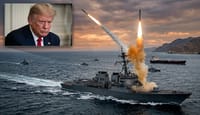
When President Trump posted "WE GOT HIM!" to announce the successful extraction of a downed U.S. Air Force colonel from deep inside Iranian territory, the message was triumphant and brief. What it left out was the bill.
A cost estimate circulating widely on X, citing Clash Report, puts the price tag of the 36-hour special forces rescue operation at up to $386 million, measured entirely in destroyed American aircraft. The figure has gone viral, with users split between calling it "priceless to save a pilot" and expressing shock at the sheer scale of hardware lost.
So what do we actually know?
What the Pentagon Has Confirmed
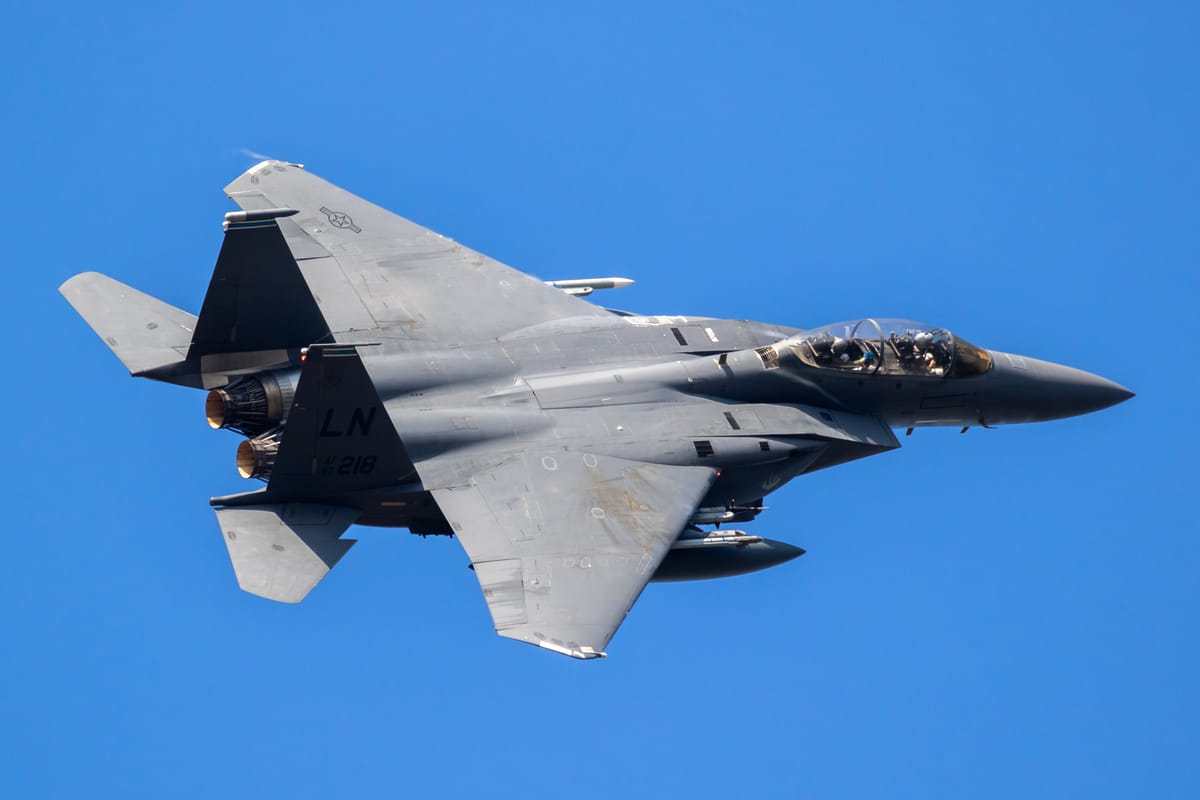
The mission began when an F-15E Strike Eagle, one of the U.S. Air Force's premier multi-role combat jets, was shot down by Iranian air defenses on April 3 over southwest Iran. The aircraft, valued at roughly $80–100 million, was confirmed lost by the Pentagon. Its pilot was killed; the weapons systems officer, an Air Force colonel described as "highly respected," survived and became the target of the rescue effort.
Around the same time, an A-10 Thunderbolt II, the iconic low-flying "Warthog" beloved by ground troops, crashed in the Persian Gulf region. Its pilot was safely recovered. Cause of the crash remains under investigation. Price tag: approximately $19–20 million.
The most dramatic and costly confirmed losses came during the extraction itself. Two C-130 transport variants (an MC-130J and an HC-130J, the special operations workhorses of the Air Force) malfunctioned at a remote forward landing zone inside Iran. Unable to fly them out, U.S. forces made the call to deliberately destroy both aircraft on the ground, denying Iran access to their sensitive technology and equipment. Iranian state media claims its forces shot them down. U.S. officials say otherwise.
Those two aircraft alone are valued at between $150 and $230 million combined.
Add it up, and the confirmed losses already approach $270–350 million, before a single unverified claim is included.
The Gap Between $350M and $386M
The viral estimate's remaining figures are harder to pin down. Iranian-released wreckage photos appear to show the remains of a small special-operations helicopter near the destroyed C-130s, consistent with an MH-6 Little Bird, the nimble rotary-wing aircraft operated by the Army's elite 160th Special Operations Aviation Regiment, known as the "Night Stalkers." At roughly $7.5 million per airframe, it's the smallest item on the list, but its presence would confirm the depth and complexity of the ground operation. Open-source intelligence analysts have flagged the imagery, though the Pentagon has not officially confirmed the loss.
Also listed in the estimate: one or two MQ-9 Reaper drones, valued at $30–60 million. The U.S. has lost Reapers in the broader Iran conflict, but no major Western outlet has directly tied specific drone losses to this particular 36-hour operation window.
Iran's Propaganda Opportunity
Iranian state outlets, Tasnim, Fars, and IRGC-affiliated media, have moved quickly to frame the destroyed aircraft as a strategic victory, releasing photos of wreckage and claiming their forces shot down multiple planes and helicopters. Regardless of how each aircraft was lost, Tehran now has images of American military hardware burned on Iranian soil, and they are making the most of it.
The Number Nobody Is Saying Out Loud
U.S. officials have released no official itemized accounting of the operation's cost. What they have said, on background and on the record, is that "no price is too high to bring our people home."
That may be true. And the colonel is, in fact, thankfully safe and receiving medical care in Kuwait.
But the $386 million figure, even as a high-end estimate, doesn't include the cost of operational fuel and logistics, munitions expended in support strikes, or the broader intelligence and surveillance assets that made the rescue possible. The real cost of the mission, measured comprehensively, almost certainly exceeds what any viral post has calculated.
For now, the Pentagon has confirmed enough to say this much with confidence: bringing one man home from Iran cost the United States several hundred million dollars in aircraft alone and the full accounting isn't finished yet.