
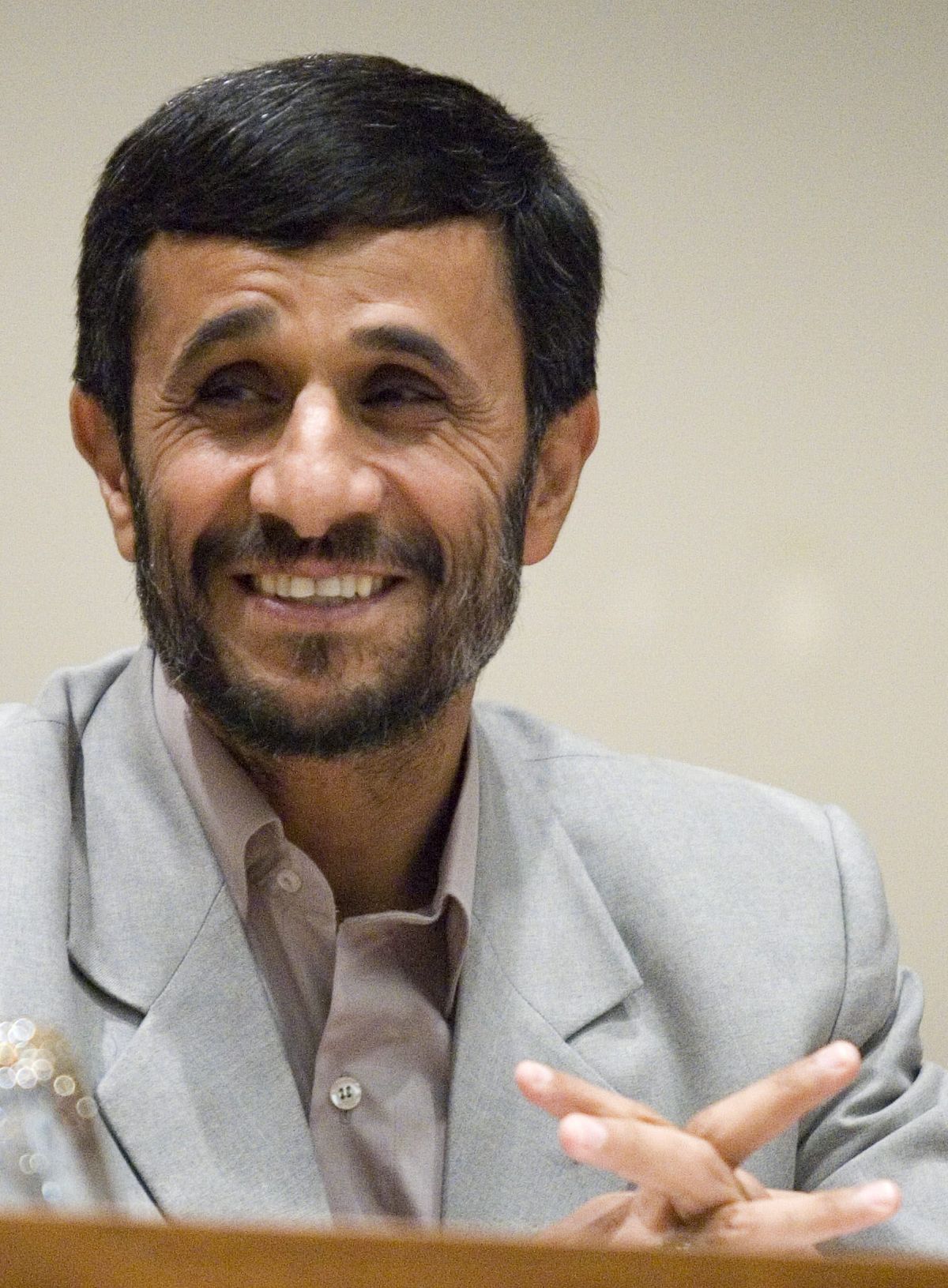
The United States and Israel entered the war against Iran with an early plan to help install former Iranian president Mahmoud Ahmadinejad as the country’s new leader, according to a New York Times report citing US officials briefed on the effort.
The plan, developed by Israel, was part of a broader effort to bring about regime change after the opening strikes of the war killed Iran’s supreme leader, Ayatollah Ali Khamenei, and other senior officials. US officials told the Times that Ahmadinejad had been consulted about the effort.
Ahmadinejad, who served as president from 2005 to 2013, was an unexpected figure for such a role. During his presidency, he was known internationally for hard-line anti-Israel and anti-American rhetoric, Holocaust denial, support for Iran’s nuclear program and the violent suppression of domestic dissent. He repeatedly clashed with Israel and was associated with calls for Israel’s destruction.
But in recent years, Ahmadinejad had fallen out with Iran’s ruling establishment. He accused senior officials of corruption, was disqualified from running in multiple presidential elections and had been placed under close surveillance by Iranian authorities. His movements were increasingly restricted to his home in Tehran’s Narmak district.
According to US officials and an associate of Ahmadinejad, an Israeli strike on the first day of the war was intended to free him from house arrest by killing the security personnel guarding him. The strike hit a security outpost near his home, killing Islamic Revolutionary Guard Corps members who were both guarding and confining him.
Ahmadinejad was injured in the strike, the officials said. Although he survived, the near miss reportedly caused him to lose confidence in the regime-change plan. He has not been seen publicly since, and his current location and condition are unknown.
The strike on Ahmadinejad’s home took place on the same day Israeli attacks killed Khamenei. An Israeli strike on Khamenei’s compound in central Tehran also killed other senior Iranian officials, including some figures whom the White House had identified as potentially more willing to negotiate over a political transition.
The Times report said the Ahmadinejad plan was part of a broader Israeli strategy that envisioned several stages: airstrikes by Israel and the United States, the killing of Iran’s top leaders, the mobilization of Kurdish forces against the regime, influence campaigns designed to create political instability, and pressure on infrastructure that would help bring about the collapse of the clerical government.
Most of the plan did not unfold as Israeli planners had hoped. The Kurdish component did not materialize, the regime did not collapse, and Iran’s leadership survived the first months of the war despite heavy strikes and internal unrest.
The report casts new light on the gap between the public goals announced by US President Donald Trump and Israeli Prime Minister Benjamin Netanyahu and the broader ambitions reportedly pursued early in the war. Publicly, Trump administration officials have said Operation Epic Fury was aimed at destroying Iran’s ballistic missile capabilities, military production facilities, navy and proxy networks, as well as limiting its nuclear program.
White House spokeswoman Anna Kelly told the Times that Trump had been clear from the start about the operation’s goals and said US negotiators are now working on a deal to end Iran’s nuclear capabilities.
The report said some US officials were skeptical from the beginning about the idea of restoring Ahmadinejad to power, given his long record of hard-line positions and hostility toward the United States and Israel.
Ahmadinejad’s recent foreign travel had fueled speculation inside Iran. He visited Guatemala in 2023 and Hungary in 2024 and 2025, both countries with close ties to Israel. He also praised Trump in a 2019 interview with the Times, calling him “a man of action” and urging a long-term cost-benefit approach to US-Iran relations.
Despite the failure of the early plan, some Israeli officials reportedly continued to believe regime change in Iran was possible. Mossad chief David Barnea is said to have told associates that the agency’s plan had a strong chance of succeeding had it been approved in full.