
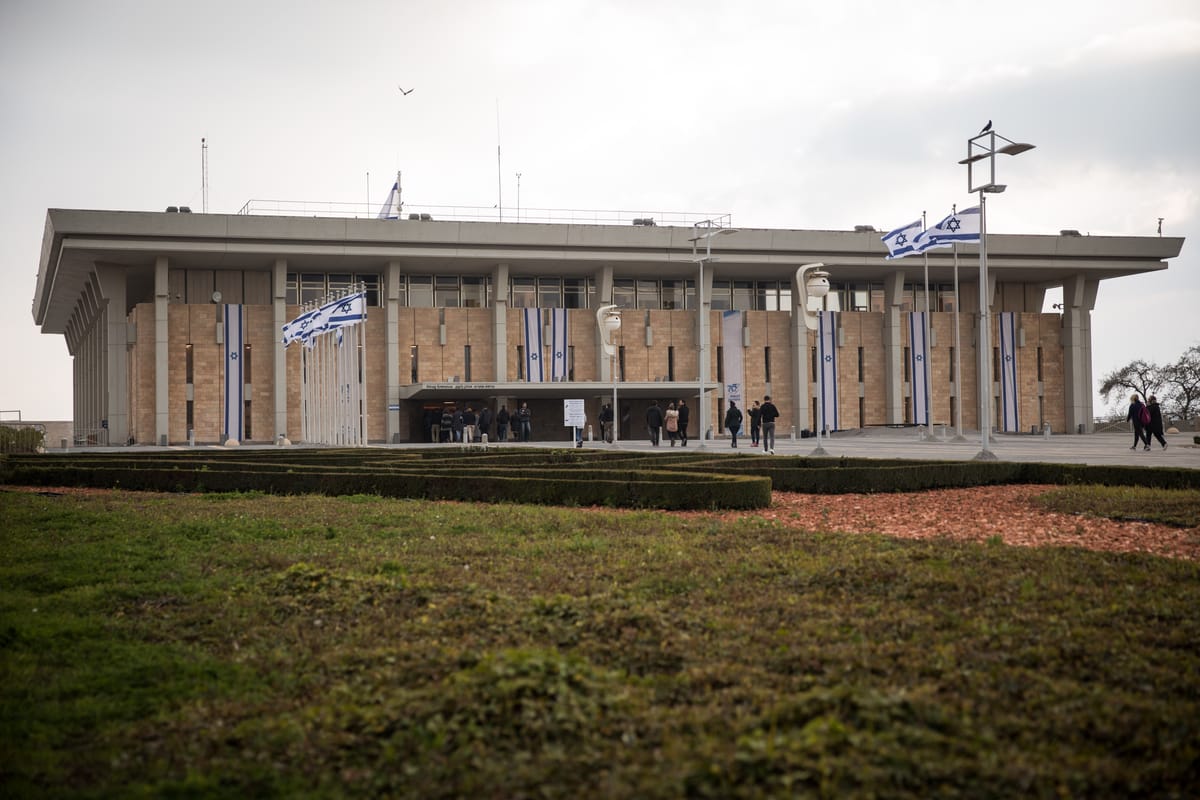
Prime Minister Benjamin Netanyahu’s coalition pulled all of its bills from the Knesset plenum agenda on Wednesday, amid concerns that it no longer has a majority following an escalating break with Haredi factions over the stalled draft exemption law.
The move came after Degel HaTorah, one of the two factions that make up United Torah Judaism, announced Tuesday that it no longer considers itself part of Netanyahu’s bloc and will work to dissolve the Knesset. The party said the coalition had failed to pass legislation enshrining broad exemptions from military service for Haredi yeshiva students.
Wednesdays are typically when lawmakers vote on bills in preliminary readings. By removing its legislation from the agenda, the coalition effectively acknowledged that it could not guarantee the votes needed to pass its own measures.
According to Hebrew media reports, the immediate concern was not only Degel HaTorah’s position, but also uncertainty over how Shas would vote. Shas has not yet issued a formal response to Degel HaTorah’s announcement, leaving coalition managers unsure whether the larger Haredi party would continue backing government bills or join pressure for early elections.
United Torah Judaism is made up of Degel HaTorah and the Hasidic Agudat Yisrael faction. A senior Agudat Yisrael source told The Times of Israel on Tuesday that the faction would support dissolving the Knesset if such a vote is brought forward.
The crisis centers on the government’s failure to pass a new law regulating the Haredi draft exemption, after the High Court ruled that the state could no longer continue blanket exemptions without legislation. Haredi parties have demanded a law preserving the long-standing arrangement, while parts of Likud and the opposition have attacked the proposal as unfair to soldiers and reservists, especially during wartime.
The timing is particularly sensitive for Netanyahu. Israel is still at war with Iran, the northern front remains unstable, and the coalition is trying to advance several major legislative priorities before elections scheduled for October 27.
If the Haredi factions join the opposition in backing dissolution, the coalition could lose control of the Knesset timetable and be forced into early elections. Degel HaTorah has reportedly pushed for elections in early September, a date it views as politically favorable because it falls before the High Holidays and before the third anniversary of the October 7 massacre.
For now, the withdrawal of coalition bills signals that the government is entering a dangerous parliamentary phase. Without reliable Haredi support, Netanyahu’s coalition may struggle to pass legislation, block opposition motions or prevent a vote to dissolve the Knesset.