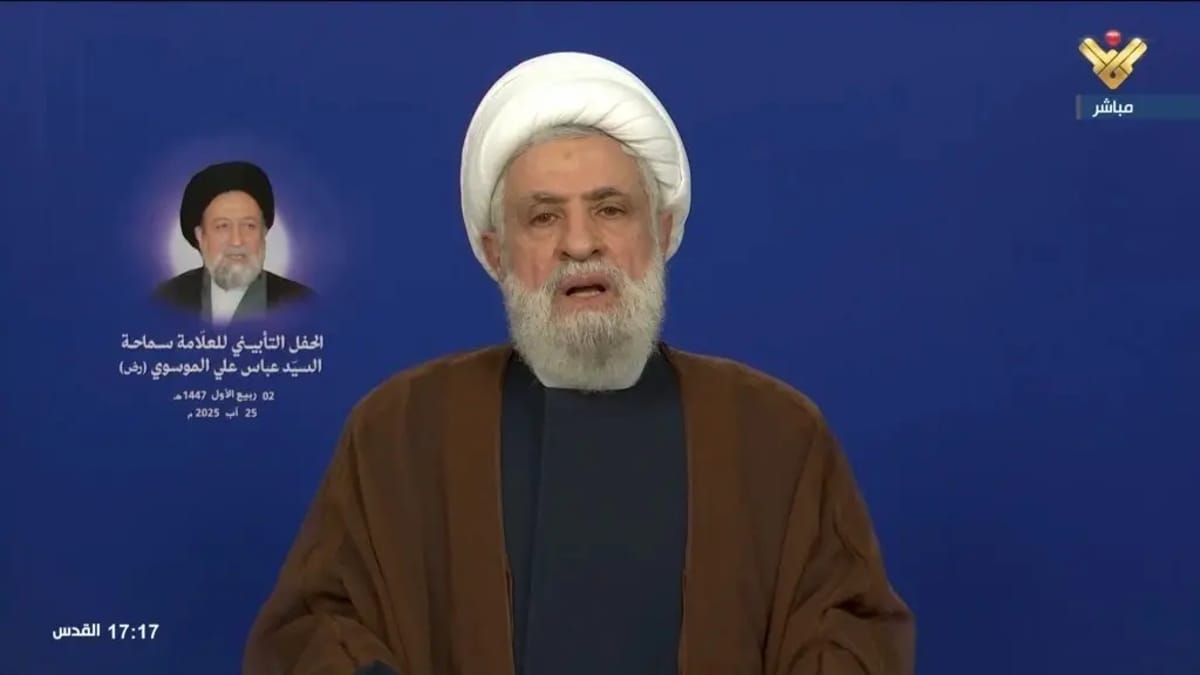
Intelligence reports emerging from the Lebanese capital suggest that Hezbollah is preparing for a domestic military takeover to shore up its crumbling authority. The terror organization has reportedly finalized a plan to occupy key sectors of Beirut in an effort to marginalize moderate political figures who have become increasingly vocal in their criticism of the group's actions. This move comes as the Lebanese public grows weary of a war that has brought the country to the brink of total ruin.
The pressure on Hezbollah’s Secretary-General, Naim Qassem, has reached unprecedented levels. Qassem is currently being forced to split his dwindling military resources between three fronts: the active combat zones in South Lebanon, the logistical hubs in the Bekaa Valley, and the streets of Beirut. This fragmentation of his forces is a direct result of the relentless IDF campaign that has decimated the group’s infrastructure and killed a significant portion of its mid-level leadership.
A primary driver of this internal desperation is the total collapse of Hezbollah’s financial network. Israeli strikes have successfully targeted the group’s economic assets, including banks, currency exchanges, and even gas stations used to fund its operations. Compounding this crisis is the report that Iran has dramatically reduced its direct cash transfers to Lebanon, leaving the terror group unable to support the hundreds of thousands of displaced Shia civilians who traditionally form its base of support.
In the south, the situation for the terror group is even more dire. Major General Rafi Milo of the Northern Command recently presented evidence to Chief of Staff Eyal Zamir showing significant progress in dismantling Hezbollah’s "terror villages." The IDF’s rapid destruction of tunnels and weapon depots has convinced the Hezbollah leadership that Israel is planning a permanent division of Lebanese territory, a fear that is driving Qassem to make increasingly erratic tactical decisions.
The planned "Conquest of Beirut" is seen as a way for Hezbollah to reassert its dominance and prevent a pro-Western shift in the Lebanese government. Leaders like the Lebanese President and Prime Minister have begun to distance themselves from the group, sensing its weakness. By taking the capital, Hezbollah hopes to intimidate these "pragmatic" forces and ensure that the country remains a frontline in the Iranian war against the West, regardless of the cost to the Lebanese people.
As the economic and military walls close in, the risk of a bloody internal conflict in Lebanon grows. Hezbollah’s transition from a "resistance" force to an occupying militia in its own capital marks a new, more dangerous phase of the regional war. With the Iranian cash flow drying up and the IDF advancing in the south, the terror group is fighting for its very survival, making it more unpredictable and dangerous than ever before.