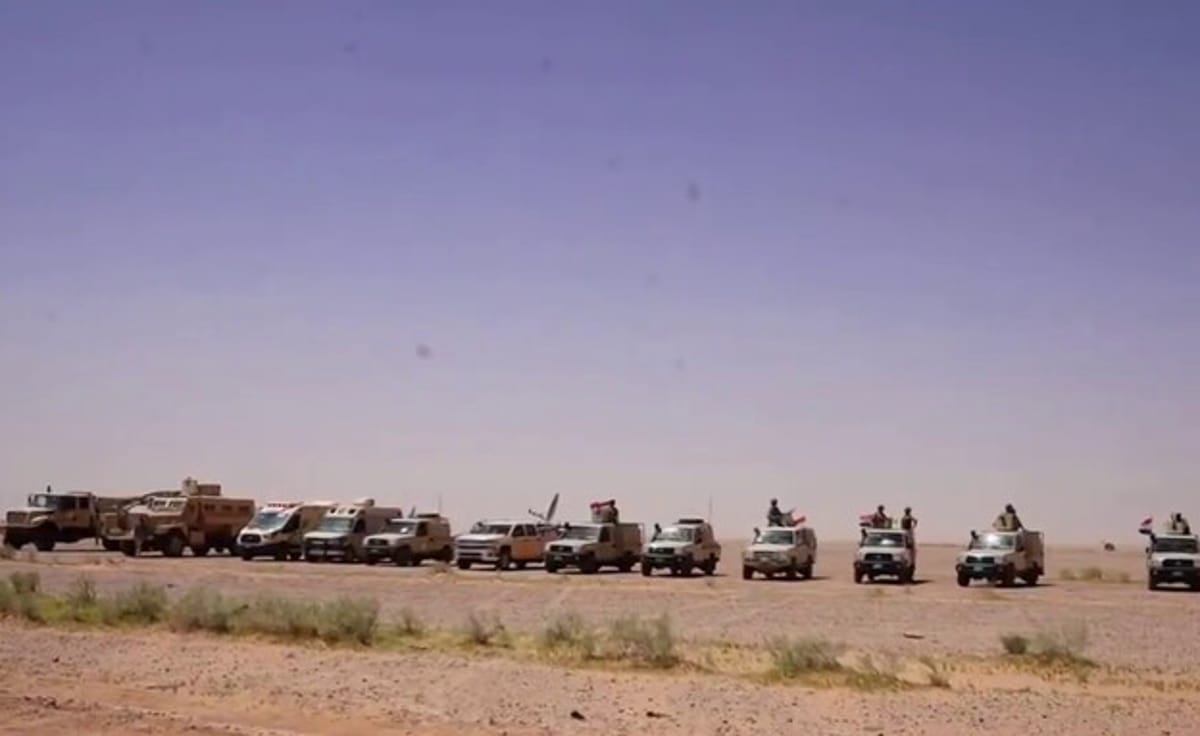
A Qatari news channel has provided a rare glimpse into a secret operations base allegedly utilized by Israeli forces deep within the territory of Iraq. The footage, released on Tuesday, focuses on a remote sector of the Najaf desert, far from major population centers or official Iraqi military installations. This revelation follows a report by the Wall Street Journal suggesting that Israel established a temporary foothold in the country to support its wider military objectives during the current war with Iran.
According to Iraqi authorities, the site in question was once a functional base for the army of Saddam Hussein but was abandoned following American air strikes in 2003. Security sources in Baghdad claim that the Israeli force utilized the existing ruins and underground infrastructure to facilitate a 48-hour presence in the region. While some Iraqi officials initially claimed the stay lasted only a few hours, the Karbala Operational Command has since confirmed that the specialized unit remained on the ground for two days before withdrawing.
The presence of Israeli troops in Iraq appears to have been facilitated by the ongoing American military presence in the country. A senior official within the outgoing Iraqi government suggested that Israel entered the territory under the cover of the international coalition against ISIS. According to this narrative, the mission took place on the night of March 4, when local shepherds reported the sounds of helicopters and unusual troop movements in the southwestern desert.
The incident was not without casualties. Iraqi units sent to investigate the reports were reportedly targeted by a precision air strike roughly four kilometers from the landing site. One Iraqi soldier was killed and two others were wounded in the engagement, which was categorized at the time as an American strike against local militias. Baghdad reportedly sent a formal protest to Washington regarding the event, but the message has allegedly gone unanswered.
In a related development, General Esmaeil Qaani, the commander of Iran’s Quds Force, arrived in Baghdad this week for emergency consultations. His visit is seen as a direct response to the reports of Israeli incursion and is focused on reorganizing the various pro-Iranian militias in Iraq. Qaani is reportedly working to preserve security coordination mechanisms among his proxies, who fear that their bases are no longer safe from direct Israeli or American ground raids.
While the Iraqi government has attempted to downplay the significance of the "Najaf base," describing it as a short-term tactical stop rather than a permanent logistical center, the event highlights the expanding geography of the war. For Israel, the ability to operate within Iraq represents a major intelligence and operational triumph, proving that its reach extends to any corner of the Middle East. For Tehran, the "Desert Ghost Base" is a sobering reminder that their "strategic depth" is increasingly transparent to their adversaries.