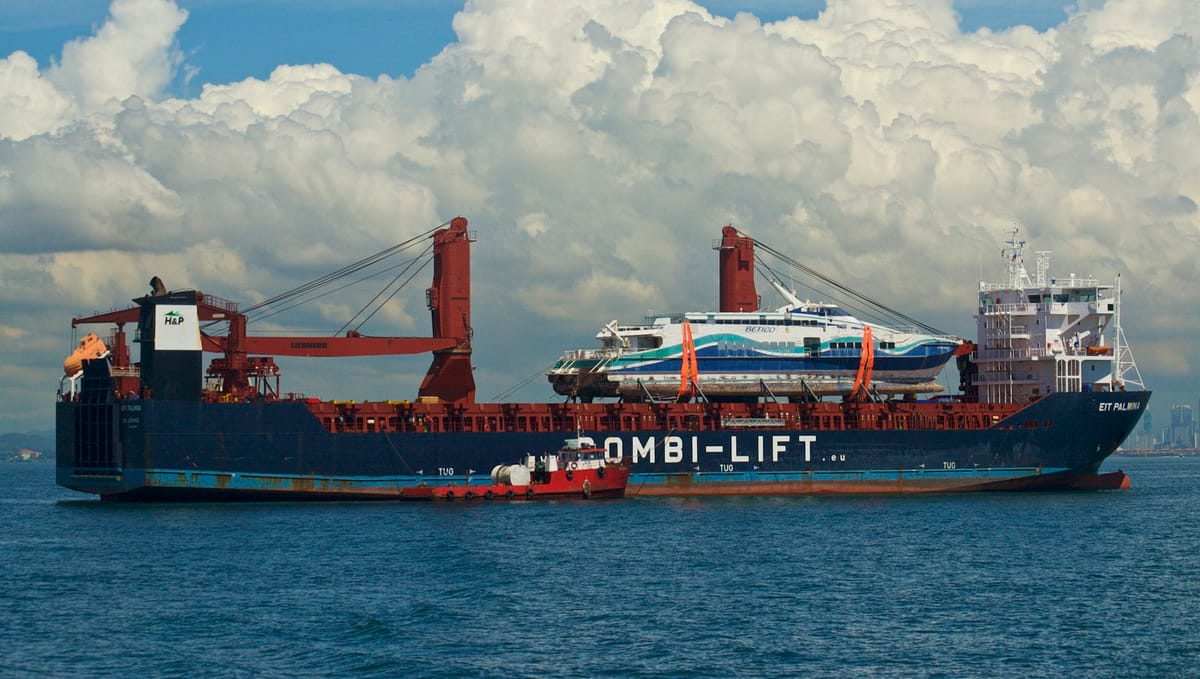
A Russian cargo vessel suspected of carrying components for two nuclear submarine reactors, possibly destined for North Korea, sank in the Mediterranean Sea under mysterious circumstances in December 2024, according to a CNN investigation published today.
The Ursa Major (also known as Sparta 3), a heavy-lift ship linked to Russia’s “shadow fleet” and previously used in military operations in Syria, went down approximately 60 miles (about 100 km) off the coast of Spain near Cartagena on December 23, 2024. The sinking followed a series of explosions that killed two crew members and left 14 others rescued by Spanish authorities.
Spanish investigators, citing statements from the ship’s captain, Igor Anisimov, determined the vessel was transporting “components for two nuclear reactors similar to those used in submarines.” The captain reportedly believed the cargo was headed for the North Korean port of Rason, amid deepening military cooperation between Moscow and Pyongyang.
Evidence Points to Possible Torpedo Strike
A key piece of evidence is a roughly 50 cm by 50 cm (about 20 x 20 inches) hole in the hull with edges bent inward, consistent with an external impact. Spanish probes suggest this damage may have been caused by a rare Barracuda-type supercavitating torpedo, a high-speed weapon capable of punching through hulls using a bubble of air to reduce drag.
Only a small number of countries are known to possess this technology: the United States, several NATO allies, Russia, and Iran.
U.S. nuclear detection aircraft conducted flights over the site in the months following the incident, monitoring for possible radioactive material. No confirmed radiation leaks have been publicly reported.
Russian Response and Further Explosions
Russia’s state-linked owner, Oboronlogistics, described the initial explosions as a “targeted terrorist attack.” One week after the sinking, the Russian intelligence and research ship Yantar, often associated with underwater espionage, arrived at the wreck site. Seismic data recorded four additional powerful explosions during its presence in the area, possibly intended to destroy or obscure remaining wreckage on the seabed at a depth of about 2,500 meters.
The ship’s declared manifest listed innocuous items such as cranes and manhole covers, but its unusual route through the Mediterranean (instead of a more direct path) raised suspicions among investigators.
Broader Context
The incident occurs against the backdrop of Russia’s reported transfer of advanced military technology to North Korea in exchange for troops and munitions used in the war in Ukraine. Preventing the spread of sensitive nuclear propulsion technology has been a priority for Western intelligence agencies.
No country has claimed responsibility for any sabotage, and the full details remain under investigation. Experts continue to debate whether the damage resulted from a torpedo, a mine, or another cause.
The wreck lies in international waters, and recovering the voyage data recorder or any remaining cargo would require complex deep-sea operations.