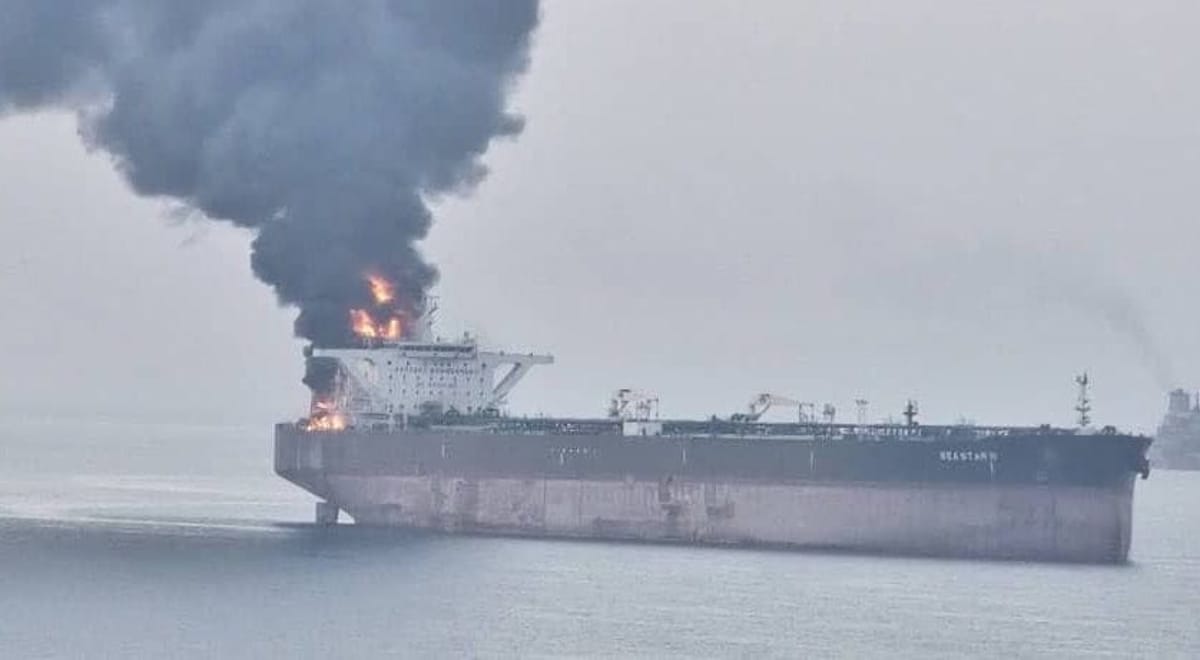
The U.S. Navy has significantly escalated its enforcement of the maritime siege on Iran, utilizing lethal force to stop a massive supertanker from evading the ongoing blockade. On May 8, a specialized F/A-18 Super Hornet launched from the deck of the USS George H.W. Bush engaged the Sea Star III, an Iranian VLCC (Very Large Crude Carrier), in the waters near the port of Jask. The strike was authorized after the vessel repeatedly failed to comply with radio instructions and maneuvers from American naval units patrolling the sector.
According to military sources, the Super Hornet targeted the vessel’s propulsion and exhaust systems, specifically aiming for the "chimneys" to disable the ship without causing a catastrophic environmental spill. This tactic is part of the "Project Freedom" mandate, which allows U.S. forces to neutralize ships that act as logistical lifelines for the Iranian war effort. The Sea Star III is one of the largest vessels in the Iranian fleet, and its neutralization represents a multi-million dollar blow to the regime’s treasury.
The engagement highlights the "wall of steel" policy that President Donald Trump has vowed to maintain until Tehran signs a comprehensive nuclear and peace agreement. In several recent incidents, the U.S. Navy has shifted from mere interceptions to active kinetic strikes against tankers that attempt to slip through the restricted zones. American officials report that they have already successfully prevented 70 Iranian tankers from entering or leaving their home ports, effectively strangling the nation’s energy economy.
For the Iranian leadership, the loss of the Sea Star III adds to a growing logistical nightmare. The regime is currently desperate to move crude out of its overflowing storage tanks, which experts warn will reach total capacity within the next 30 days. Without the ability to use its supertankers, Iran may be forced to shut down its oil wells permanently or even burn its existing stock to prevent structural damage to the wells, a move that would be economically suicidal.
The U.S. Central Command issued a brief statement regarding the incident, noting that all naval operations are conducted in accordance with international law and are designed to restore freedom of navigation for neutral commerce. However, the strike sends a chilling message to the commercial shipping world: the blockade is absolute, and the U.S. is prepared to use its carrier-based air power to enforce it against any vessel that dares to challenge American authority in the Gulf.
As the diplomatic deadline nears, the "Sea Star III" incident serves as a physical manifestation of President Trump’s frustration with the negotiation process. With the 30-day window for a peace deal closing, the administration appears more willing to use its overwhelming naval superiority to force a total surrender. The waters near Jask remain a high-tension zone, with American and Iranian units in constant, often hostile, contact as the world’s energy artery remains under lockdown.