
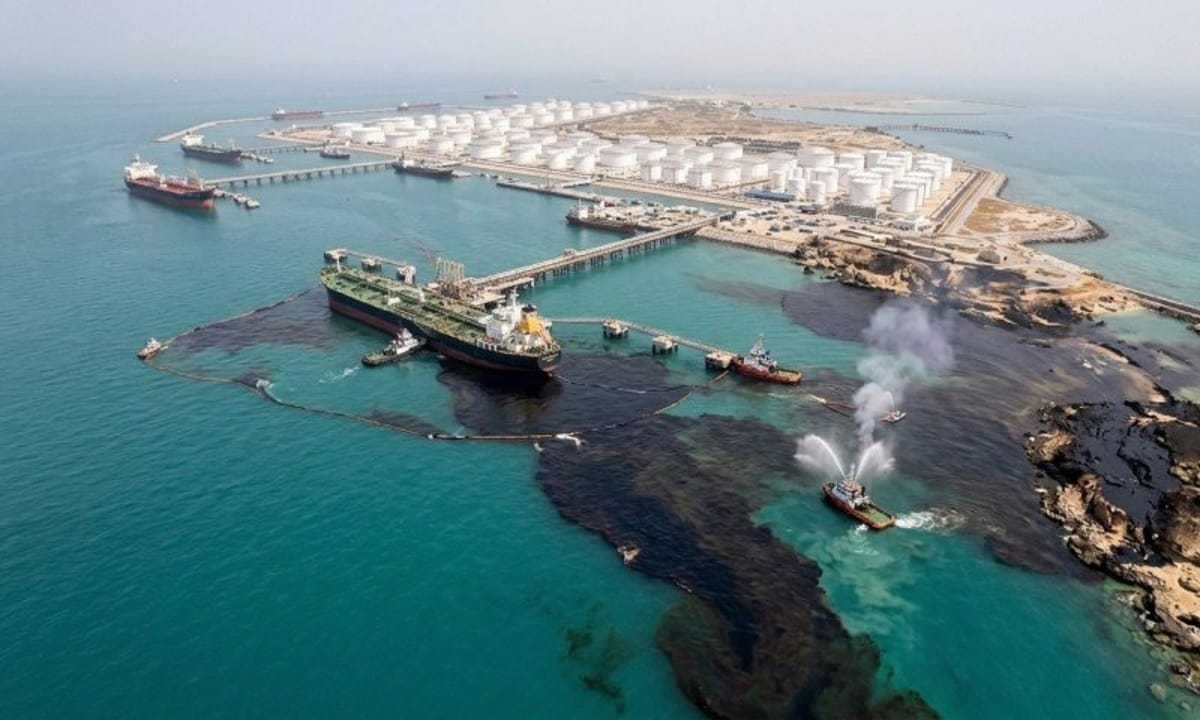
International environmental organizations and satellite monitoring agencies are raising alarms following the discovery of a massive oil leak originating from Kharg Island, Iran’s primary crude oil export terminal.
New satellite imagery from the past 48 hours shows a significant slick of crude oil spreading into the waters of the Persian Gulf. While initial assessments considered technical failure or wartime infrastructure damage as possible causes, U.S. security officials are now voicing a more sinister suspicion: that the spill may be a deliberate act of environmental sabotage by the Iranian regime.
Motives Behind a "Manual" Leak
Intelligence analysts suggest that Tehran may be intentionally dumping oil into the sea as a radical solution to a mounting logistics crisis. Following a tightened U.S. naval blockade designed to prevent Iranian oil exports, the country's storage facilities have reportedly reached maximum capacity.
Experts point to several strategic reasons for such a move:
- Avoiding Well Shutdowns: Closing oil wells is a complex, expensive process that can cause permanent damage to the reservoirs and make them difficult to restart. Dumping oil allows the flow to continue despite the lack of storage.
- Global "Price Tag": By polluting the Persian Gulf, Iran may be attempting to impose a global environmental and economic cost on the international community as retaliation for sanctions.
- The "Martyrdom" Doctrine: Security sources describe this as a "suicidal-Shia" tactic, where the regime is willing to sacrifice its own local industries, such as fishing and desalination, to achieve a symbolic "victory" against Western pressure.
Environmental Impact
The Persian Gulf is a sensitive ecosystem already under stress. A spill of this magnitude at Kharg Island threatens marine life, coral reefs, and the water security of neighboring Gulf states that rely heavily on desalination plants.
The Iranian government has not yet issued a formal statement regarding the leak. Meanwhile, international green groups are calling for an immediate independent investigation to determine the extent of the damage and whether the flow can be stemmed before it reaches international waters.