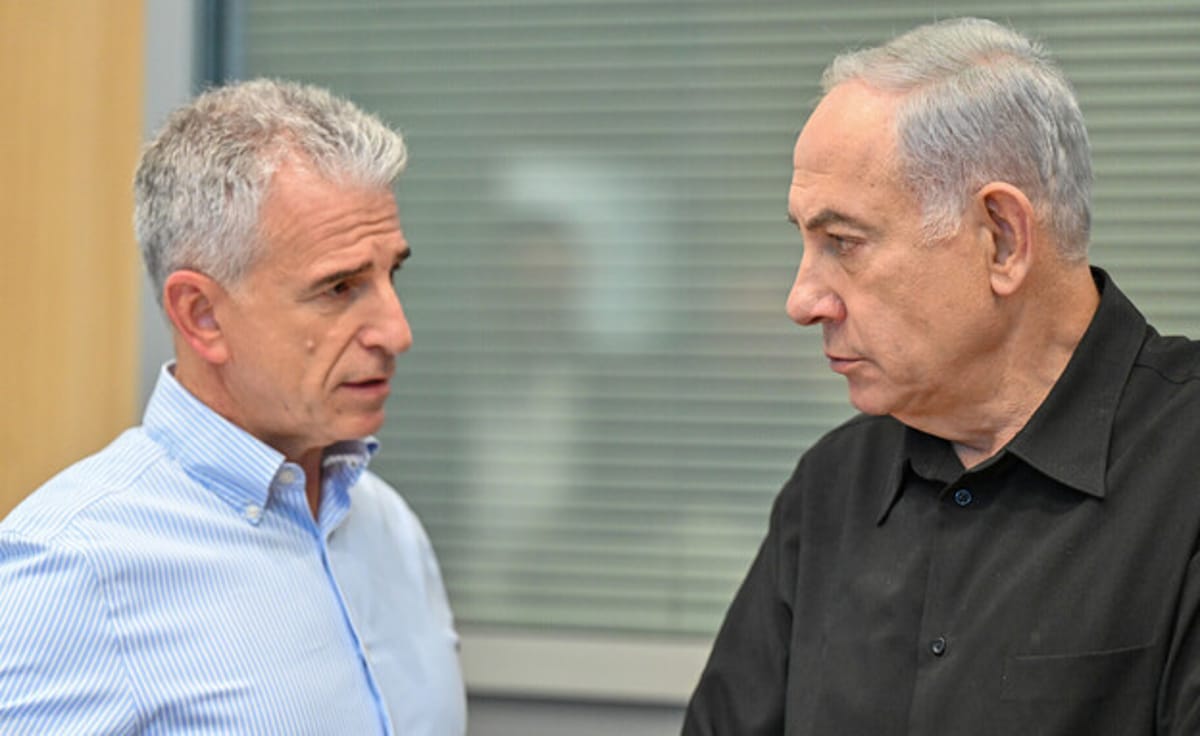
Prime Minister Benjamin Netanyahu has reportedly delivered a harsh reprimand to the current Director of the Mossad, David Barnea, following the discovery of a confidential letter sent to the Attorney General. The letter, which expressed Barnea's fierce opposition to the appointment of Major General Roman Gofman as his successor, has triggered a civil war within Israel's security establishment. Netanyahu accused Barnea of "undermining his authority" and acting behind his back to influence the High Court of Justice without proper authorization.
The secret document, which was recently made public, contains Barnea’s assessment that while Gofman possesses the daring and creativity needed for high-level operations, he suffers from a "significant problem in terms of integrity." Barnea argued that because the Mossad answers only to the Prime Minister and operates outside standard civil law, its leader must be a person of unimpeachable character. He emphasized that the head of the organization must apply rigorous self-criticism and have "clean hands" to maintain the trust of the agency.
Central to the opposition is a "command remark" on Gofman's record regarding the past activation of a minor, Uri Almaki, during Gofman's time as a division commander. Barnea’s letter suggested that this incident might represent a dangerous pattern of "walking on the edge" and bypassing protocols to achieve tactical results. The outgoing chief warned that such a pattern could develop into a grave danger if allowed to permeate the highest levels of the national intelligence agency.
Netanyahu responded to these allegations by providing his full backing to Gofman, calling him a "heroic warrior" and one of the IDF’s most valued operational commanders. The Prime Minister highlighted Gofman’s bravery on October 7, when he charged from his home toward the Gaza border, eliminated terrorists at the Sha'ar HaNegev junction, and was seriously wounded in the process. Netanyahu characterized Gofman as an independent thinker with supreme responsibility for Israel's security, dismissing the opposition as a "clique" attempt to disqualify an outsider.
Attorney General Gali Baharav-Miara has officially joined the petition against the appointment, calling it "extremely unreasonable" and legally indefensible. She argued that the committee tasked with approving senior appointments relied on incomplete facts and failed to properly weigh the moral shadow cast by the Almaki affair. The Attorney General’s stance has placed her in a direct legal confrontation with the Prime Minister's Office, with Netanyahu insisting that neither the court nor the media has the right to dictate his security choices.
As the High Court prepares to hear the case, the Mossad remains in a state of leadership limbo. Proponents of Gofman, such as acting Civil Service Commissioner Daniel Hershkowitz, argue that the Attorney General's claims are "full of errors" and that the committee's original approval should stand. However, with the current head of the agency willing to testify behind closed doors against his own proposed replacement, the battle for the future of the Mossad has become one of the most significant domestic crises facing the government during the war.