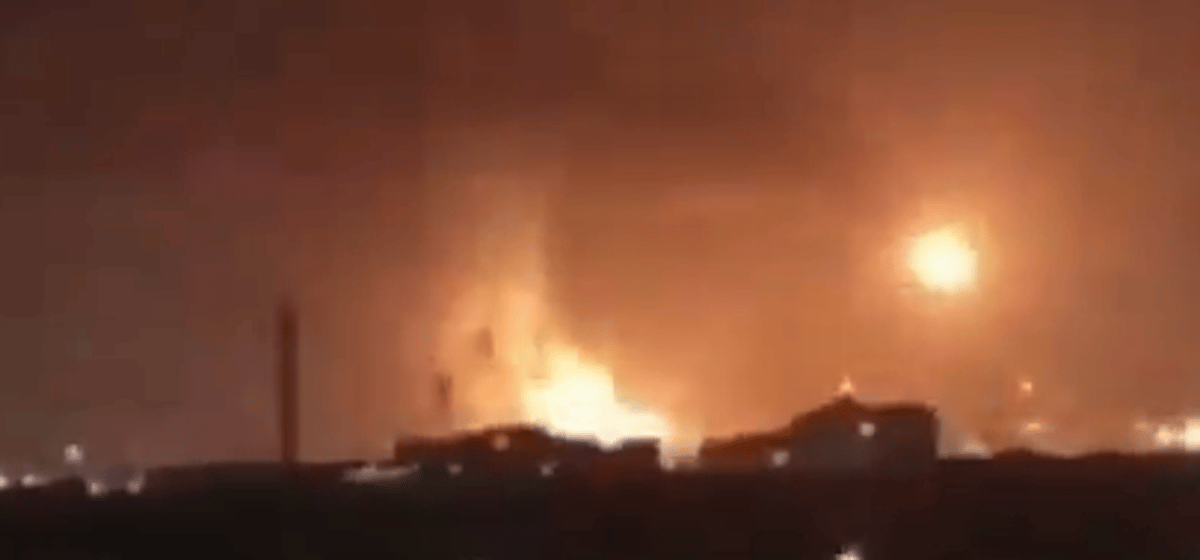
For the first time in the history of the modern Middle East, Saudi Arabia has crossed a major red line by launching direct military strikes against Iranian targets on Iranian soil. According to reports from Reuters and various Western intelligence sources, the Saudi Air Force conducted a series of secret aerial operations in late March 2026. These strikes were designed as a direct response to persistent Iranian attacks that had successfully bypassed the American military defense umbrella to hit targets inside the Saudi Kingdom.
The operations, while unconfirmed by official government channels in Riyadh, represent a massive escalation in the regional war. For decades, the two powers have fought through proxies in Yemen, Lebanon, and Iraq, but the current war has pushed the Saudi leadership to adopt a policy of direct kinetic retaliation. Sources indicate that the decision to strike was born out of a realization that traditional American defense systems were no longer sufficient to deter Tehran’s aggressive drone and missile program.
Before the jets crossed into Iranian airspace, Riyadh took the calculated step of informing Tehran that the strikes were imminent. This was not an attempt to coordinate, but rather a stern warning that the Kingdom would no longer tolerate violations of its sovereignty without a reciprocal price. The message was clear: Iran must halt its direct aggression or face an escalating campaign that would target the regime's own infrastructure.
The strategic gamble appears to have yielded immediate results on the ground. Data from the region shows that weekly Iranian strikes on Saudi territory plummeted from over 105 incidents to approximately 25 following the Saudi air raids. Faced with the reality of a direct war with a well-equipped neighbor, Iran shifted its remaining attacks to Iraqi proxies to maintain a layer of plausible deniability and avoid further direct attribution and retaliation from Riyadh.
This secret military pressure paved the way for a quiet diplomatic understanding between the two regional giants. Sources report that a deal was reached in the week preceding the broader U.S.-Iran ceasefire on April 7th, 2026. This local arrangement was focused on de-escalation and ensuring that the "rules of engagement" did not lead to a full-scale regional conflagration that would devastate global energy markets.
While the Saudi government maintains a public stance of silence regarding the raids, the message to the international community is unmistakable. The Middle East is moving toward a new era where regional powers are willing to take their security into their own hands rather than relying solely on Western guarantees. As the dust settles from the March strikes, the focus now shifts to whether this fragile peace can hold as international negotiations continue.