Even as a fragile ceasefire holds across the wider Gulf, Iran appears to have been running covert operations against its neighbors. Kuwait has revealed that armed members of Iran's Islamic Revolutionary Guard Corps landed on one of its most strategically sensitive islands last month and were only stopped after a gunfight with Kuwaiti troops.
On May 1, Iran dispatched six armed IRGC members to Bubiyan Island in Kuwait. Kuwaiti and IRGC forces exchanged fire, resulting in the injury of one Kuwaiti soldier. Four of the IRGC fighters were captured, while two fled.
Kuwait's Ministry of Interior said the men arrived "aboard a fishing boat specially chartered to carry out hostile actions against Kuwait" and admitted they had been tasked by the IRGC with infiltrating the island. The ministry identified the group as including two colonels, a captain, and a first lieutenant.
Kuwait only publicly linked the attack to Iran on Tuesday, nearly two weeks after the incident, setting off an immediate diplomatic storm across the Gulf.
Why Bubiyan?
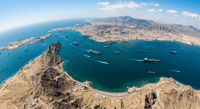
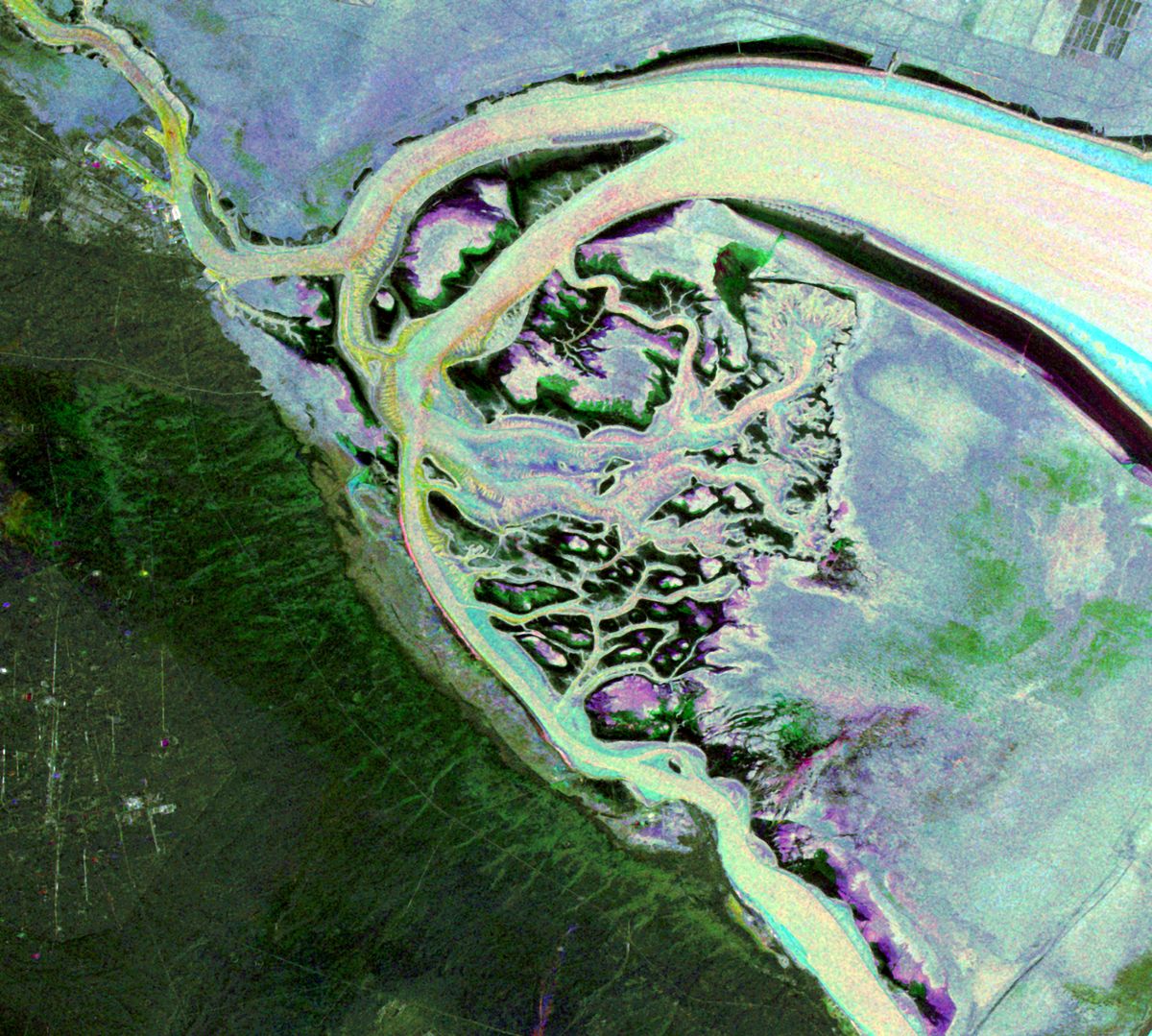
The choice of target was not random. Bubiyan is Kuwait's largest island and home to some of the Gulf nation's most sensitive military and industrial installations, including Mubarak Al Kabeer port, which is scheduled to be fully operational by the end of the year. As it also hosts a U.S. Marine contingent, Bubiyan is a potential flashpoint in the U.S.-Iran conflict.
The port is part of Kuwait's Vision 2035 and China's Belt and Road Initiative, making it significant to international trade networks. For Tehran or actors linked to it, Bubiyan would represent a high-value pressure point: close to U.S. military assets, critical to Kuwait's economic ambitions, and increasingly tied to Chinese trade interests.
The timing carries its own geopolitical weight. The allegation came just ahead of U.S. President Donald Trump's visit to Beijing for talks with Chinese President Xi Jinping, an operation targeting a China-backed port, announced on the eve of a U.S.-China summit, lands with maximum diplomatic awkwardness for all parties involved.
Tehran's Explanation: Faulty GPS
Iran's response has been brief and dismissive. Iran's Foreign Ministry rejected Kuwait's allegations as "baseless," denied any plans for hostile acts, and urged Kuwait to avoid "hasty statements," saying the issue should be handled through official channels. Earlier, Tehran had claimed the men ended up in Kuwaiti waters due to a navigation system malfunction.
That explanation has satisfied few. The four arrested men confessed during interrogation to being assigned by the IRGC to infiltrate the island to carry out "hostile acts against the state," according to state-affiliated Kuwaiti media. Navigation malfunctions do not typically come with colonels, rented fishing boats, and weapons.
Gulf Allies Close Ranks
The regional response has been swift and unified. Kuwait's Ministry of Foreign Affairs condemned the alleged incursion as a "flagrant violation" of Kuwaiti sovereignty and a grave breach of international law. It demanded Iran immediately and unconditionally cease "unlawful hostile acts," summoned Iran's ambassador to receive a formal protest note, and reserved Kuwait's right to self-defense under Article 51 of the United Nations Charter.
The UAE's Deputy Prime Minister and Foreign Minister Sheikh Abdullah bin Zayed condemned the plot "in the strongest terms," expressing solidarity with Kuwait and describing the operation as a "terrorist plot." He reiterated that the security of Kuwait is an integral part of the security of the UAE and other Arab Gulf states.
The Gulf Cooperation Council Secretary General called the operation a "systematic attempt" by Iran to destabilise the region.
Separately, Bahrain announced on the same day that it had sentenced three people to life in prison for conspiring with and spying for Iran's Islamic Revolutionary Guard Corps, a reminder that the Bubiyan incident is not isolated, but part of a broader pattern of alleged Iranian activity across the Gulf during the ceasefire period.
A Ceasefire in Name Only?
The incident raises uncomfortable questions about what the current ceasefire actually means in practice. The incident marks one of the most serious direct accusations levelled by Kuwait against Iran's Revolutionary Guards in recent years, coming amid heightened regional instability linked to the ongoing U.S.-Iran conflict and the Strait of Hormuz crisis.
Since the regional war erupted in late February, Kuwait has intensified security operations against individuals and groups allegedly linked to Iran. In April, Kuwaiti authorities announced the arrest of 24 people accused of financing "terrorist" entities.
Kuwait has not yet said whether it will refer the case to the UN Security Council, though officials have indicated that option remains open. The four detained IRGC officers remain in Kuwaiti custody, and legal proceedings against them are underway.
Iran, so far, has not acknowledged that any of its personnel were ever there.