Developing

BREAKING: U.S. F-35 Shoots Down Iranian Drone Approaching USS Abraham Lincoln

BREAKING: The U.S. Navy shot down an Iranian drone near the USS Abraham Lincoln on Tuesday. Amid soaring regional tensions, Washington warns of a "strong blow" if Tehran continues its maritime provocations in the Arabian Sea.

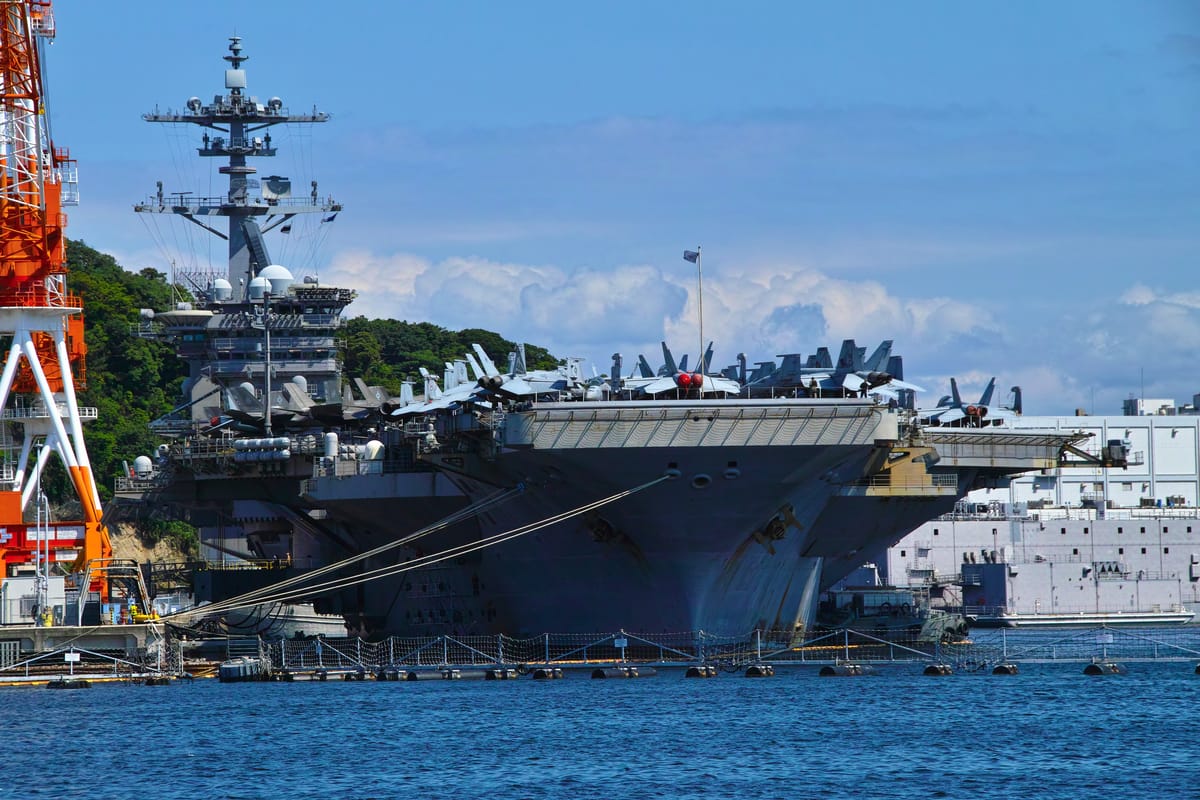
USS Abraham Lincoln
USS Abraham Lincoln (Photo: Shutterstock)

The U.S. Navy on Tuesday intercepted and destroyed an Iranian drone that approached the aircraft carrier USS Abraham Lincoln in the Arabian Sea, marking a significant escalation in a tense maritime standoff between Washington and Tehran.

The Iranian Shahed-139 unmanned aerial vehicle (UAV) was shot down by a U.S. F-35 fighter jet as it flew toward the Nimitz-class carrier, according to U.S. officials. No damage to the vessel or injuries to personnel were reported. While the Pentagon has yet to issue a formal statement, the action follows standard defensive protocols for high-value naval assets operating in international waters.

The encounter took place as the Abraham Lincoln Carrier Strike Group maintains a high-alert posture off the coast of Oman. The carrier arrived in the region on Jan. 26, after a rapid transit from the South China Sea, part of what President Donald Trump has termed a "massive armada" intended to pressure the Iranian regime following its deadly crackdown on domestic anti-government protests.

Ready for more?

The shootdown is the latest in a series of "gray zone" provocations by the Islamic Revolutionary Guard Corps (IRGC). Earlier Tuesday, three pairs of Iranian gunboats approached and challenged the Stena Imperative, a U.S.-flagged tanker, in the Strait of Hormuz. The tanker was ordered to stop and prepare for boarding but maintained course and was eventually escorted to safety by a U.S. warship.
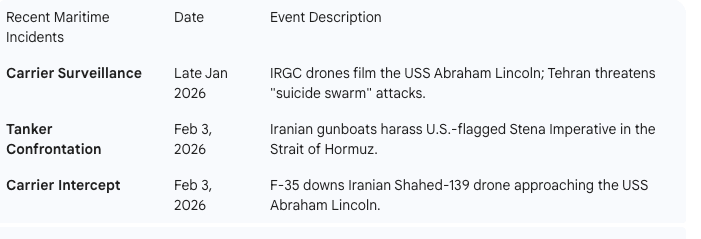

"Gray zone" provocations by IRGC
"Gray zone" provocations by IRGC (Photo: AI generated)
Ready for more?

The U.S. military presence in the Middle East has reached its highest level in years. In addition to the carrier strike group, the Pentagon has deployed THAAD and Patriot missile defense batteries to bases in Jordan, Saudi Arabia, and Kuwait. These reinforcements are aimed at deterring Tehran while it grapples with internal instability; reports indicate that more than 35,000 civilians have been killed by regime forces during a bloody crackdown on protests that began in late 2025.

Military analysts warn that Iran’s use of low-cost drone swarms represents a "credible threat" to regional stability. "Tehran is testing the ROE (Rules of Engagement) of the new administration," said one defense analyst. "They are using these drones to see how far they can push before the 'massive armada' decides to push back."

Despite the military friction, diplomatic efforts are intensifying. Iranian President Masoud Pezeshkian confirmed Tuesday that he has authorized his foreign minister to pursue "fair and equitable" negotiations with the U.S., provided they are conducted "free from threats." Diplomatic sources suggest a potential meeting between U.S. and Iranian officials could take place in Turkey as early as Friday.

Ready for more?

Join our newsletter to receive updates on new articles and exclusive content.

We respect your privacy and will never share your information.

Enjoyed this article?

Yes (237)
No (9)
Follow Us:

Loading comments...