
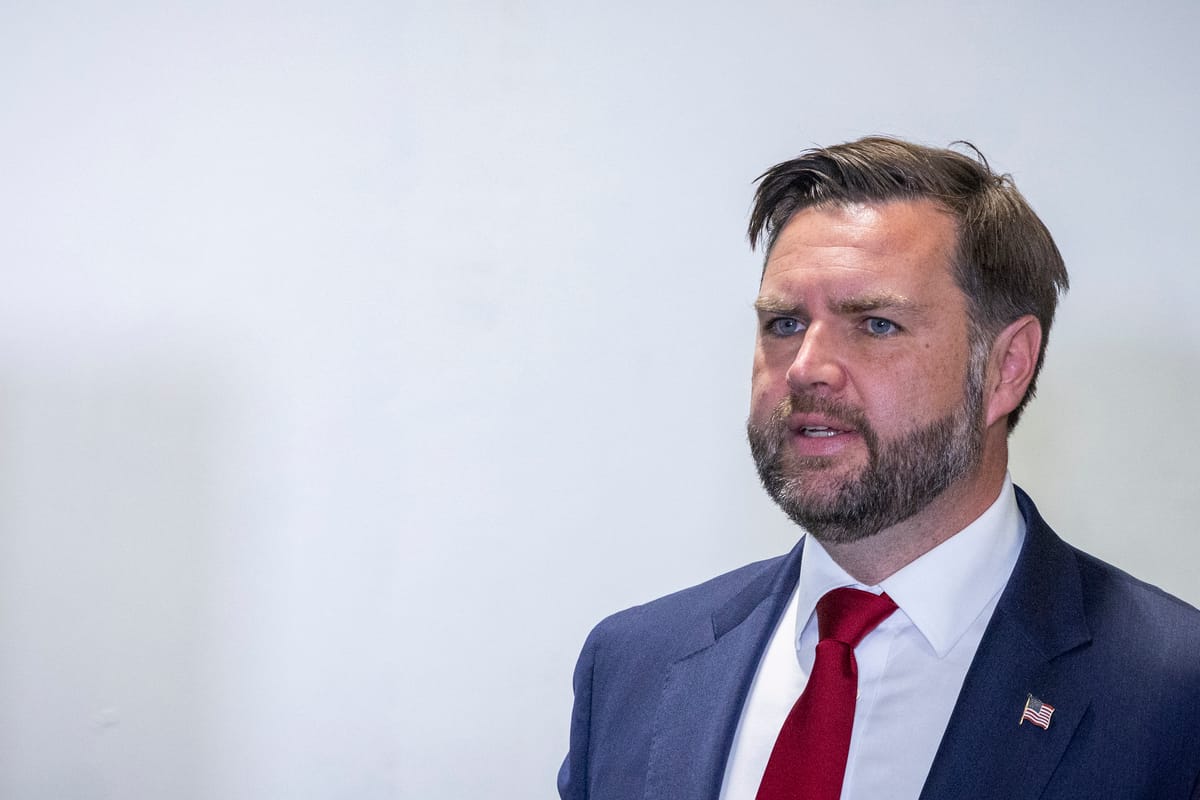
Remarks by US Vice President JD Vance at Turning Point USA’s AmericaFest this week landed with particular unease in Israel, not because he attacked Israel directly, but because of what his framing reveals about a growing shift inside the Republican Party.
Vance addressed the wave of antisemitism that has roiled conservative politics by insisting it is largely being misdiagnosed. “99% of Republicans, and probably 97% of Democrats, don’t hate Jews because they’re Jewish,” he said. What Americans are reacting to, he argued, is not Jews, but a “consensus foreign policy” that should be open to challenge. The real task, in his view, is to debate US foreign commitments openly rather than “shutting down” dissent by labeling it antisemitic.
On its face, this sounds reasonable. Debate about US aid, alliances, and overseas military engagement is legitimate and necessary. But for Israelis, the subtext is unmistakable: antisemitism is being reframed as policy disagreement, and the burden of proof is shifting away from those spreading antisemitic ideas and toward those objecting to them.
This distinction matters because the current American debate is not taking place in a vacuum. Vance made his comments amid a very public fight within the MAGA movement over the normalization of figures who traffic in explicit antisemitism, including white nationalist Nick Fuentes and conspiracy-peddling influencers like Candace Owens. When Vance declines to draw clear red lines, arguing instead against “purity tests,” it signals tolerance for an ecosystem in which antisemitism is increasingly treated as just another controversial opinion.
For Israel, this is not an abstract concern. For decades, bipartisan American support for Israel rested on a moral consensus that antisemitism is not merely another viewpoint, and that attacks on Jews, whether rhetorical or physical, demand firm condemnation. Vance’s comments suggest that this consensus is eroding, particularly on the American right, where “America First” rhetoric is being used to recast hostility toward Israel as principled skepticism rather than prejudice.
That shift was on full display at the conference. Prominent conservative voices openly accused pro-Israel figures of dual loyalty, blamed Israel for political violence without evidence, and portrayed Jewish influence as corrosive to American interests. Yet Vance’s response was to minimize the problem and emphasize unity over exclusion. For Israelis, the message is troubling: the priority is preserving a political coalition, even if that means accommodating people who openly flirt with antisemitic tropes.
The danger here is not that Republicans will suddenly “hate Jews,” as Vance put it. It is that antisemitism is being laundered through the language of foreign policy realism and free speech, making it harder to call out and easier to dismiss. When hostility toward Israel becomes indistinguishable from mainstream debate, Jewish communities pay the price first.
Vance is widely viewed as a leading contender for the post-Trump Republican future. His remarks suggest that future may involve a colder, more transactional relationship with Israel, and a greater willingness to tolerate antisemitism so long as it is packaged as dissent. Israelis would be wise to take note.