While the skies over Israel are frequently filled with the "fireworks" of interceptions, the reality on the ground is a study in contrasts. Unlike previous conflicts, the Israeli North has not been abandoned.
In a defiant display of "business as usual," farmers in communities like Netu'a, Shatula, and Shomera continue to milk cows and gather eggs under the spring bloom, even as sirens and explosions ripple through the air.
The Long Game in Tehran
The Israeli Air Force (IAF) is currently executing a methodical, multi-stage plan in Iran. According to military sources, the strikes began with the "centers of gravity" of the Iranian regime and are now moving toward secondary targets. However, experts warn that this campaign could take at least another month to complete.
The primary risk? Attrition.
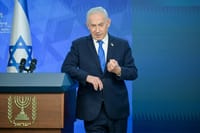
While Prime Minister Netanyahu has historically favored long campaigns, there is a growing fear that a protracted conflict might allow the Iranian regime to adapt and survive. Israel’s current strategy focuses on:
- Decapitating the IRGC: Targeting the "policing" institutions of the Revolutionary Guard to encourage a civilian uprising.
- Economic Warfare: Leveraging regional partnerships, including the UAE’s influence over the Iranian stock exchange, to trigger a total financial collapse of the Islamic Republic.
Hezbollah’s Internal Collapse
On the northern front, the IDF remains in a "forward defense" position in Southern Lebanon. While the military has yet to unleash its full destructive power, Hezbollah is already feeling the squeeze—not just from bombs, but from empty pockets.
Reports indicate that for the past month and a half, Hezbollah has failed to pay salaries to its operatives, "pensioners," and the families of its "martyrs."
This financial drought has sparked unprecedented internal rage, frustration, and a lack of motivation within the organization. For the first time, the "Shield of Lebanon" is facing a rebellion from within its own ranks.
A Shifting Tide in Beirut
Adding to Hezbollah's woes is a notable shift in the Lebanese government. For the first time in years, Lebanese officials are signaling through public declarations that Hezbollah’s era of dominance may be over. While the Lebanese Army has yet to move against the group, the political rhetoric suggests that the "state within a state" is losing its grip on the capital.
The High-Tech Threat
Despite the pressure, Hezbollah remains a lethal foe. The group is utilizing high-quality intelligence to launch precision strikes, recently evidenced by a direct hit on satellite communication dishes in Israel’s Emek HaEla. This "quality over quantity" approach is testing the limits of Israel's defense arrays and intelligence superiority.
The question remains: How long can Israel maintain this surgical "forward defense" before the pressure to launch a full-scale sweep of Lebanon becomes irresistible?