Jewish–Israeli heroism is not meant to destroy or devastate. It is meant to build and to heal. A hero is not only the one who goes out to fight, but also the one who knows how to care for those who return from battle.
We all grew up on stories of Jewish heroism, from Samson the Mighty, to Judah the Maccabee, to Bar Kokhba.
In times of war, Jewish heroism resurfaces with tremendous force. We have been flooded with stories of extraordinary courage, people who sacrificed their lives to protect others. Personally, I am accompanied by the story of the late Moshe Ohayon, whom I knew, who went out with his son Eliad, also killed, to defend residents of their neighborhood in Ofakim.
These are stories that must continue to be told, of extraordinary individuals willing to give their lives for others. There is nothing more noble than that.
The Hero Also Has a Vulnerable Side
But slowly, other stories are emerging as well, the price paid by the IDF fighters during the war, and in many cases, the price they continue to pay. The families left behind at home, the impact on spouses and children, the traumatic experiences, and the wounds that do not fade. More than once, I have met a soldier who returned from combat changed. I don’t dare ask, but I wonder what he went through.
The hero once seen as strong and invincible is now revealed in a more complex light. The stereotypical hero suddenly has a vulnerable, sensitive side, and that side, too, is gradually becoming something we admire.
One of the most-watched videos of the past year is comedian Udi Kagan’s sketch “Combat Trauma,” in which he speaks about being a fighter and the psychological scars that followed. Singer and actor Idan Amedi, who was seriously wounded and openly exposes the vulnerability of heroes, has become someone people look up to and admire deeply.
Jewish Heroism Takes on New Dimensions
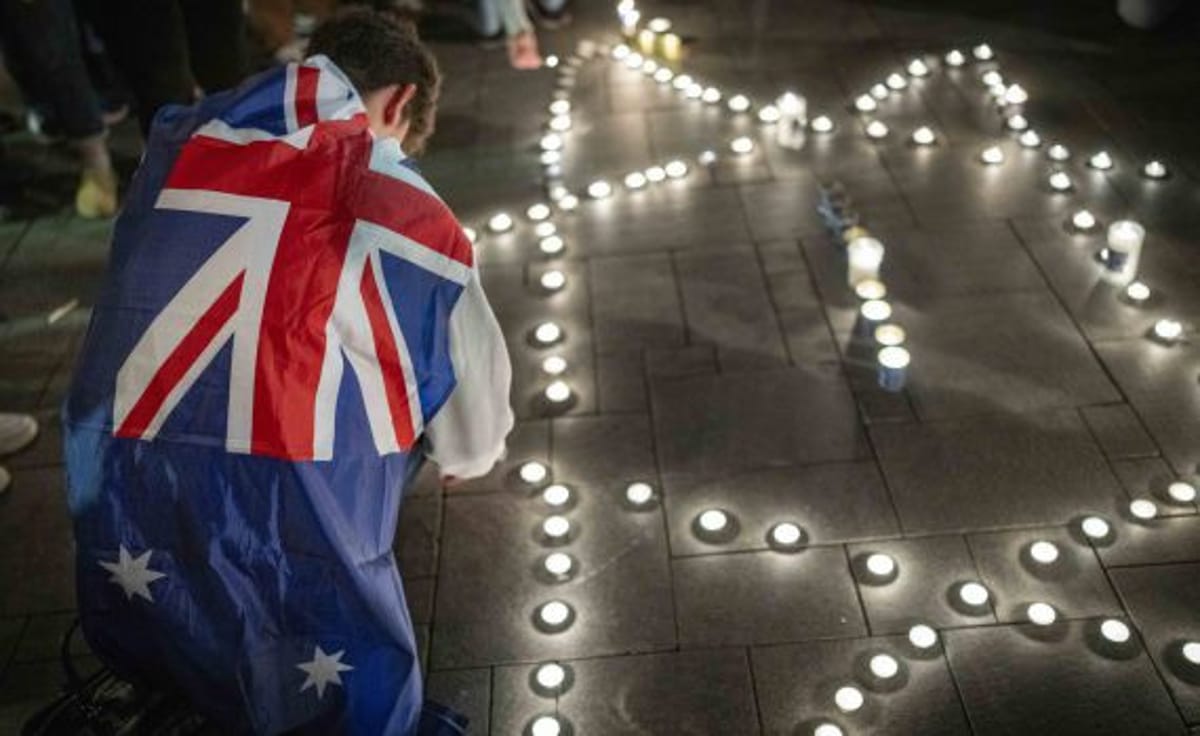
The terror attack in Sydney, Australia, shattered yet another myth. At first, many of us assumed that the man who charged at the terrorist was Jewish. We were surprised to learn that the brave individual who fought the attacker with his bare hands, and was wounded in the process, was actually Muslim.
This echoes stories from October 7 about Bedouins and Muslims who saved Jews during the fighting. Many remember little Romi Swissa from Sderot, who was miraculously rescued. Before opening the car door to police officers, she asked: “Are you Israeli?” But the person who saved her was a Muslim man who, instead of fleeing, drove the orphaned girls, whose parents had been murdered, to a police station, risking his own life to save them.
Heroism is not the exclusive property of Jews. So what, then, is Jewish heroism?
I believe that even if heroic courage is not uniquely Jewish, that does not mean we cannot adopt it as a Jewish and Israeli ethos. But I would like to suggest an additional layer.
There is a well-known saying from Pirkei Avot: “Who is a hero? One who conquers his impulses.” At first glance, heroism seems instinctive, raw. Yet Pirkei Avot turns the idea on its head, teaching that there is also a moral dimension to heroism, one expressed through restraint and self-control.
I do not see this as contradicting the heroism we know, but rather as completing it. The Jewish fighter does not act out of blind instinct, revenge, or a desire to destroy, but out of purpose and meaning. The hero is not only the hardened warrior who “sees nothing but the target,” but also the one who comes home from battle, takes care of his children, and seeks psychological help to heal his soul.
Jewish–Israeli Heroism Is Not About Destruction
Jewish culture has a role to play, not only in shaping an ethos that preserves our national resilience, but also in embracing complexity. “Who is a hero? One who conquers his impulses” is not meant to undermine the biblical hero, but to add depth and nuance. Jewish tradition strives to present multiple angles on values, enriching them and giving our lives deeper meaning.
The more we learn to listen to the different voices within Jewish tradition, the more we can draw from it and the more depth and significance it can give to our lives.