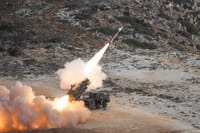
When the United States and Israel launched their combined aerial assault on Iran on February 28, 2026, the stated objective was to degrade a nuclear threat and project overwhelming strength. What followed was a lesson in the gap between projecting power and exercising it wisely.
Within hours, Iran closed the Strait of Hormuz. Naval mines appeared. Tankers were struck. And roughly a quarter of the world's oil trade, the invisible circulatory system of the global economy, simply stopped flowing. The resulting energy crisis, the worst since the 1970s, did not just expose a military planning failure. It exposed something deeper: the structural limitations of running a superpower like a family business.
The merchant imaginary
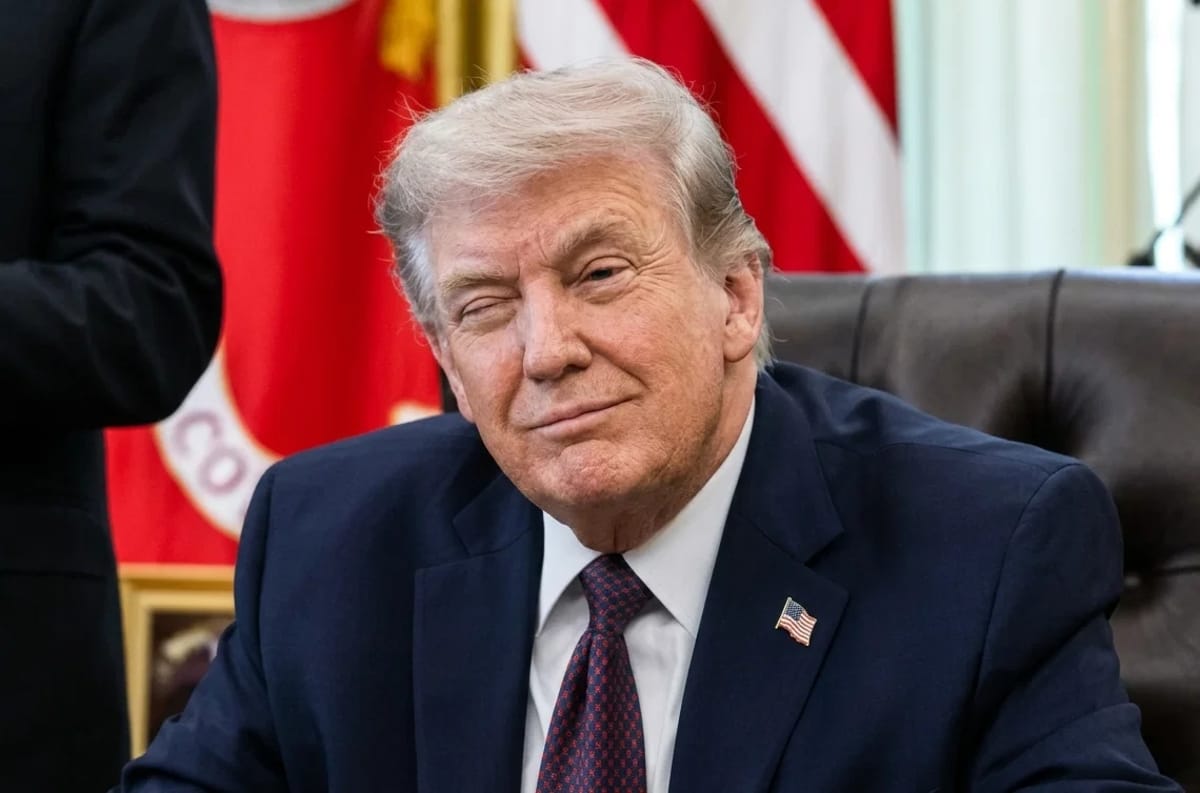
Donald Trump has long cultivated a persona built around the idea that statecraft and deal-making are essentially the same thing, that the instincts that built a real estate empire translate cleanly into geopolitical leverage. Analysts have a term for this worldview: the "merchant imaginary." It is the belief that every conflict is fundamentally a negotiation, that every adversary has a price, and that the right display of confidence can bend reality to your will.
"The most dangerous thing about the merchant imaginary is not that it fails - it is that it fails while looking like boldness."
This worldview has certain seductive logic in peacetime commerce. But it carries a critical vulnerability: it has no framework for adversaries who are not primarily motivated by rational economic calculation, adversaries who might absorb losses, tolerate suffering, and still refuse to fold. Iran, under decades of sanctions, has developed a considerable tolerance for exactly that kind of pain.
Trump reportedly dismissed explicit Pentagon warnings that attacking Iran would inevitably trigger a Hormuz blockade. These were not the cautious murmurs of bureaucratic timidity - they were specific, operational assessments from the Joint Chiefs. He read them as "the system" resisting his vision rather than as professional intelligence he was obligated to weigh. That distinction matters enormously.
Five cascading errors:
- Dismissed intelligence
- Empowered Iran economically
- Lifted sanctions in panic
- Misread the gas market
- Failed to build a coalition
The second irony cuts the deepest. Trump, who has spent decades defining success through financial leverage, managed to engineer a scenario in which Iran — the party being bombed — emerged as an economic beneficiary. Reduced export volumes were more than offset by the price spike that American military action itself created. Iran effectively received a revenue boost from the very campaign designed to cripple it.
Worse still, the administration's response to domestic gasoline prices, the political pressure that comes from every spike at the pump, led to a temporary lifting of Iranian oil sanctions in the early weeks of the conflict. The intention was to calm markets. The effect, as read in Tehran, was unmistakable: the United States had blinked. Strategic oxygen was delivered to the regime at precisely the moment it should have been denied.
The gas problem nobody modeled
Perhaps the most technically consequential error was what might be called the "gas blindness." The administration's crisis management appeared to operate on the assumption that natural gas could be handled like oil, that strategic reserves could be tapped, prices stabilized, and a "deal" arranged on the global market. But oil and gas are fundamentally different commodities.
Oil can be stored in barrels. Liquefied Natural Gas requires pressurized, cryogenic infrastructure that most nations do not hold in reserve quantities. When Iran's blockade severed Qatar's LNG export routes, one of the world's largest, there was no buffer. The shortage was immediate and physical. No financial instrument or diplomatic maneuver could conjure the missing molecules.
The crisis compounded when Israel's Leviathan gas field, the primary energy supplier to Egypt, was shut down for over a month for security reasons. Egypt, suddenly cut off from both its Qatari and Israeli sources simultaneously, faced blackouts and industrial closures. A regional energy architecture built on complementary suppliers collapsed because nobody had stress-tested what happened when multiple nodes failed at once.
Going it alone
The strategic error that may prove most lasting, however, was diplomatic rather than military or economic. Securing commercial shipping through a contested strait under active threat requires an enormous concentration of naval resources, multiple destroyers per convoy, sustained aerial cover, coordinated logistics. It is a task beyond the capacity of even the United States Navy to sustain alone at scale.
"You started this war - you will finish it." That was the message, unspoken but unmistakable, that came back from European capitals when Washington called for help.
The administration turned to Europe and NATO for assistance only after the crisis had already ignited, after the water was, literally and figuratively, on fire. The request landed in capitals that had spent years absorbing American disregard: the Greenland episode, the pivot away from Ukraine, the transactional pressure on NATO contributions. The accumulated resentment was not merely political theater. It had calcified into a considered refusal to absorb the consequences of decisions made without them.
The lesson here is not simply that alliances matter, though they do. It is that alliances are perishable. They require maintenance, consultation, and the constant demonstration that partners will share both the risks and the decision-making. An alliance that is treated as a service to be summoned when needed will not be there when it is needed most.
What the crisis revealed
The Hormuz crisis of 2026 was not primarily a military story. It was a stress test of a governing philosophy and the philosophy cracked under load. The core problem with the merchant imaginary is not that it is cynical or immoral, but that it is analytically incomplete. It correctly identifies that power involves leverage and that adversaries respond to incentives. It fails to account for the structural constraints of complex systems: the physical properties of commodities, the institutional memory of alliances, the domestic incentive structures of adversary regimes.
A dealmaker who ignores the advice of the engineers will build a building that falls. A commander-in-chief who dismisses the Joint Chiefs' operational assessments because they complicate his narrative will find, eventually, that reality does not negotiate.
The Strait of Hormuz did not break Donald Trump's political career - that remains to be written. But it did something arguably more significant: it made the gap between the performance of mastery and its actual exercise impossible to ignore.