Historic
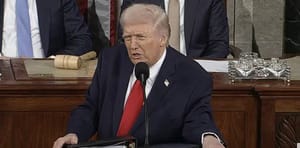
A Night of Records and Recriminations: Trump Delivers Longest State of the Union in U.S. History
•news


Comprehensive coverage of Donald Trump's presidency, political activities, policy decisions, and impact on American and international affairs
Donald John Trump (born June 14, 1946) is the 45th President of the United States, serving from January 20, 2017, to January 20, 2021, and was elected as the 47th President in November 2024. He is married to Melania Trump and has five children: Donald Trump Jr., Ivanka Trump, Eric Trump, Tiffany Trump, and Barron Trump. Before entering politics, Trump was a real estate developer, television personality, and businessman who built a global brand around his name. He resides primarily in Palm Beach, Florida, at his Mar-a-Lago estate.
Trump's political career has been marked by unconventional approaches to governance, direct communication with supporters through social media, and policies focused on economic nationalism, immigration reform, and "America First" foreign policy. His presidency saw significant tax reform, judicial appointments including three Supreme Court justices, and efforts to renegotiate international trade agreements. His administration's handling of domestic and foreign policy issues generated substantial debate across the political spectrum.
The Trump presidency fundamentally reshaped American political discourse and party dynamics. His communication style, characterized by direct engagement with supporters and frequent criticism of traditional media outlets, represented a departure from conventional presidential communication. This approach mobilized a significant political base while also generating controversy and intense scrutiny from political opponents and media organizations.
Trump's economic policies centered on tax cuts, deregulation, and renegotiating trade deals such as replacing NAFTA with the USMCA (United States-Mexico-Canada Agreement). His administration implemented tariffs on Chinese goods as part of a broader trade dispute, arguing that such measures would protect American manufacturing and reduce trade deficits. Supporters credited these policies with strong pre-pandemic economic growth, while critics raised concerns about long-term fiscal impacts and international trade relationships.
Immigration policy represented a central focus of Trump's political platform and presidency. His administration pursued stricter border enforcement, travel restrictions from certain countries, and efforts to construct a border wall along the U.S.-Mexico border. These policies generated significant legal challenges and public debate about immigration reform, national security, and humanitarian considerations.
Trump's foreign policy approach emphasized bilateral negotiations over multilateral agreements, skepticism toward international organizations, and direct engagement with world leaders. His administration withdrew from or renegotiated several international agreements, including the Paris Climate Accord and the Iran nuclear deal. His meetings with North Korean leader Kim Jong Un marked unprecedented direct engagement between U.S. and North Korean heads of state, though long-term outcomes remained uncertain.
Following his presidency, Trump has remained a dominant figure in American politics, maintaining significant influence within the Republican Party and continuing to engage in political activities. His post-presidential period has been marked by ongoing legal challenges, investigations, and his successful 2024 presidential campaign. His continued political relevance and influence on policy debates ensure that developments related to Trump remain significant news topics affecting American political landscape and international relations.

Footage from France shows officers under sustained attack as hundreds of thousands take to the streets; smoke fills city as protesters hurl blocks torn from pavements
Historic
Peace or War

Digital Invasion