Anduril Industries and Palantir Technologies are jointly developing the core software for President Donald Trump’s proposed “Golden Dome” antimissile defense system, according to people familiar with the matter, positioning the two companies at the center of one of the largest and most ambitious U.S. defense projects in decades.
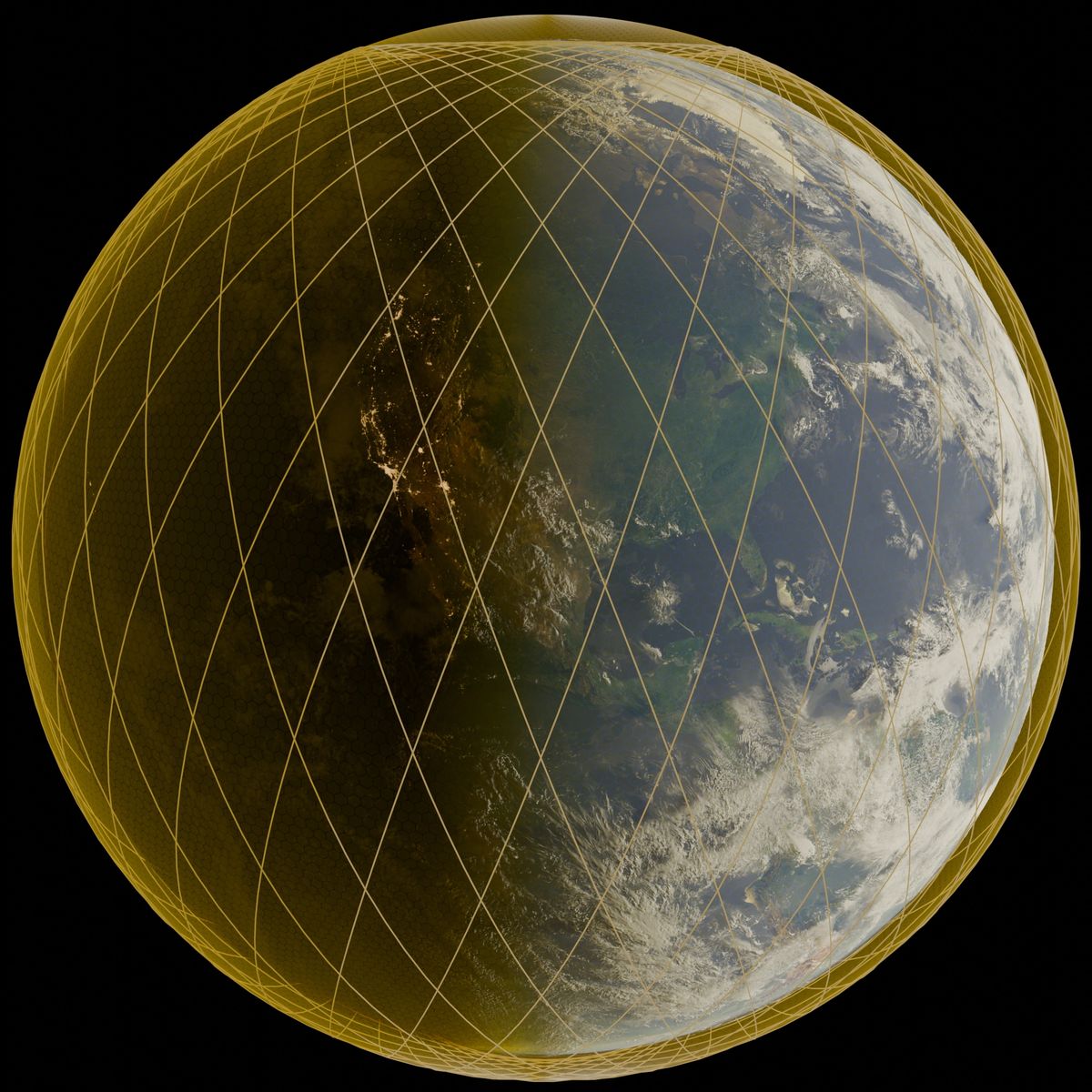
The software under development would serve as the command-and-control “nervous system” of the Golden Dome, linking radars, satellites, sensors and interceptors into a real-time network capable of detecting and neutralizing ballistic, cruise and hypersonic missiles aimed at the U.S. homeland. The companies are part of a broader consortium that also includes Aalyria, Scale AI and Swoop Technologies; initial testing of the software is planned for this summer, the people said.
The Golden Dome initiative, first announced by Trump in May 2025, envisions a multilayered, largely space-based shield that would dramatically expand on existing U.S. missile defenses. The project’s estimated cost has grown to roughly $185 billion, officials and analysts have said. Trump has pushed for rapid deployment, describing the system as essential to deterring adversaries including Iran, China and North Korea.
Palantir, known for its data-analytics platforms widely used by the U.S. military and intelligence agencies, is expected to handle much of the artificial-intelligence and integration work. Anduril, the defense-technology firm founded by Palmer Luckey, brings expertise in autonomous systems and sensors. Both companies have been interested in the project since its inception and previously collaborated with Elon Musk’s SpaceX on early concepts, according to earlier Reuters reporting.
The arrangement highlights the Trump administration’s preference for working with a small group of politically connected technology firms rather than relying solely on traditional prime contractors such as Lockheed Martin and RTX. Palantir’s chairman, Peter Thiel, is a longtime Trump supporter and mentor to Vice President JD Vance.
News of the companies’ expanded role sent Palantir shares higher in after-hours trading Tuesday.
The Golden Dome effort comes as the U.S. is engaged in Operation Epic Fury, the ongoing military campaign against Iran and its regional proxies. Iranian-backed militias have launched rockets and drones at U.S. and Israeli targets, and Tehran has threatened to close or disrupt shipping through the Strait of Hormuz. U.S. officials have cited the need for advanced homeland defense as one reason for accelerating the project.
No formal contract details have been made public, and the Pentagon has not commented on the specific roles of Anduril and Palantir. A Palantir spokesman declined to comment. Anduril did not respond to requests for comment.
The project has drawn criticism from some lawmakers and analysts who question its feasibility, cost and the speed with which Trump has demanded it be completed, originally within three years. Supporters argue that recent advances in AI, satellite technology and autonomous systems make the Golden Dome more realistic than past expansive missile-defense concepts.
For now, the software partnership between Anduril and Palantir marks the latest sign that Silicon Valley-style defense contractors are playing an increasingly central role in Trump’s national-security agenda.