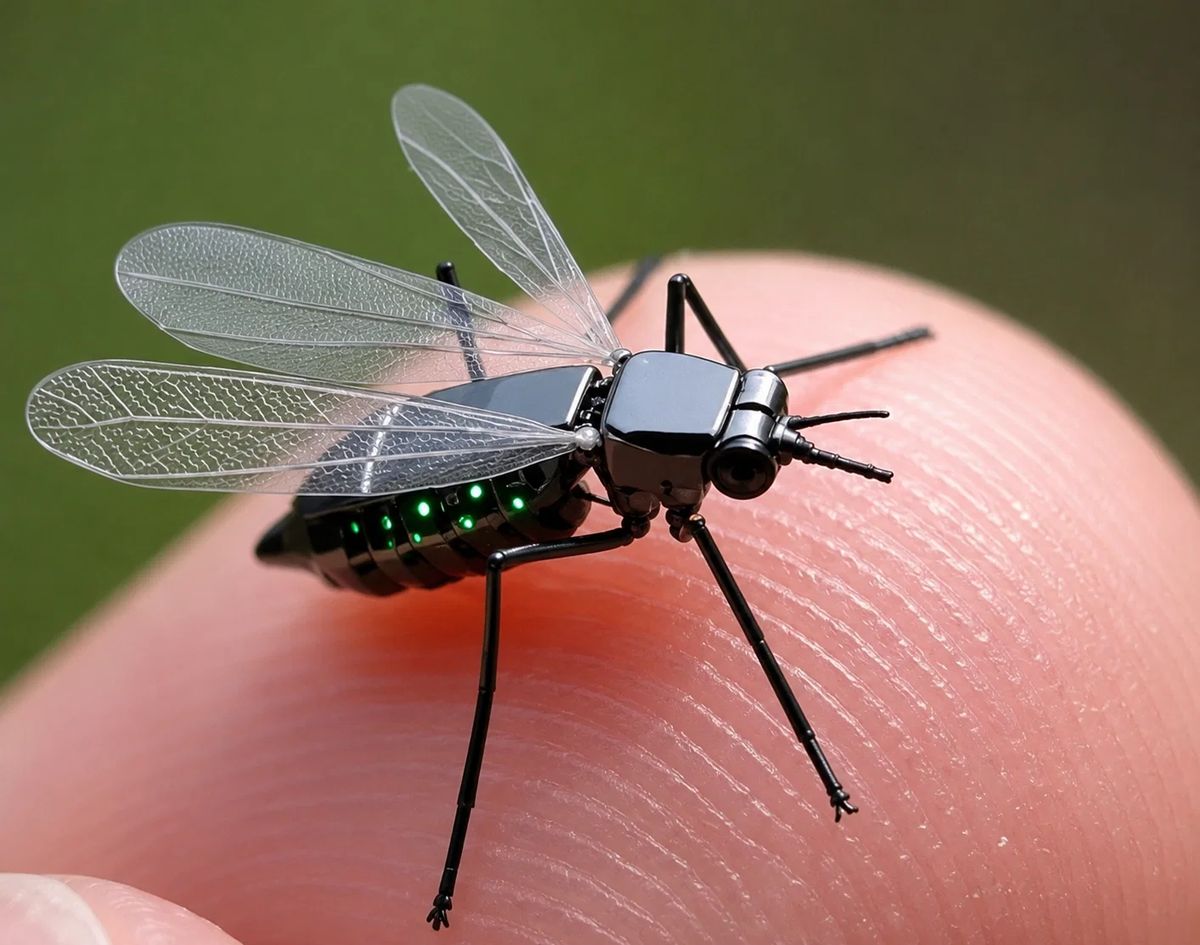
A Chinese military university has unveiled a tiny drone weighing less than 0.3 grams, designed to resemble a mosquito and carry out covert surveillance missions.
The miniature device is drawing attention because of its ability to imitate nature. Its wings reportedly flap around 500 times per second, allowing it to move in a way that closely resembles a real insect, including the ability to hover with precision.
Because of its extremely small size and weight, the drone is nearly invisible to the human eye and can evade radar detection. It is also capable of entering spaces that standard drones cannot reach, including indoor areas, narrow rooms and dense urban environments.
Despite its harmless appearance, the mosquito-like drone is built as an advanced intelligence-gathering tool. It is equipped with miniature sensors designed for hidden monitoring and observation in sensitive locations. The system was developed for covert military missions that require quiet movement and maximum discretion.
The technology could mark a major step forward in the world of espionage, especially as militaries seek smaller, harder-to-detect tools for surveillance and intelligence collection. A drone the size of an insect could theoretically operate in places where cameras, standard aircraft or human agents would be far more likely to be noticed.
At the same time, the development raises obvious privacy concerns, because apparently humanity looked at mosquitoes and decided the one thing missing was espionage.
The drone still faces serious technical limits. Its microscopic size means battery life is very short, and it is highly sensitive to wind, which can easily push it off course. Those weaknesses could limit its use outside controlled or protected environments.
Even so, the project points to the future of battlefield and intelligence technology. In the modern age, the next major surveillance threat may not look like a camera, a satellite or a large drone. It may look like a tiny insect sitting quietly on the wall.