Get our mobile app
Download on the App StoreGet it on Google Play

Military Analysis

Egypt's Tank Army vs. Modern Drone Warfare

Egypt maintains the Arab world's largest armored force with thousands of tanks, but lessons from Ukraine reveal critical vulnerabilities to low-cost drones that challenge traditional military doctrine

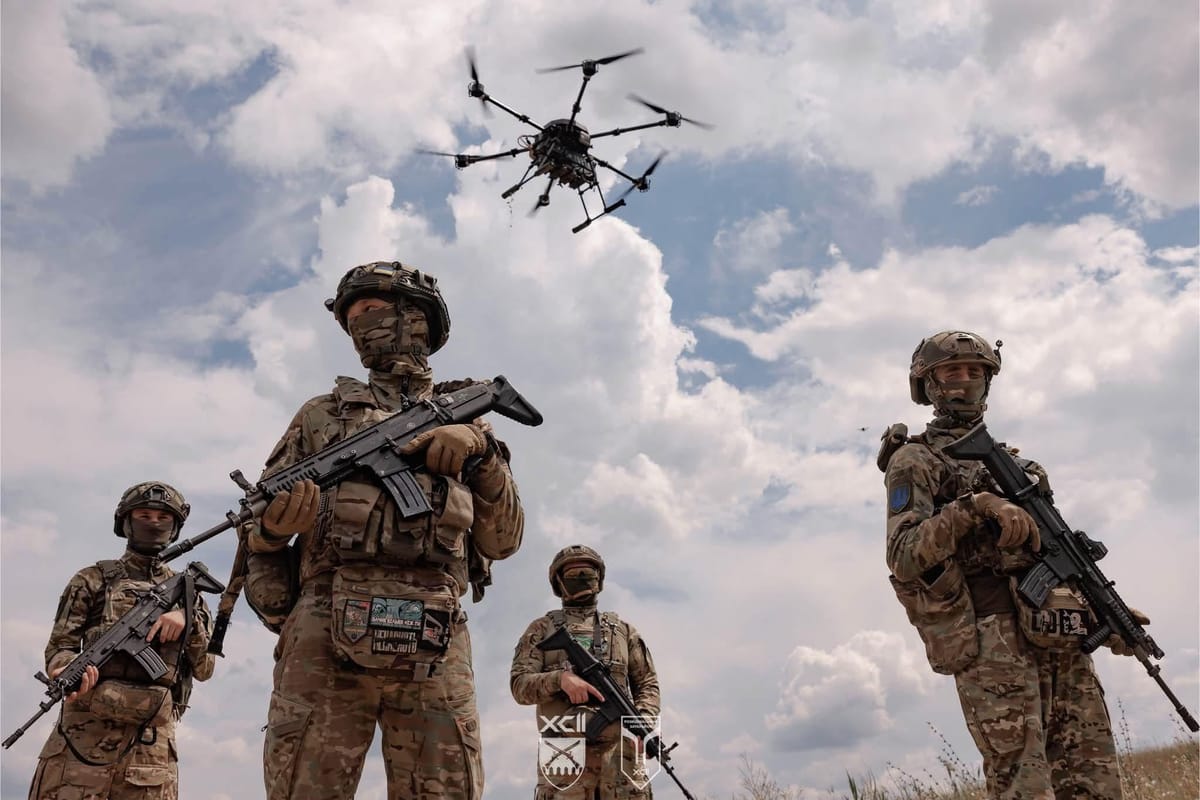
Uk soldiers with drone above them
Egyptian army
Egyptian army (Photo: Official Military Spokesman / Armed Forces Spokesperson)

Egypt commands the Arab world's most formidable armored force—thousands of heavy tanks positioned along its borders, extensive infrastructure across the Sinai Peninsula, and a massive armor deployment that reinforces Cairo's regional standing. Yet in an era where inexpensive drones can destroy costly tanks in seconds, the rules of engagement have fundamentally shifted.

Cairo continues to embrace a distinctly traditional doctrine of "critical mass." Its enormous armored force serves multiple strategic purposes: deterring threats along borders with Libya and Sudan, maintaining regional power status, and controlling critical assets like the Suez Canal. Domestic production capabilities support this approach, assembly and upgrading of substantial portions of Abrams tanks at the military's Factory 200, logistical resilience that reduces absolute dependence on American supply during crises, and construction of extensive infrastructure throughout Sinai.

Despite decades of stable peace with Israel, Israeli defense officials continue monitoring these developments closely. Satellite imagery reveals bunkers carved into mountains, extended runways for fighter jets, advanced Chinese air defense systems, and forces numbering tens of thousands of troops.


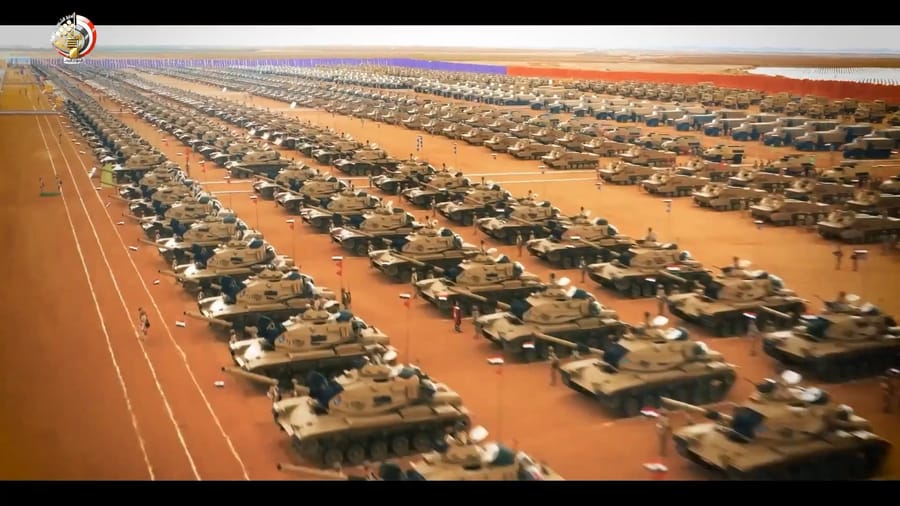
Ukarine's Independence Day parade
Ukarine's Independence Day parade (Video: Ukraine's Defense Ministry)

Israel's Response: Quality Over Quantity

Israel has never attempted to compete in numbers. Israeli military doctrine consistently relies on qualitative superiority, air supremacy and complete control of airspace, precise real-time intelligence, decentralized communication systems for network-centric warfare, and advanced active protection like the Trophy system that renders an adversary's numerical advantage less relevant.

In a theoretical direct confrontation scenario, the Israeli Air Force and precision strike capabilities would be expected to offset the numerical advantage.

Nevertheless, the mere existence of such an enormous armored fleet requires Israel to maintain high readiness levels and track every change in Sinai infrastructure. The advanced KC-46 "Gideon" refueling aircraft that arrived in recent months dramatically expand the IDF's operational envelope, enabling fighter jets to remain airborne for extended hours and at vast distances.

Ukraine's Lessons: When Drones Changed the Equation

The Russia-Ukraine war exposed deep structural weaknesses in traditional armored forces. FPV drones and loitering munitions demonstrated the ability to destroy advanced tanks by striking vulnerability points, the roof or engine compartment. Logistics convoys, assembly areas, and tank transporters become easy targets long before armor reaches the contact line.

The implications for Egypt are clear: a fleet of thousands of tanks could be degraded with extraordinary speed without protection from multi-layered air defense umbrellas, advanced electronic warfare, and drone interception systems. Thick armor alone no longer suffices on a battlefield that is completely transparent from an intelligence perspective. Egypt recognizes this shift and is attempting to diversify its procurement, but the gap compared to nations developing laser defense systems, automated interception, and network-based warfare remains significant.

Paper Advantage or Real Threat?

Egypt's advantage in tank numbers is largely theoretical, unless it's going to be backed by unprecedented air and electronic defense. Mass still provides conventional deterrence and regional status, but on the modern battlefield it remains perpetually vulnerable.

For Israel, the picture is clear: there's no need to enter a quantitative arms race. Technological advantage, air superiority, and deep-strike capability remain the primary tools. However, monitoring Egyptian buildup in Sinai will continue, because even in the drone era, thousands of tanks cannot be ignored.

Ready for more?

Join our newsletter to receive updates on new articles and exclusive content.

We respect your privacy and will never share your information.

Enjoyed this article?

Yes (19)
No (1)
Follow Us:

Unmissable content


Loading comments...

Also of Interest