
Get our mobile app
Download on the App StoreGet it on Google Play

Midterm Elections 2026

US midterms: what's at stake for Israel

Two years into Trump's second term, Americans vote for Congress and a third of the Senate. The results will shape the president's final two years, US-Israel relations, and whether an Islamist with Muslim Brotherhood ties reaches the Senate.

US Midterms Open Today: What's at Stake for Trump and Israel

Two years after Donald Trump's return to the White House, the United States goes to the polls today for midterm elections that could reshape the president's final two years in office, the trajectory of US-Israel relations, and the political map of America itself.

Unlike Israel's parliamentary system, where the government is drawn directly from the Knesset and every election is both legislative and executive, the American system maintains a rigid separation of powers. The presidency is elected every four years, while Congress is elected every two years—precisely at the midpoint of the presidential term.

But even that is an oversimplification. Not all of Congress stands for election every two years: senators serve six-year terms, so only a third of Senate seats are contested in any given cycle. That means the significance of midterm elections varies depending on which Senate seats are up for grabs.

The House of Representatives

The presidency itself is not on the ballot, but these elections will determine whether Trump can govern for his remaining two years.

All 435 seats in the House of Representatives are up for election. Republicans currently hold a narrow majority of 218 seats plus one independent who caucuses with them, while Democrats hold 214 (two seats are currently vacant).

By most estimates (and by historical precedent) Trump is expected to lose his House majority. The party of the sitting president almost always suffers an electoral blow in midterm elections and loses ground in Congress.

The House is the legislative body of the federal government, with control over budgets, funding, and broad authority over domestic affairs. But it cannot force policy on the president: the White House can veto House legislation and block it from taking effect.

Still, a hostile House can be a major headache for any president. It can freeze budgets, effectively paralyze the administration's domestic agenda, and even launch impeachment proceedings against the president. But its impact is limited as long as it lacks the support of the Senate, the more senior chamber.
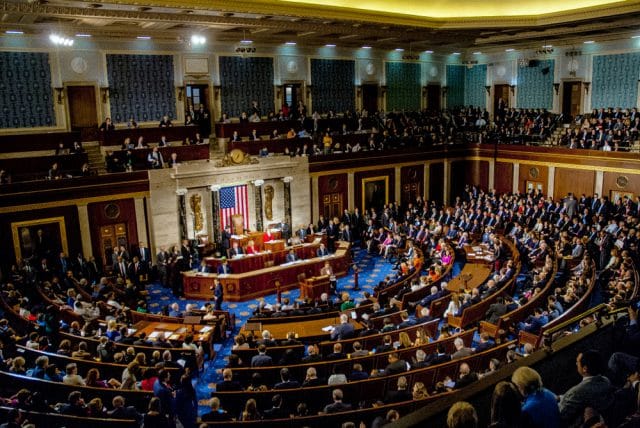
The US House of Representatives chamber
The US House of Representatives chamber (Photo: Mark Reinstein / Shutterstock)

The Senate

For Trump, the Senate is the more critical battleground. Here, both the forecasts and the historical patterns are murkier. The Senate tends not to swing dramatically from election to election, largely because only a fraction of its members face voters at any one time, and relatively few seats are genuinely competitive between the parties.

Republicans currently hold a 53–47 majority in the Senate. For Democrats to take control, they would need to flip at least four seats without losing any of their own and even a 50–50 tie would leave Trump in control, since under the Constitution the vice president serves as president of the Senate and casts the deciding vote in the event of a tie.

This cycle, seven Senate races have been identified as critical to control of the chamber, which has sweeping influence over foreign policy. The Senate must confirm Supreme Court nominees and senior executive appointments, ratify international agreements, and can determine the fate of any impeachment trial launched by the House.

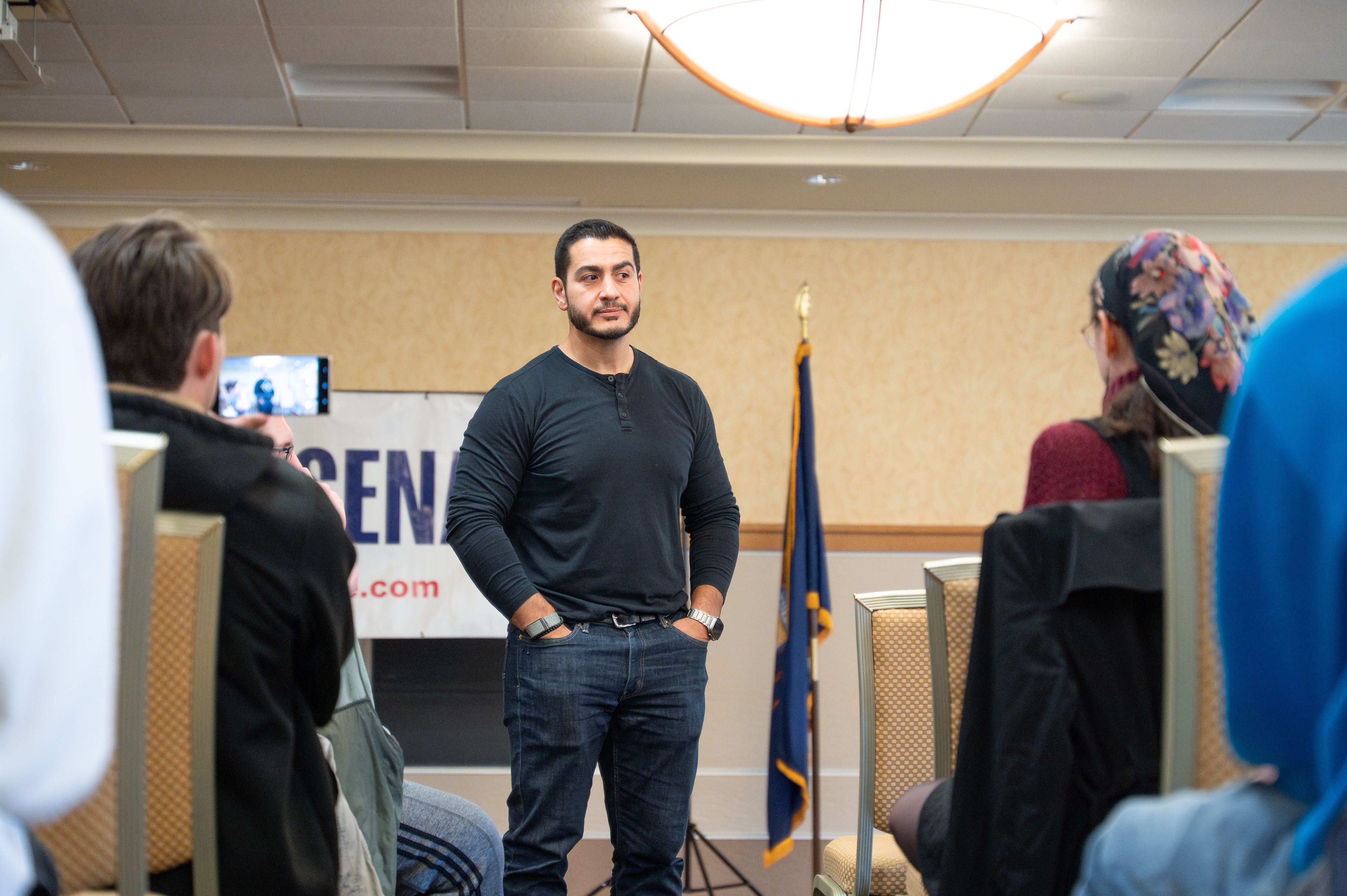
Abdul El-Sayed, Democratic candidate for Senate in Michigan
Abdul El-Sayed, Democratic candidate for Senate in Michigan (Photo: Conlan Houston)

The seven most competitive Senate races (known as "toss-ups") include Republican defenses in Maine (Susan Collins vs. Troy Jackson), Ohio (appointed Senator John Husted vs. Sherrod Brown), Texas (Ken Paxton vs. James Talarico), Kansas (Roger Marshall vs. Adam Hamilton), and Alaska (Dan Sullivan vs. Mary Peltola), alongside open seats in Iowa (Ashley Hinson vs. Josh Turk) and Michigan (Mike Rogers vs. Abdul El-Sayed). These tight contests in key states will determine whether Republicans maintain their 53–47 majority or whether Democrats can flip the balance of power in the Senate.

Beyond the numbers, the character of the incoming senators will signal the direction of American politics. Abdul El-Sayed represents the far-left edge of this election: an Islamist candidate with reported ties to the Muslim Brotherhood, whose family has been flagged for connections to terror financing.

If El-Sayed wins a Senate seat, it would indicate that figures like Zohran Mamdani, the New York City mayor who is also a far-left politician with questionable ties to Islamist elements and quiet support for Hama, are not merely local fringe phenomena but part of a political current gaining a foothold in national American politics. That would signal serious future implications for relations with Israel.

Ready for more?

Join our newsletter to receive updates on new articles and exclusive content.

We respect your privacy and will never share your information.

Enjoyed this article?

Yes
No
Follow Us:

Unmissable content


Loading comments...

Also of Interest