Get our mobile app
Download on the App StoreGet it on Google Play

0.1 Seconds From Death

Tech That Saved Pilot Shot Down Over Iran

An American airman's dramatic testimony on 60 Minutes highlighted the ejection seat system that operates when a pilot has no other option to save the aircraft. What happens in those critical seconds, and how does the technology work in the world's most advanced fighter jets?

This Ejection Seat Saved a U.S. Pilot Shot Down Over Iran

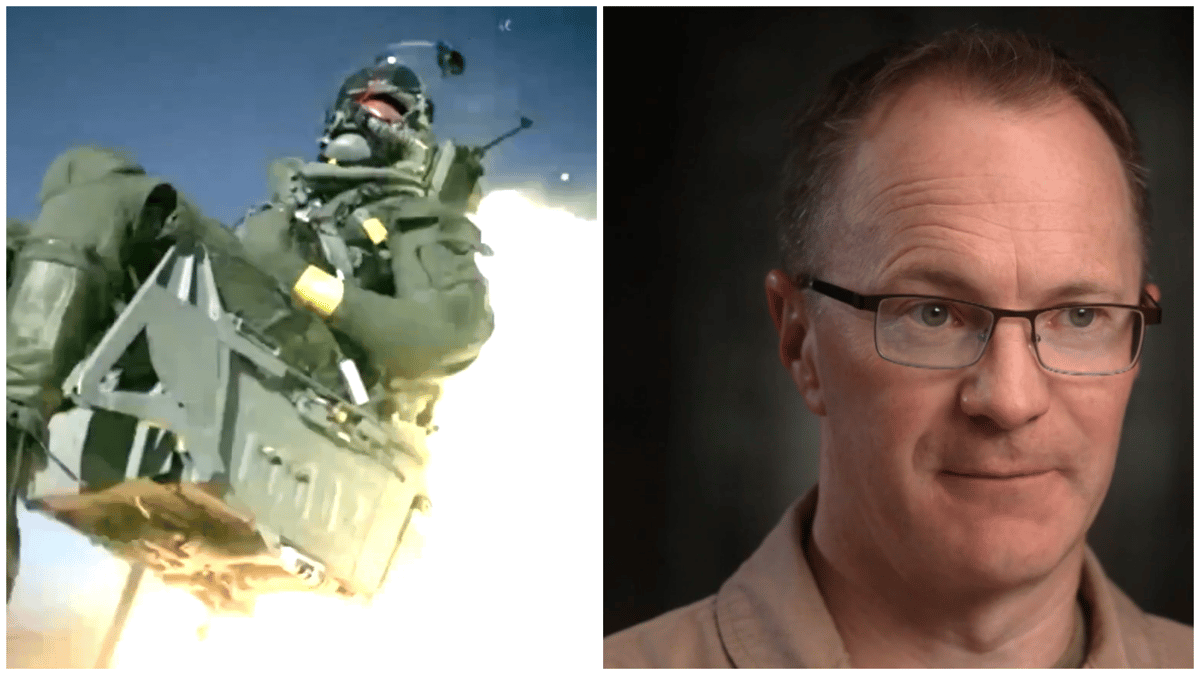
The world followed closely this week as a U.S. Air Force airman, known by the call sign "Bravo," recounted on "60 Minutes" the moment his F-15E Strike Eagle was hit over Iran and he was forced to eject from the aircraft.

After the strike, Bravo and his pilot found themselves behind enemy lines, but the ejection system enabled them to leave the aircraft and begin their survival ordeal.

Ejection seat in fighter aircraft
Ejection seat in fighter aircraft (Photo: U.S. Military)

Behind that dramatic moment lies one of the most complex mechanisms in fighter aircraft: the ejection seat, a complete escape system designed to propel the pilot away from the aircraft at tremendous speed and enable him to reach the ground via parachute.

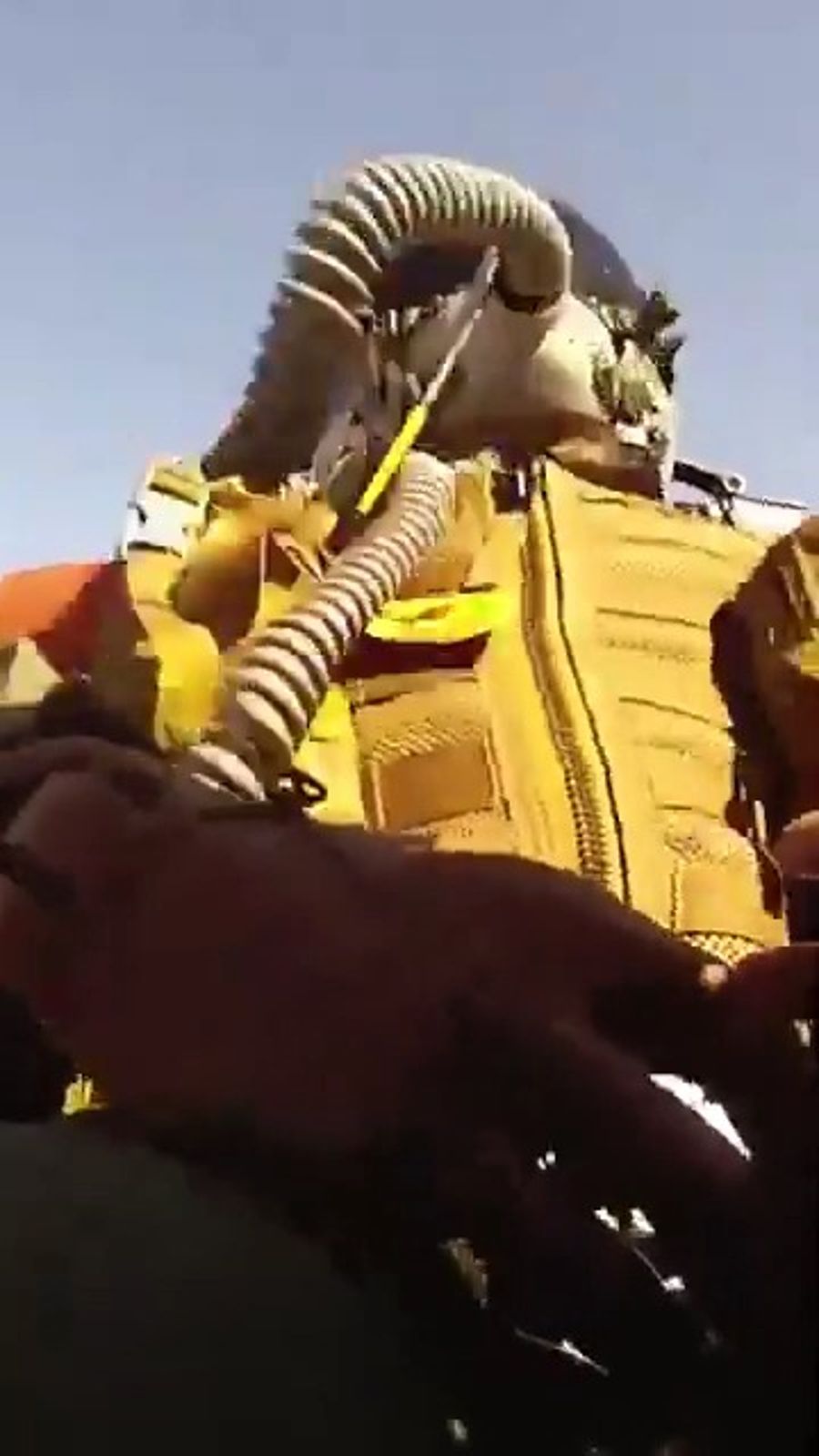
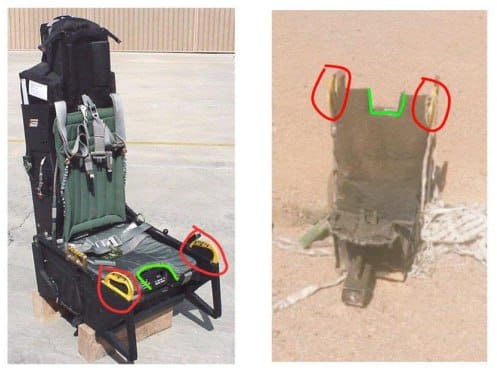
The ejection seat of the American pilot who went down in Iran - yellow ejection handles mounted on the sides of the seat used to activate the ejection mechanism.

In the F-15E Strike Eagle that Bravo and his pilot were flying, the ejection system is an integral part of the crew's survival apparatus. When the aircraft is hit and continued flight is impossible, the pilot activates the ejection mechanism. Within a very short time, an automatic sequence of actions begins, designed to extract the crew member from the cockpit, stabilize him, and deploy the parachute.

The goal is to address one of the greatest challenges: sometimes the pilot is not abandoning an aircraft flying in stable, level flight, but rather a damaged aircraft that is spinning, diving, or at extremely low altitude. Therefore, modern ejection systems include mechanisms that manage the escape sequence according to altitude and speed.

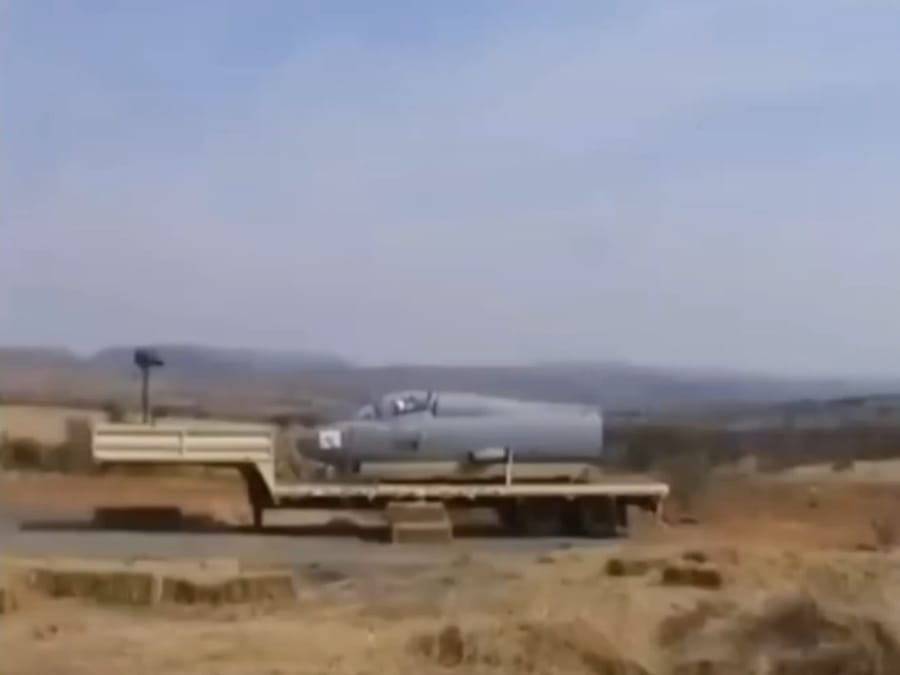
Modern seats can extract a pilot from the aircraft within seconds.
Modern seats can extract a pilot from the aircraft within seconds. (Photo: Social media)

This technology has advanced even further in fifth-generation aircraft, including the F-35. All F-35 variants are equipped with the US-16E ejection seat manufactured by Martin-Baker. According to the manufacturer, the system can provide escape capability under "zero-zero" conditions, meaning even at altitude and speed close to zero, and the seat incorporates mechanisms for head and neck protection, arm and leg restraint, oxygen supply, and survival kit.

The F-35 system also includes a rocket motor beneath the seat, in addition to the ejection mechanism, which helps propel the pilot away from the aircraft. After ejection, a small drogue parachute deploys to stabilize the pilot, followed by the main parachute. The system manages these stages through an electronic timing mechanism and automatic backup system.

Pilot training on an ejection seat
Pilot training on an ejection seat (Photo: Social media)

Even the canopy itself is not an insurmountable obstacle. In the F-35, the system includes a mechanism designed to break through the canopy during ejection, without jettisoning the entire canopy.

In the F-35B variant, which takes off and lands vertically, there is also an automatic ejection capability in case of lift fan failure, according to conditions programmed into the system.

The numbers illustrate just how advanced this system is. According to Martin-Baker, the F-35's US-16E seat is designed to operate up to a ceiling altitude of approximately 15,250 meters and a maximum ejection speed of 600 knots equivalent airspeed, and the system has already saved the lives of F-35 pilots.

Ready for more?

Join our newsletter to receive updates on new articles and exclusive content.

We respect your privacy and will never share your information.

Enjoyed this article?

Yes
No
Follow Us:

Unmissable content


Loading comments...

Also of Interest