Get our mobile app
Download on the App StoreGet it on Google Play

Jets in tunnels

Iran air base survives strikes, rebuilds

Oghab 44 base carved into Zagros Mountains houses fighter jets in tunnels • Hit multiple times in US-Israeli operation but Iran clears rubble and paves new access routes

Strikes in Iran
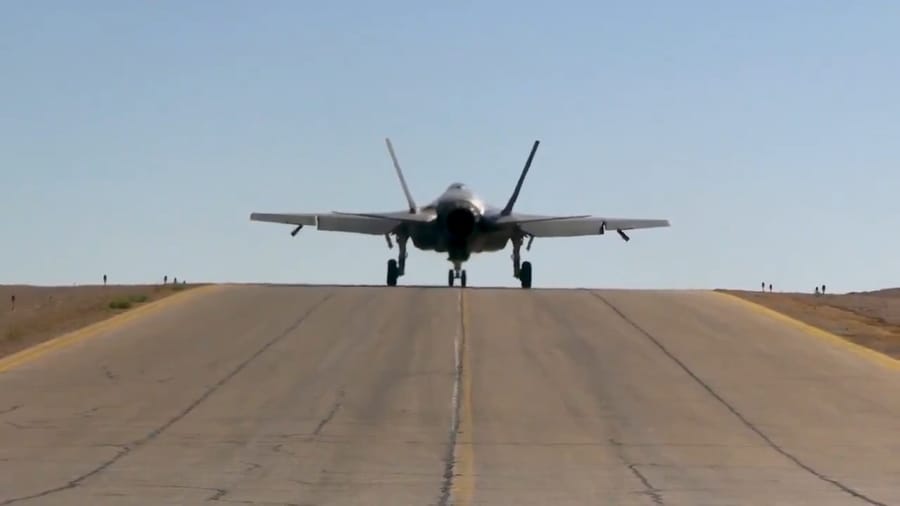
US Air Force prepares for strikes
US Air Force prepares for strikes (Photo: US Central Command)

In Hormozgan province, about 160 kilometers northwest of the Strait of Hormuz, one of Iran's most striking military installations is carved into the Zagros Mountains: Oghab 44 base. It is an underground tactical base of the Iranian Air Force, designed to protect fighter jets, drones and missiles from air strikes.

The base was first revealed in February 2023, when Iranian media showed F-4 Phantom jets standing inside wide tunnels, ready for flight. Construction began as early as 2013, when a runway about 4.3 kilometers long was paved in the valley at the foot of the mountain, and two taxiways carved through a small ridge connect it to four tunnel entrances.

The idea behind the design is simple but effective: the aircraft stay safe inside the mountain, equipped with bombs and missiles, and emerge only when needed. This is how a relatively inferior air force tries to survive against a technologically superior adversary.


Repeated strikes and constant repair

In 2026 came the real test. As part of Operation Epic Fury, the joint US-Israeli operation that began on February 28, the base was hit at least three times, in late March, mid-July, and again. The goal was clear: to sever the underground hangars from the runway, block the tunnel entrances and trap whatever was inside.

Satellite images showed craters near the entrances, damage to support structures and blockages on the runway itself. But Iran did not give up. Planet Labs images from late September 2026, analyzed by The War Zone, show a completely different picture: bulldozers cleared the rubble, blockages were removed from the runway, a central section of the western taxiway has already been paved with concrete, and preparation work is underway on the adjacent section.

Iran is effectively building an alternative access route, so it will not be dependent on just one taxiway. The move demonstrates determination to continue operating the facility despite repeated strikes.

The underground strategy

An article published in April 2026 in Defense Blog claimed that this fortification concept, protected shelters in the mountains, preserved about two-thirds of Iran's operational aircraft fleet under heavy strikes. The surviving aircraft, along with drones and missiles, are used for strikes on American bases in the region, runways, command facilities and support infrastructure.

This is how Iran raises the cost of American air activity without entering direct combat in the skies. Underground mountain shelters are not indestructible, bunker-buster bombs can collapse entrances, but they create a difficult problem for the adversary: you need to invest expensive and precise munitions, and even then you can only block temporarily.

Once there is a ceasefire, it is possible to clear, repair and rebuild. Oghab 44 proves that the mountain still beats the bomb, at least for a while. Iran is not trying to win in the skies, but to survive underground, to deter, and to continue threatening the Strait of Hormuz. Meanwhile, the bulldozers keep working.

Ready for more?

Join our newsletter to receive updates on new articles and exclusive content.

We respect your privacy and will never share your information.

Enjoyed this article?

Yes
No
Follow Us:

Unmissable content


Loading comments...

Also of Interest