Get our mobile app
Download on the App StoreGet it on Google Play

Holiday Baking

Honey Challah Recipe for Rosh Hashanah

Honey baked right into the dough and a glossy sweet glaze on top—here's how to make it with a simple kneading technique

Sweet honey challah for Rosh Hashanah

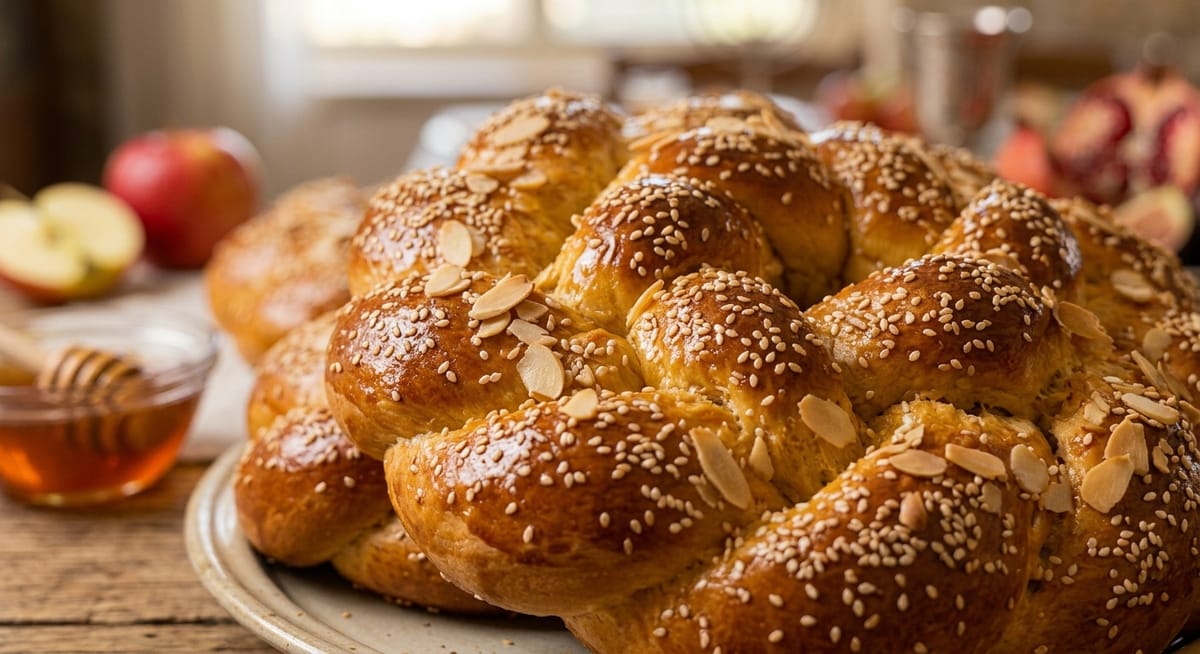
Tomorrow evening marks Rosh Hashanah 5787, and kitchens are already buzzing with preparations for the holiday table. Among the traditional honey cakes and impressive first courses, one recipe manages to give the holiday table the perfect touch: homemade honey challah, soft and golden, with a glossy glaze that turns it into a real star.

This recipe incorporates honey directly into the dough, giving the challah a delicate sweetness and wonderful texture. The special glaze—a simple mixture of honey and boiling water brushed on the challah the moment it comes out of the oven—creates a beautiful shiny layer and a fragrance that fills the house. The best part? It's much simpler than it looks.
Simple Ingredients—Everything You Need for Two Challahs

The recipe is designed to make two medium challahs and requires basic ingredients found in every home.

For the dough:

1 kg of challah flour (or regular white flour)

2 tablespoons of dry yeast

1/2 cup of quality honey

1/4 quarter cup of sugar.

2 large eggs

1/2 cup of canola oil,

1.5 - 2 cups of lukewarm water

1 level tablespoon of salt.

For brushing and glazing:

Prepare one beaten egg with a teaspoon of water, and you can add sesame seeds, poppy seeds, or sliced almonds to taste. The real secret lies in the special honey syrup: three tablespoons of honey mixed with two tablespoons of boiling water—a simple mixture that creates the incredible shine that makes the challah truly special.

Detailed Preparation Steps

Begin by kneading the dough: in a mixer bowl with a dough hook, place the flour, yeast, sugar, honey, eggs, oil, and one cup of lukewarm water.

Turn on the mixer at slow speed and gradually add the remaining water—the exact amount of water depends on the type of flour and air humidity, so it's important to add carefully until you get a uniform dough.

When the dough begins to come together, add the salt and continue kneading for another 8-10 minutes until the dough is soft, elastic, and slightly sticky to the touch.

Lightly oil the dough and the sides of the bowl, cover with a clean towel or plastic wrap, and set aside for the first rise in a warm place for about an hour and a half to two hours—the dough should double in volume. This is the stage where the yeast works its magic and creates the special airy texture.

Once the dough has risen properly, divide it into two equal parts.

For Rosh Hashanah, it's customary to make round challah symbolizing the cycle of the year and the blessing for a good and sweet year: from each portion, create long strips of dough, braid them into a regular braid and then roll the braid into a snail shape, or weave the strips in a circular warp-and-weft structure—both methods create a beautiful and impressive challah.

Perfect Baking and Glazing

Place the shaped challahs on a baking sheet lined with parchment paper, cover with a light towel, and set aside for a second rise of about 40 to 50 minutes. This rise is essential—it allows the dough to recover from shaping and reach the ideal texture before baking. Meanwhile, preheat the oven to 180 degrees Celsius.

When the challahs have finished their second rise, gently brush them with the beaten egg—gentle movements so as not to damage the volume—and sprinkle sesame seeds, poppy seeds, or sliced almonds on top to taste.

Bake for 25-30 minutes, until the challahs acquire a beautiful golden-brown color, including on the bottom. To check, you can gently lift the challah and verify that the bottom has also browned properly.

And here comes the real secret: immediately when the challahs come out of the oven, while they're still hot, brush them with the honey and boiling water mixture. This glaze is absorbed into the hot challah and creates a rich glossy layer, a wonderful honey fragrance that fills the house, and a delicate sweetness that makes the challah truly special. The result: golden honey challah, soft and sweet in just the right measure, that will be the real star of the holiday table.

Important tip: if you have leftover challah after the holiday, don't throw it away, you can make wonderful baked goods from it or freeze it for later use. Shanah tovah u'metukah!

Ready for more?

Join our newsletter to receive updates on new articles and exclusive content.

We respect your privacy and will never share your information.

Enjoyed this article?

Yes
No
Follow Us:

Unmissable content


Loading comments...

Also of Interest