NASA Finds "Bathtub Ring" on Mars
Using topographical data collected by NASA’s Mars Global Surveyor, researchers detected a band of landforms in the planet’s northern lowlands that appear consistent with the contours of an ancient ocean boundary. The formation is being compared to the residue left behind by receding water in a bathtub, marking where the surface of a large body of water may once have stood.
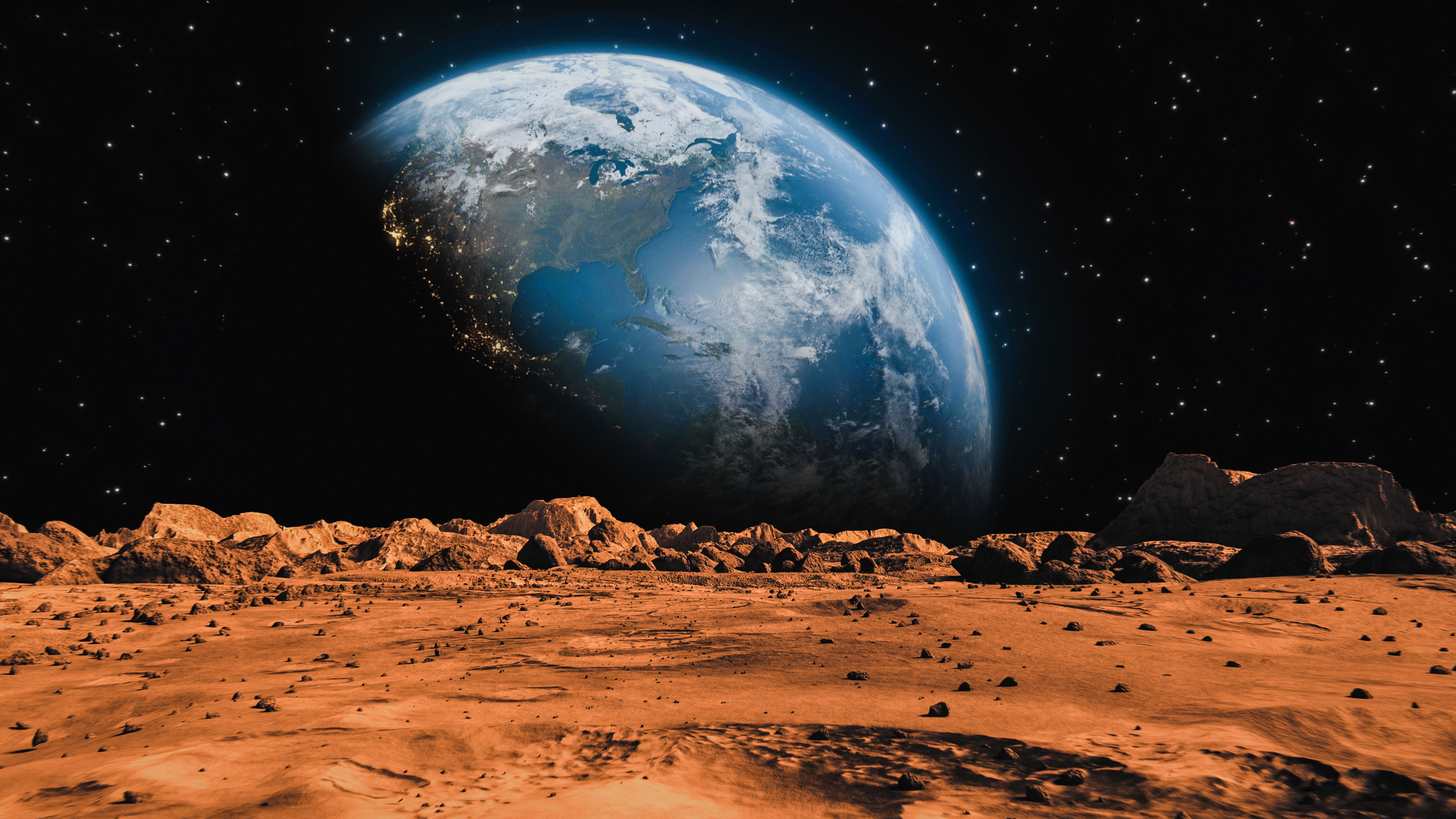
Scientists have identified new evidence suggesting that Mars may once have hosted a vast ocean, based on geological features resembling a shoreline “bathtub ring,” according to a study published in Nature.
Using topographical data collected by NASA’s Mars Global Surveyor, researchers detected a band of landforms in the planet’s northern lowlands that appear consistent with the contours of an ancient ocean boundary. The formation is being compared to the residue left behind by receding water in a bathtub, marking where the surface of a large body of water may once have stood.
The findings add to longstanding evidence that liquid water existed on Mars billions of years ago, though the existence of a large, long-lived ocean has remained debated. Scientists believe that early in its history, roughly 3.7 billion years ago, Mars had a warmer climate and an active water cycle, with rivers and lakes feeding into larger bodies of water.
The newly identified “coastal shelf” may have formed over millions of years as sediment from rivers accumulated along the edge of an ocean, shaped by waves and shifting water levels. Unlike Earth, Mars lacks plate tectonics, so researchers refer to these features as a coastal shelf rather than a continental shelf.
The study’s authors say that if confirmed, the formation strengthens the case for a northern Martian ocean that may once have covered up to one-third of the planet’s surface.
Additional evidence supporting this theory includes previously identified river deltas and radar data from China’s Zhurong rover, which suggested the presence of buried sandy beaches.
Researchers caution that interpreting Martian geology is challenging due to billions of years of volcanic activity and erosion. However, the alignment of multiple features in the same region supports the hypothesis of a long-lived ocean.
The existence of such an ocean would have significant implications for understanding Mars’s past habitability, as stable, widespread water is considered a key condition for the development of life.