Get our mobile app
Download on the App StoreGet it on Google Play

History

Hasidic Leaders' White House History

As senior rebbes prepare to meet President Trump, a look back at pivotal encounters between Hasidic leadership and American presidents, from Jimmy Carter during the Iran hostage crisis to Bill Clinton's controversial clemency decision

Admorim and rebbes visiting US president

Hasidic communities worldwide are watching closely as a delegation of senior rebbes and spiritual leaders from the United States prepares to meet with President Donald Trump this week.

While visits to the White House always generate excitement, a review of historical records reveals this is far from the first time Hasidic leadership has traveled to Washington to represent Jewish interests at the highest levels of American government. These encounters have occasionally produced some of the most dramatic and consequential moments in U.S. political history.

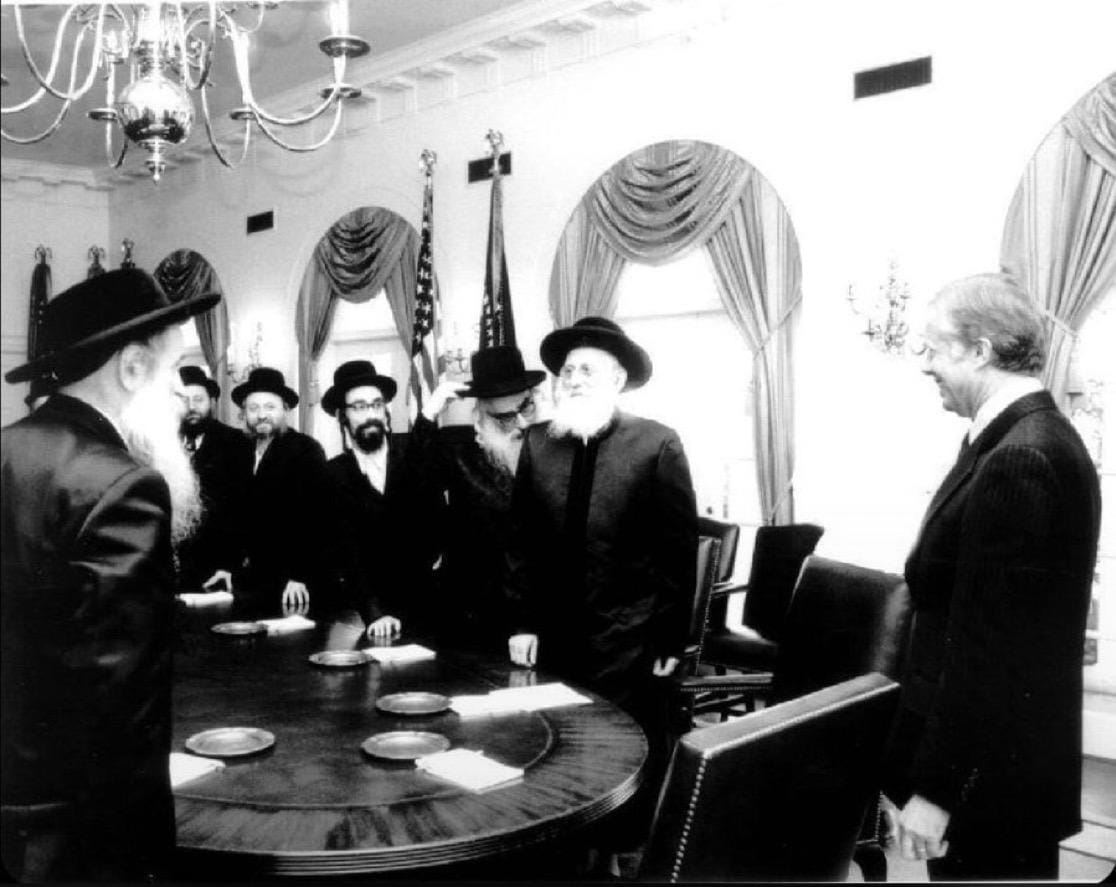
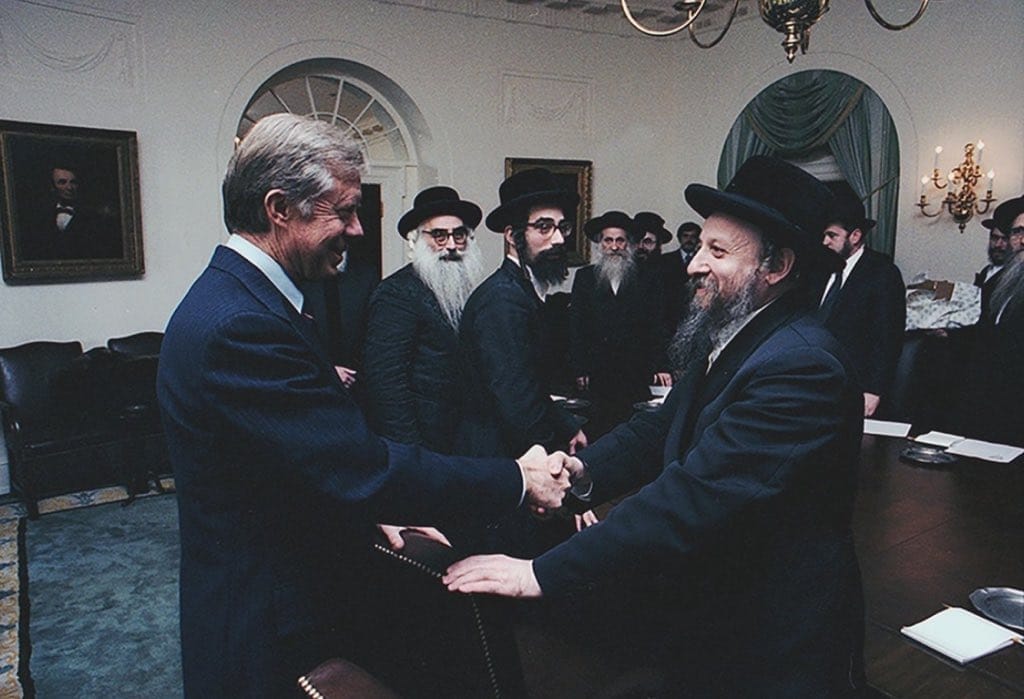
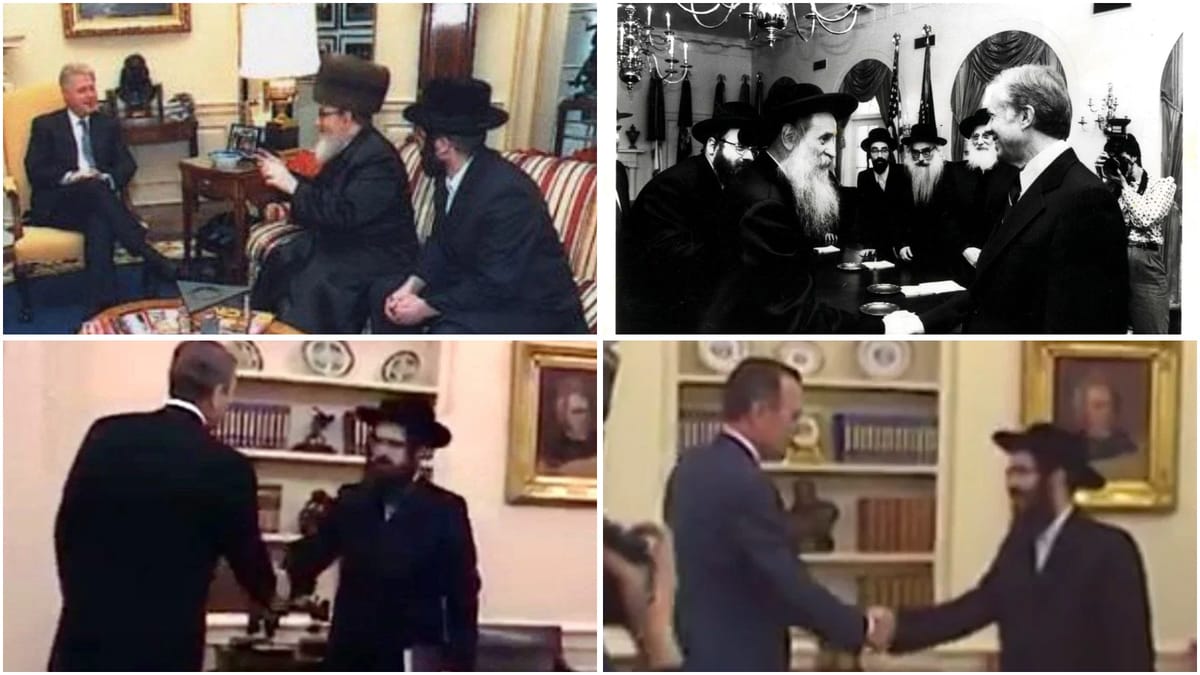
A significant meeting took place on the fourth night of Hanukkah in December 1979. Organized jointly by the Rabbinical Alliance of America and Canada and the White House, the gathering marked the first time a group of Hasidic leaders held a formal discussion in the Oval Office with a sitting president—in this case, Jimmy Carter.

The delegation was led by three prominent rebbes: the Satmar Rebbe, known as the Berach Moshe; the Bobover Rebbe; and the Vizhnitzer Rebbe of Monsey. The Satmar Rebbe opened the meeting with words of blessing, while the Bobover Rebbe recited a special prayer for the welfare of the government in Hebrew. They were accompanied by the sons of the Bobover and Vizhnitzer rebbes, as well as community activists Rabbi Sander Deutsch and Rabbi Ephraim Stein, who served as translator.

The historic visit had four main objectives. The meeting occurred during the Iran hostage crisis, with American diplomats held captive in Tehran. The rebbes sought to publicly express support for President Carter's measured approach aimed at preventing bloodshed, and they offered prayers for the hostages' safe release.

The delegation also raised practical concerns about improving conditions for Jewish inmates in federal prisons, requesting access to kosher food, religious articles, and the ability to observe Shabbat and Jewish holidays according to religious law.

The rabbis additionally thanked the president for his role in architecting the Camp David Accords and the peace treaty between Israel and Egypt, which had prevented further wars in the Holy Land.
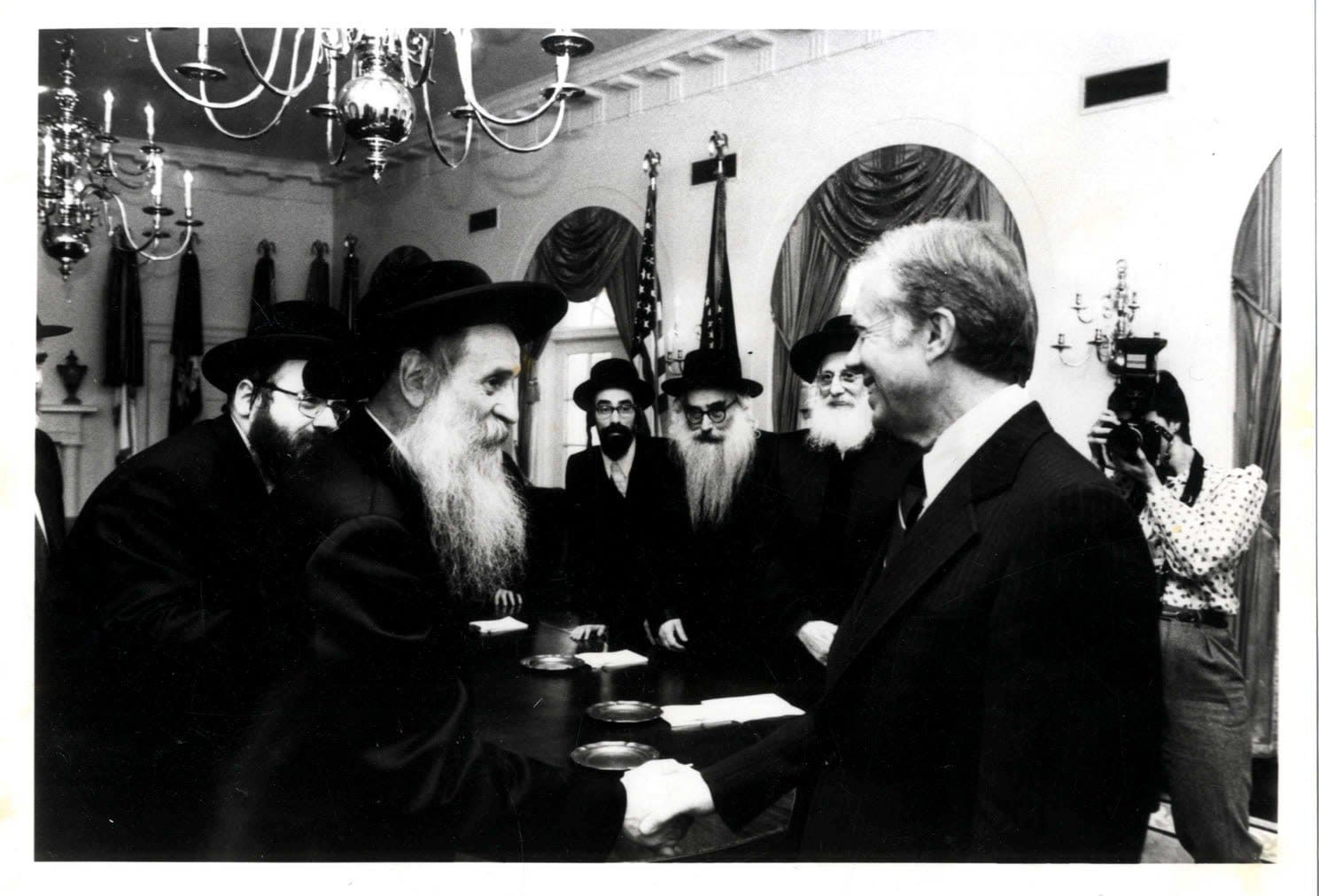
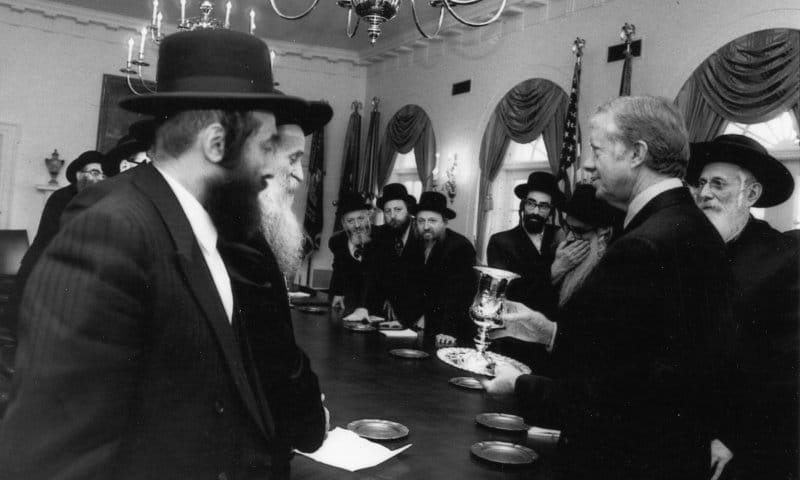
Admorim and rebbes visiting US president Carter
Admorim and rebbes visiting US president Carter (The White House)
Admorim and rebbes visiting US President Carter
Admorim and rebbes visiting US President Carter (The White House)
Admorim and rebbes visiting US president Carter
Admorim and rebbes visiting US president Carter (The White House)
Admorim and rebbes visiting US president Carter
Admorim and rebbes visiting US president Carter (The White House)

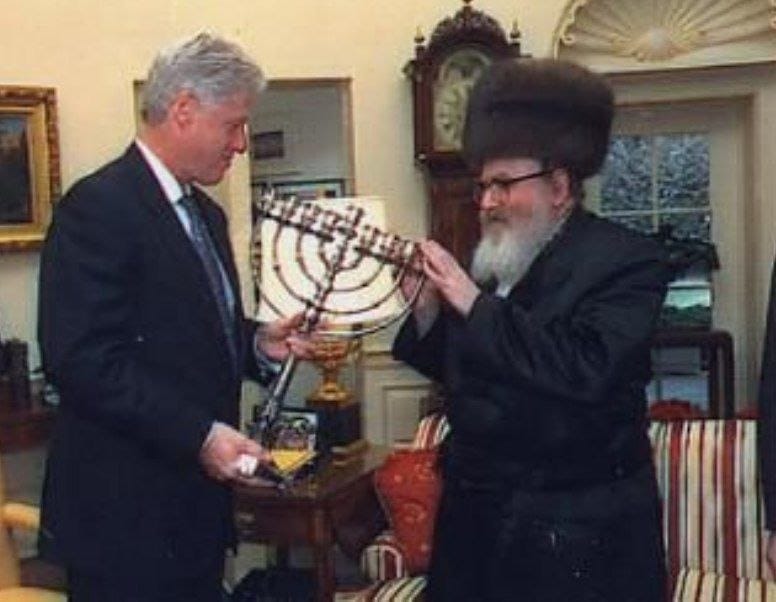
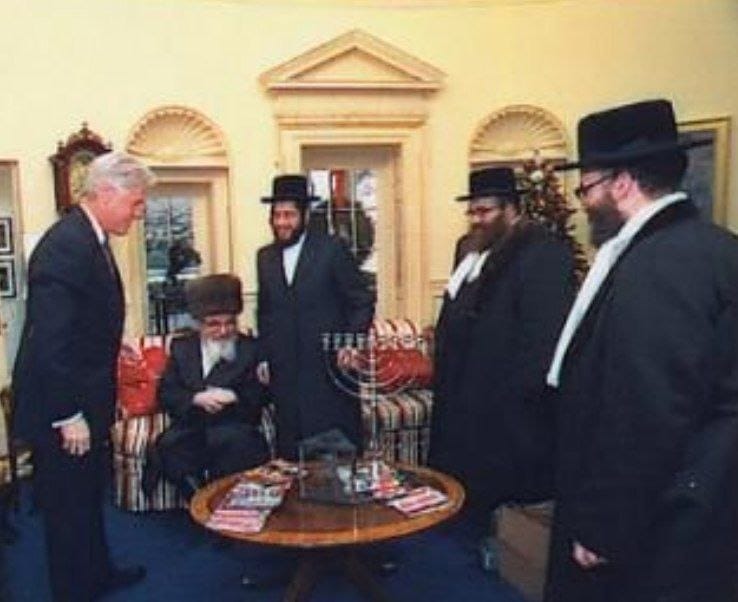
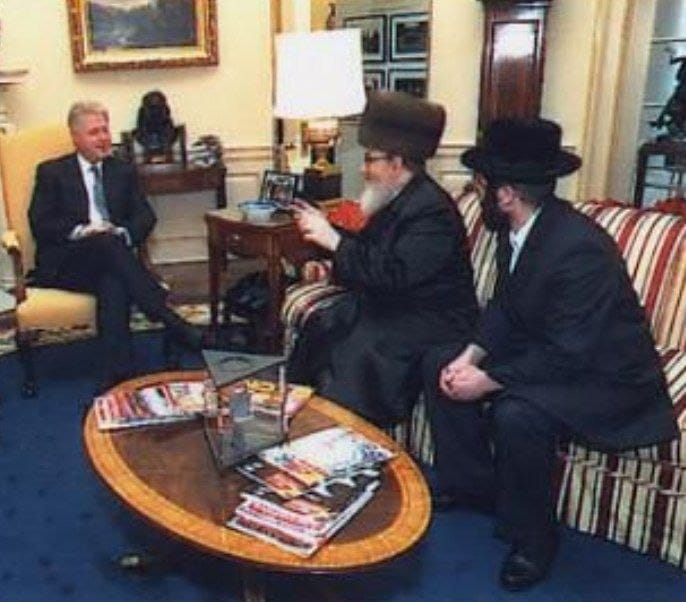
Another famous and widely covered event occurred on the Friday before Hanukkah in December 2001. Like its predecessor, this meeting also took place during Hanukkah, but it carried a far more dramatic and focused character. The Skverer Rebbe traveled to the White House for a private meeting with President Bill Clinton, seeking to fulfill the religious commandment of redeeming captives on behalf of four Skver Hasidim from the village of New Square, New York.

The four men had been convicted in 1999 of defrauding federal student aid programs, diverting funds to Hasidic institutions, and were serving lengthy prison sentences.

The Rebbe was accompanied by his sons, Rabbi Aharon Mendel and Rabbi Yitzchak Twersky, along with the mayor of New Square and community activist Rabbi Yisroel Moshe Spitzer.

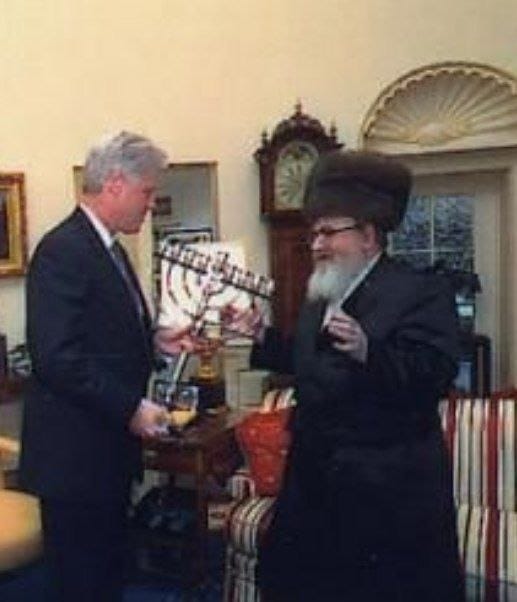
A unique scene unfolded when the Rebbe entered the Oval Office wearing the traditional kolpik fur hat, customary for his family during Hanukkah, and presented President Clinton with a special gift: an ornate silver menorah.

The meeting sparked enormous public controversy in the United States. On his final day in office, January 20, 2001, President Clinton signed commutations reducing the sentences of the four Hasidim, who were immediately released from prison. Critics alleged the move was a political quid pro quo, noting that just one month before the meeting, the president's wife, Hillary Clinton, had run for U.S. Senate from New York and received nearly unanimous support from New Square residents.

Following the uproar, federal authorities opened a formal investigation, during which Hillary Clinton herself testified. Ultimately, the case was closed without suspicion or indictments after investigators found no evidence of an illegal connection between the electoral support and the clemency grant.

Skverer Rebbe visists Bill Clinton
Skverer Rebbe visists Bill Clinton (The White House)
Skverer Rebbe visits US president Clinton
Skverer Rebbe visits US president Clinton (The White House)
Skverer Rebbe vists Clinton
Skverer Rebbe vists Clinton (The White House)
Skverer Rebbe visits Clinton
Skverer Rebbe visits Clinton (The White House)
Skverer Rebbe visits Clinton
Skverer Rebbe visits Clinton (The White House)
Skverer Rebbe visits Clinton
Skverer Rebbe visits Clinton (The White House)

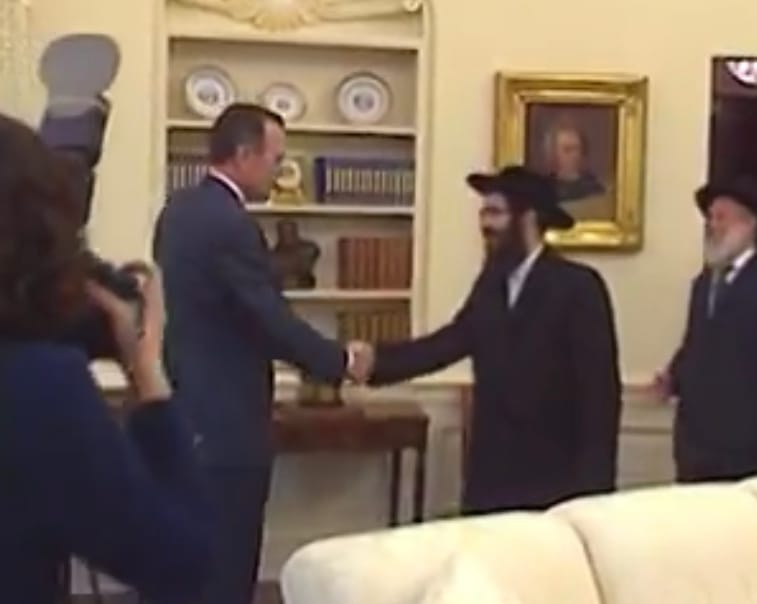
The current Satmar rebbes, who lead separate branches of the movement, also met with U.S. presidents on communal matters before assuming leadership of their respective communities.

Observers are curious to see which issues will be addressed this time and what impression the Hasidic leadership will leave on the current American administration.

Satmar Rebbe meets US president
Satmar Rebbe meets US president (The White House)
Satmar Rebbe meets US president
Satmar Rebbe meets US president (The White House)
Satmar Rebbe meets US president
Satmar Rebbe meets US president (The White House)
Ready for more?

Join our newsletter to receive updates on new articles and exclusive content.

We respect your privacy and will never share your information.

Enjoyed this article?

Yes (30)
No (1)
Follow Us:

Unmissable content


Loading comments...

Also of Interest