Some criminal mysteries are solved in ways no investigator could ever plan. That's exactly what happened in France in 1926, when a Paris hotel chambermaid named Suzanne Schiltz found an apple inside a guest's suitcase and decided, out of hunger, to take a bite. Instead of soft fruit flesh, her teeth suddenly struck something extremely hard. Hidden inside the apple was a rare pink diamond that was at the center of one of France's biggest heist cases at the time.
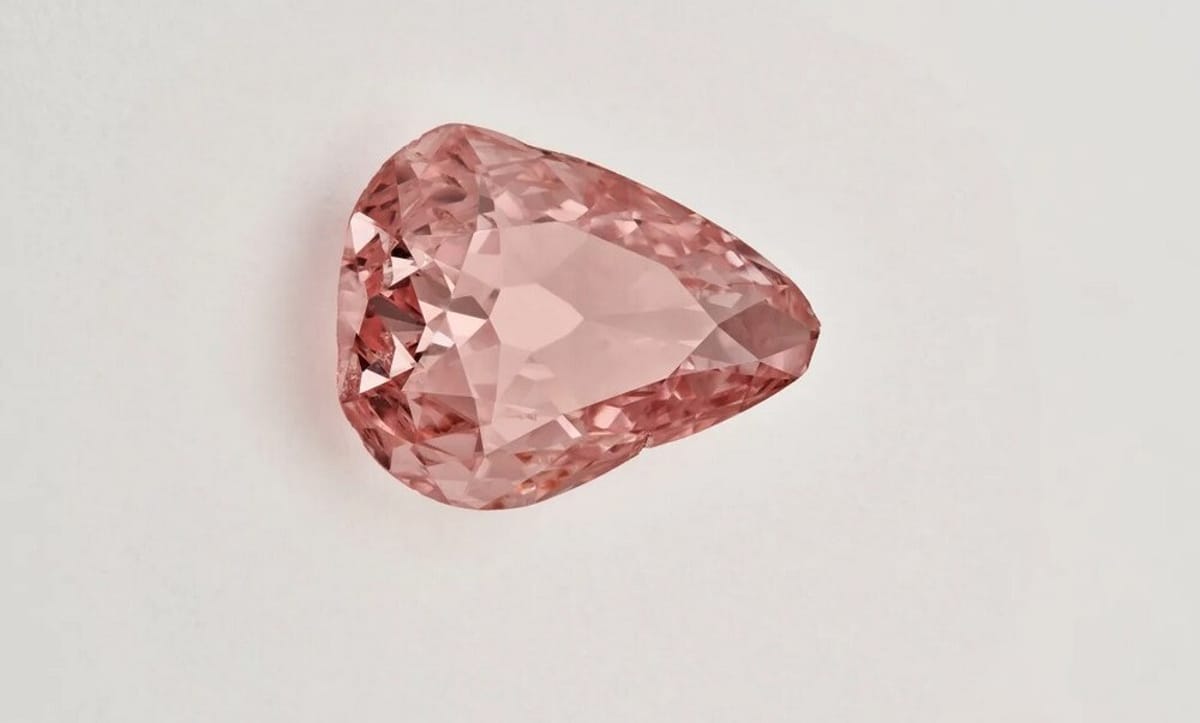
The stone in question is the Grand Condé, a 9.01-carat pink diamond considered one of the historic treasures of the Condé Museum at the Château de Chantilly, about 30 miles north of Paris. The diamond has been documented in the collections of the Princes of Condé since at least the 18th century and is considered exceptional not only for its color but also for its long history.
On the night of October 11–12, 1926, two young men, Léon Kaufer and Émile Sauteur, managed to break into the château museum. The pair were not professional burglars as police initially suspected, but young men who pulled off the break-in using ladders in a fairly straightforward operation. Dozens of jewelry items and valuables were stolen from the château, including the famous pink diamond. The total haul was valued at approximately three million dollars at the time, an enormous sum in that era.
But the thieves' great success quickly became a problem. Some of the jewelry pieces were too famous and recognizable, and dealers were afraid to go near them. The problem was especially acute with the Grand Condé. Nearly everyone in the French gem trade knew how to identify the diamond, making it extremely difficult to sell without arousing suspicion.
In an attempt to hide the stone, it was buried inside an apple kept in a suitcase at the hotel. And that's when the chambermaid entered the picture.
Schiltz, who was cleaning the room, saw the apple, coveted it, and decided to eat it. The first bite nearly cost her a broken tooth. When she examined what was hidden in the fruit, a pink, polished object was revealed inside. Suspicion was quickly aroused, the stone was examined, and it turned out to be the diamond stolen from the Château de Chantilly. The discovery helped police reach the suspects and crack the case.
A newspaper from that period even described an amusing exchange between one of the suspects and his interrogators. The officer asked him if he liked apples. When the suspect asked why, the investigator hinted that the apple found among his belongings had hidden an unusually exceptional "seed" inside.
Now, a century after the heist that became part of local folklore, the diamond is returning to center stage. The Condé Museum at the Château de Chantilly has announced that the Grand Condé will be displayed as part of a special exhibition opening on October 17, 2026. This will be the first time in nearly a hundred years that the stone will be shown to the public again.
In preparation for the exhibition, the diamond has also undergone a series of gemological tests and scientific research designed to examine its composition, density, clarity, and unique properties. One of the goals is to create a kind of scientific "identity card" for the stone, which will allow it to be identified even if it is stolen in the future and undergoes cutting or reshaping.
And so, a hundred years after one of France's most famous diamonds nearly disappeared forever, its story is still remembered primarily thanks to a detail none of the thieves could have anticipated: a hungry chambermaid, one apple, and a bite that happened to become the solution to a massive heist mystery.