Get our mobile app
Download on the App StoreGet it on Google Play

The Chariots of Lchashen

Soviet dam reveals 3,500-year-old necropolis

When Moscow drained Lake Sevan for hydroelectric power, the water level dropped and exposed what had been hidden for millennia: a Bronze Age burial ground with hundreds of tombs, fortifications, and six wooden chariots built to carry the dead into the next world

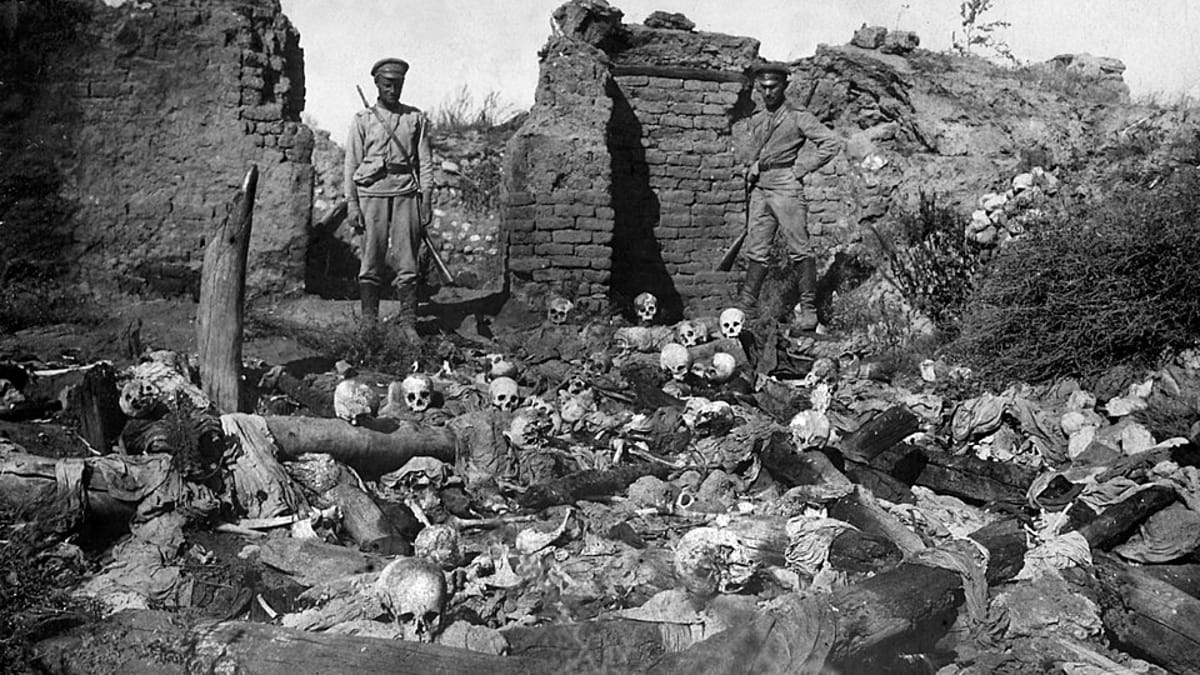
Russian soldiers photographed in the Armenian village of Sheykhalan, also known as Sheykhsalan, during the Armenian Genocide.

In the early 19th century, the great powers were expanding at speed. The age of empires had returned in force, but since the earth itself does not grow, every gain came at the expense of smaller, weaker states.

Armenia, familiar to all of us, was divided between two empires. Parts of Armenian territory were under Ottoman rule, while the eastern regions, including Yerevan and Lake Sevan, were controlled by the Persian Empire.

At that time, Tsarist Russia began pushing south into the Caucasus. Moscow saw the region as strategically vital: it bordered both the Ottoman and Persian empires, and control of the area gave Russia a foothold on the road to the Middle East.

In the Russo-Persian War of 1804 to 1813, Russia succeeded in seizing vast territories in the Caucasus. For nearly a century afterward, eastern Armenia remained under Tsarist Russian rule.
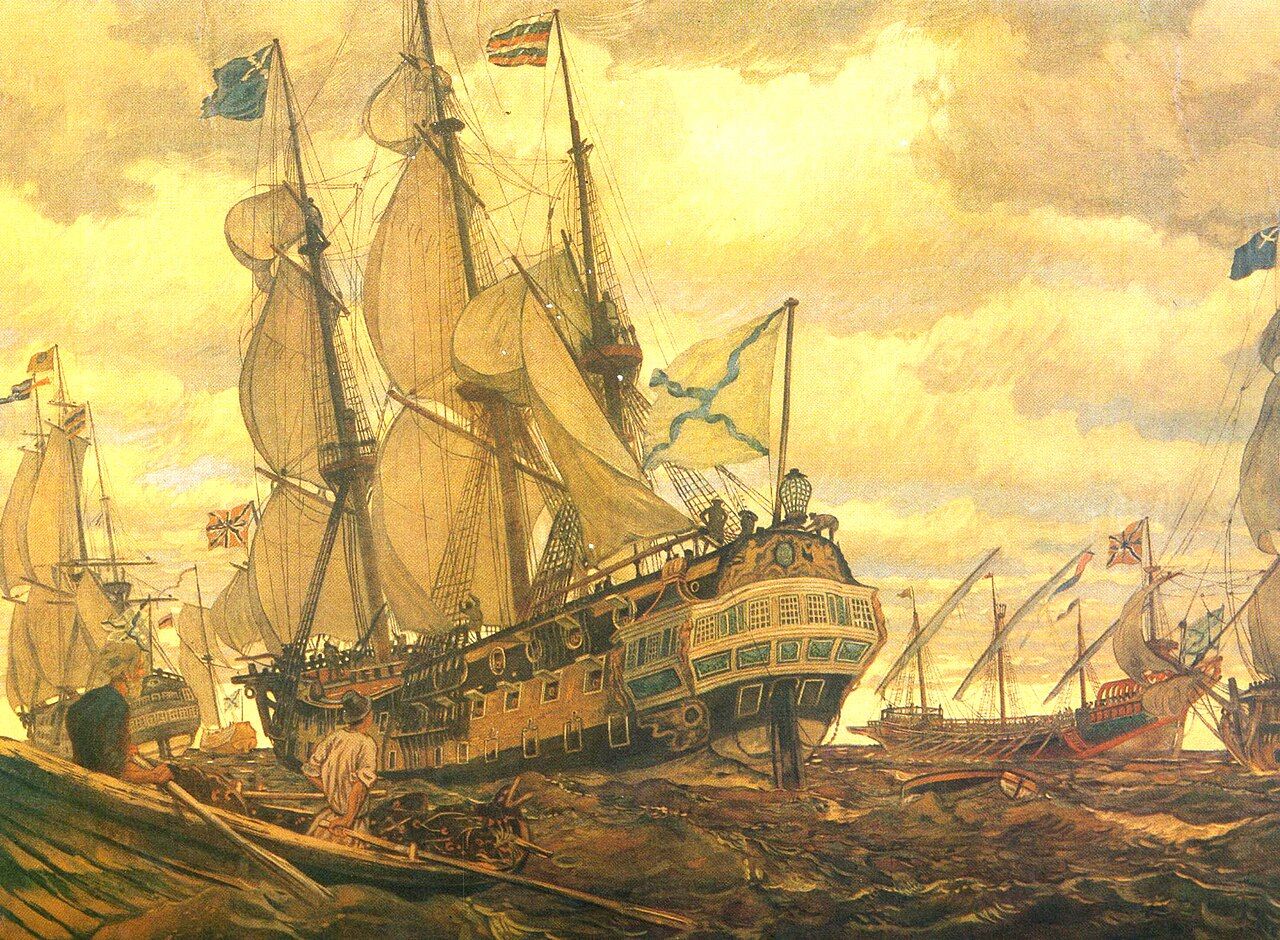
The Russian fleet of Peter the Great in the Caspian Sea

In 1917, the Russian Empire collapsed. Tsar Nicholas II was deposed, and later that year the Bolsheviks under Vladimir Lenin seized power in Petrograd. The chaos in Russia immediately affected the Caucasus, and in 1918 Armenia declared independence and established the First Republic of Armenia.

The young republic was surrounded by enemies, suffered from economic crisis and shortages, and at the same time faced the aftermath of the First World War and violent struggles in the Caucasus. In the autumn of 1920, Turkish forces began advancing into Armenia. The Armenian army struggled to stop them, and pressure from the Bolsheviks mounted in parallel.

In the end, in December 1920, the Armenian Soviet Socialist Republic was established, and Armenia re-entered the Russian sphere, this time under the red flag.

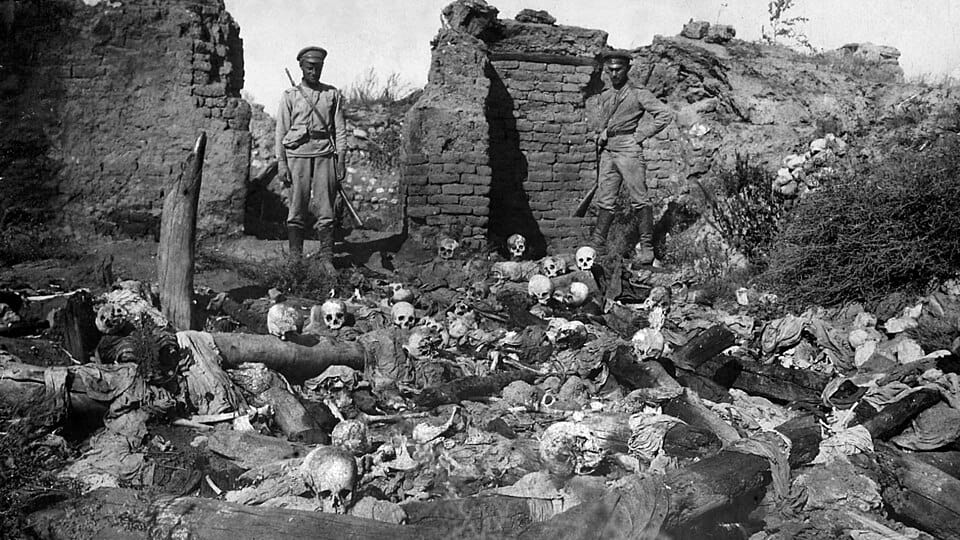
Russian soldiers photographed in the Armenian village of Sheykhalan, also known as Sheykhsalan, during the Armenian Genocide.

Archaeology, Soviet Style

In the years that followed, the region changed rapidly. Soviet rule was not content with political control. It sought to transform Armenia into part of an industrialised, centrally planned economic system: factories, roads, power stations, irrigation systems and large-scale agriculture.

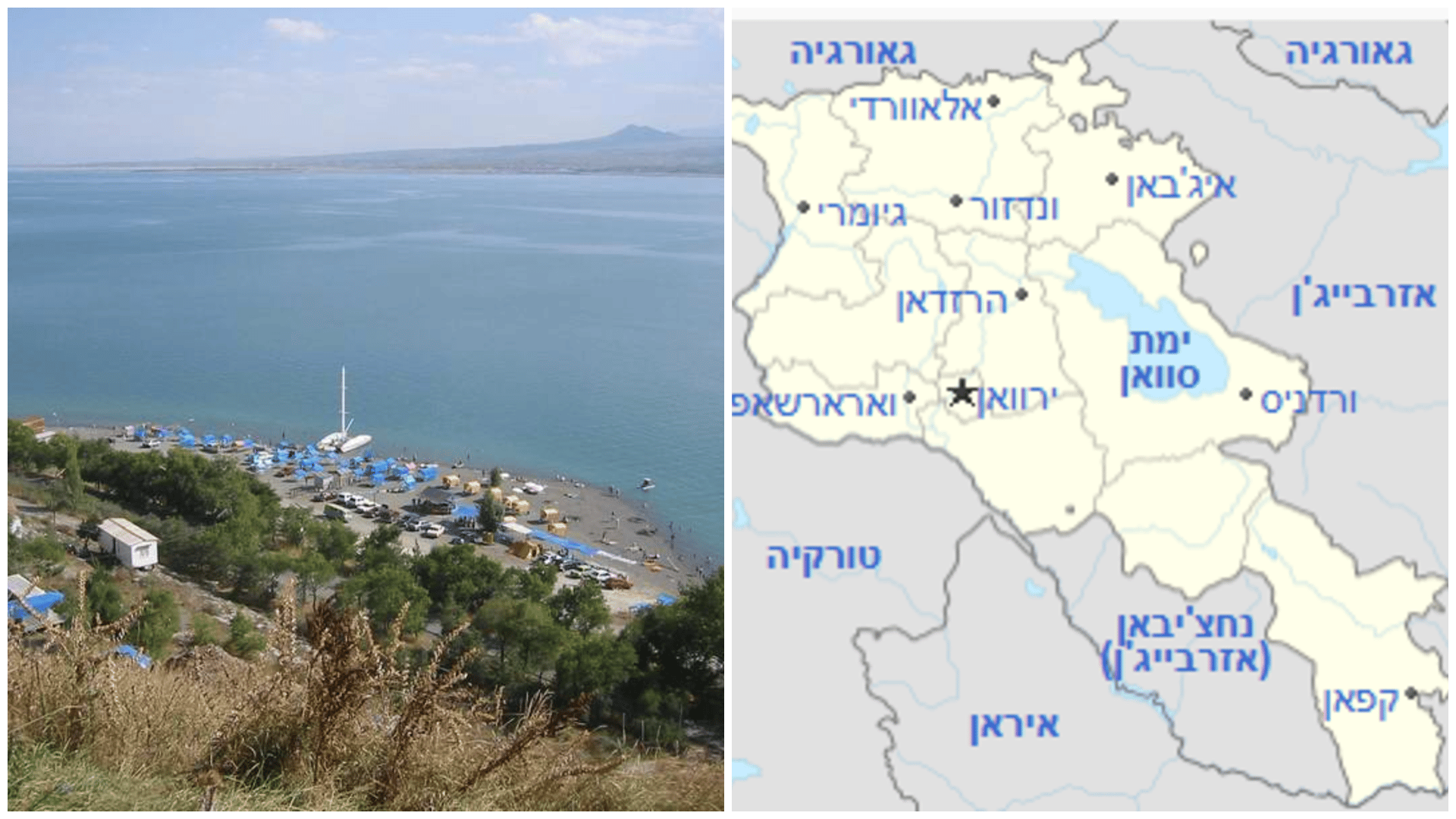
In the heart of the Armenian plateau, at an altitude of nearly 2,000 metres, lay one of the largest and most important water reserves in the region. Lake Sevan is the largest lake in Armenia, and its waters were an enormous resource — but to Soviet engineers, they were also an untapped resource.

They began planning how to draw water from the lake, channel it through a system of tunnels and canals, use it to generate electricity and irrigate agricultural land. In 1933, the first stage of the system came into operation, designed to exploit the waters of Sevan via the Hrazdan River, which flows out of the lake toward Yerevan.

What the Soviet engineers did not know was that beneath those waters, in the Lchashen area, a secret thousands of years old was waiting to be revealed.

Lake Sevan
Lake Sevan

Who were the people who lived in the Lchashen area some 3,500 years ago? For generations, the question remained almost unanswered. The society that lived around Lake Sevan in the Bronze Age had vanished from the pages of history.

Then came the moment of exposure. As the water level of Lake Sevan dropped as a result of the Soviet project, areas that had been hidden for hundreds and thousands of years began to be revealed. Near the village of Lchashen, a large archaeological site was gradually uncovered, at its centre an ancient cemetery. As the lake level fell, some 430 burial structures and 31 burial mounds were exposed.

When researchers began to dig, they realised they were looking at far more than graves. Lchashen is in fact a complete archaeological complex: a cemetery, settlement remains, an ancient fortress and the infrastructure of an ancient city. Researchers even found planned streets and buildings indicating a significant settlement.

The excavations uncovered hundreds of Bronze Age graves, containing human remains alongside a wide variety of objects buried with them. Some of the graves were relatively simple, but others were far richer, and the gap between them provided researchers with an important clue: the society that lived here had a clear social structure, with individuals of far greater status and wealth than others.

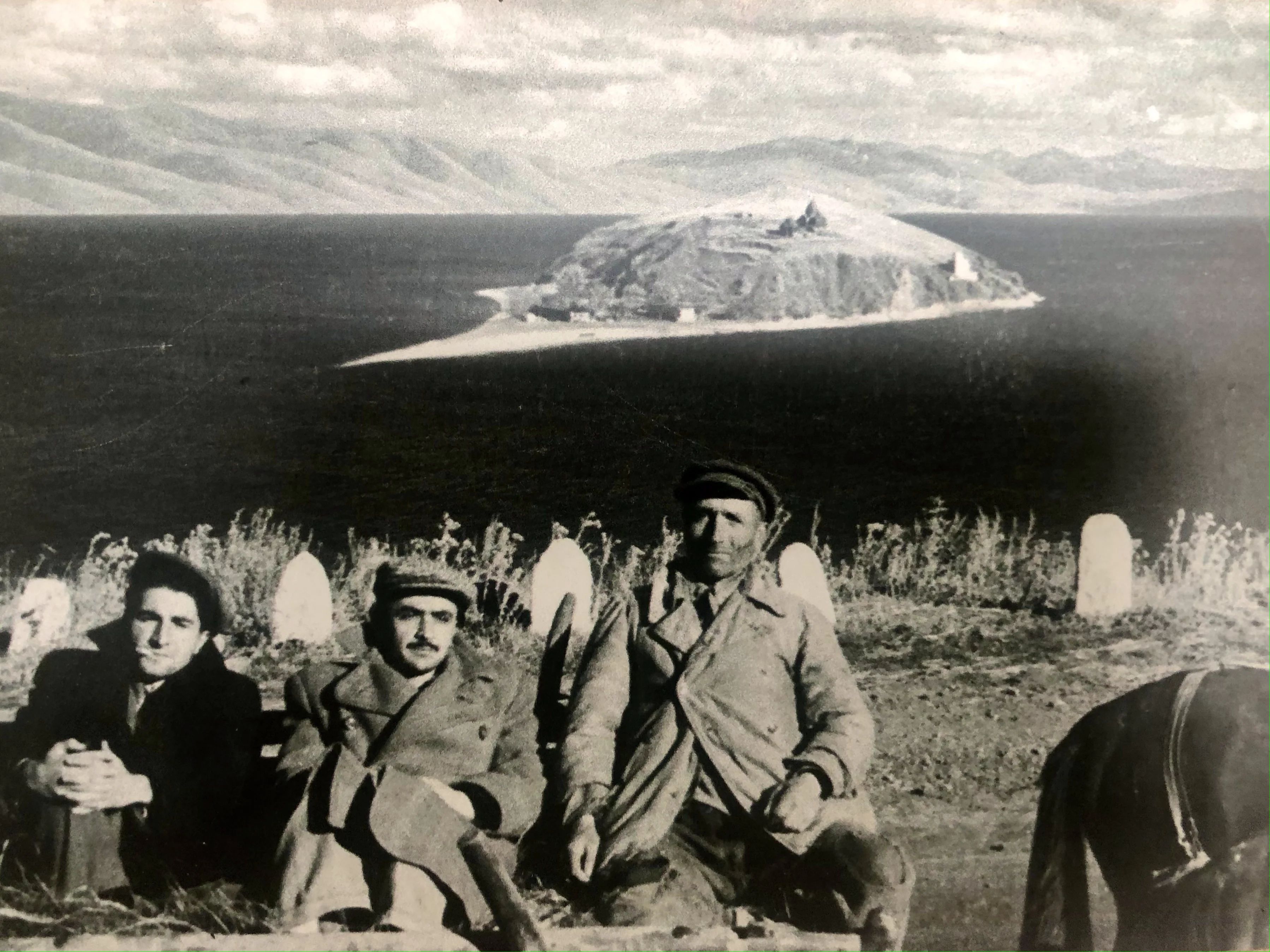
Russian writers rest opposite Sevan Island (1930s), Lake Sevan, Armenian Soviet Socialist Republic.

Inside the graves were found pottery, bronze vessels, weapons, jewellery, beads, figurines and other finds. Alongside the human remains were also animal bones, evidence of burial customs and the importance the people of the period attached to offerings placed beside the dead.

The graves also provided a glimpse into the way of life of the vanished society. The weapons testified to warriors, the jewellery and bronze vessels pointed to skilled craftsmen and trade connections, while the particularly rich graves testified to the existence of a local elite.

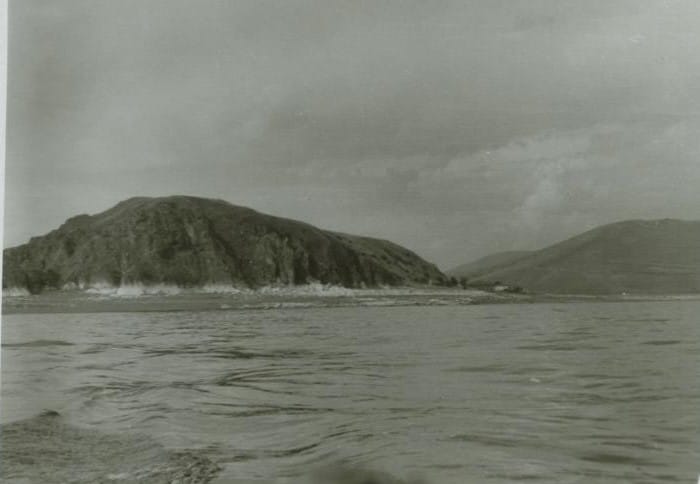
Lake Sevan in the 1950s

Chariots to Paradise

But among the graves and objects uncovered were also finds of an entirely different kind.

Finds that would surprise archaeologists not because of the gold or weapons they contained, but because of what they revealed about the technological capability of the people who lived here some 3,500 years ago.

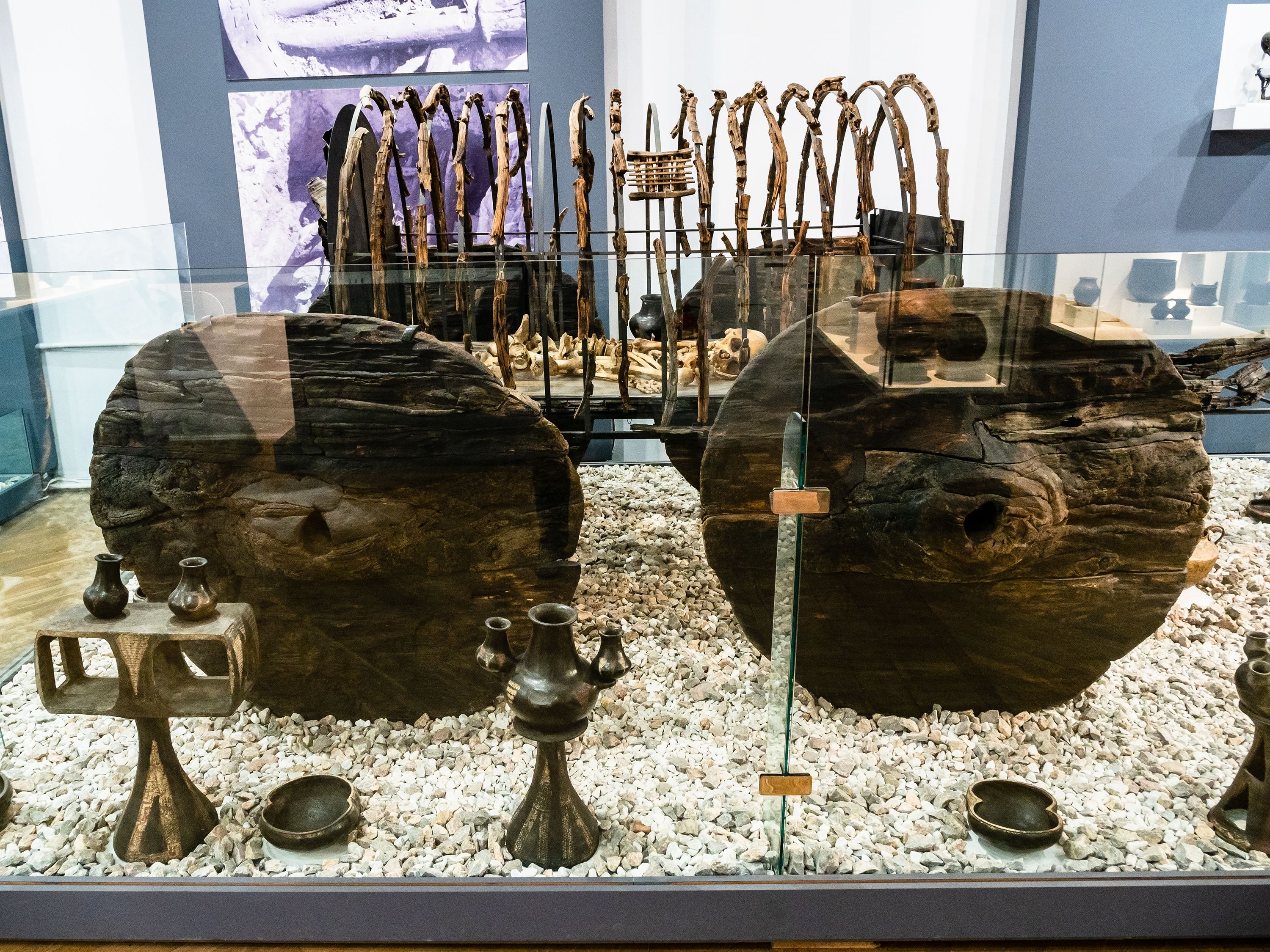
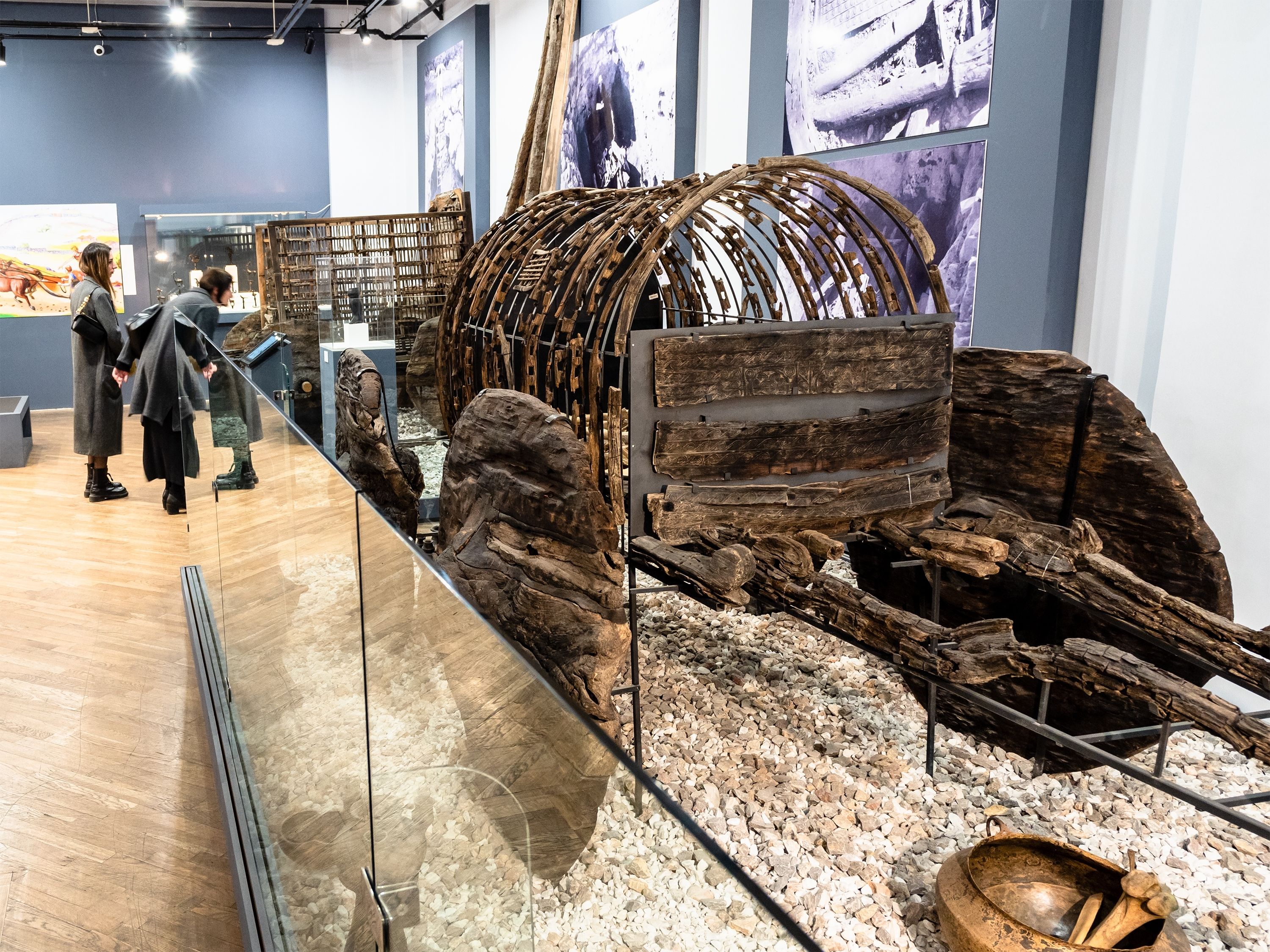
Inside some of the richest graves at the site, six wooden chariots were discovered. These were not merely decorative objects or small models, but vehicles made of wood and buried alongside human beings in the Bronze Age.

Their construction is particularly impressive. One of the chariots was assembled from more than 70 wooden parts, joined together using advanced carpentry techniques, including mortise and tenon joints. Additional parts were reinforced with bronze components. Four of the chariots also included an arched frame, which was apparently covered with leather or cloth, effectively turning them into covered carriages.

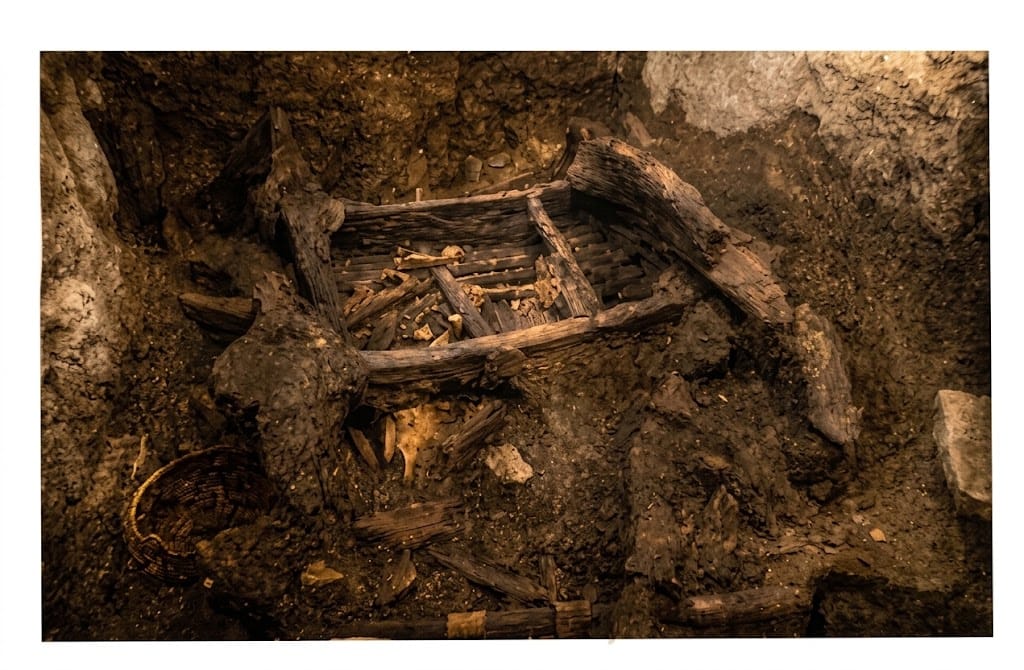
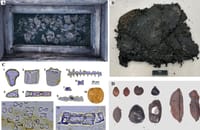
Remains of a wooden cart — this is the original excavation photograph of the wooden cart

But the chariot itself concealed a secret. When researchers examined the wooden parts that had been preserved for thousands of years, it turned out that they had not used a single type of wood for the entire chariot. On the contrary: different parts were built from different types of wood, according to the function required of them.

The wheel, the axle, the pole and the frame parts required different properties. Some parts had to withstand heavy loads, others needed to be flexible, and still others rigid and durable over time. The ancient builders knew how to select the appropriate raw material for each one and assemble from it a complex and precise vehicle.

For archaeologists, this was further evidence that this was not simple carpentry. Behind the chariots stood practical knowledge accumulated over generations, deep familiarity with the properties of wood, and engineering capability that made it possible to join dozens of parts into a functioning vehicle.

The covered chariots in the museum in Armenia
The covered chariots in the museum in Armenia (Photo: Shutterstock)

But perhaps most astonishing is not the way the chariots were built, but the fact that they survived at all.

Wood does not usually survive thousands of years. It rots, decomposes and disappears. In the case of Lchashen, the burial conditions helped preserve the wood from decay. When the chariots were buried, the oxygen-poor environment significantly slowed the decomposition processes, and so the wooden parts survived for some 3,400 years.

Researchers believe that the very burial of the chariots alongside members of the elite may be connected to belief in the afterlife. According to one interpretation, the chariot was not perceived only as a means of transport that served the person in his lifetime, but also as a vehicle meant to accompany him after death, on the journey to the next world.

The chariots in the museum in Armenia
The chariots in the museum in Armenia (Photo: Shutterstock)

The fact that the chariots were buried together with the dead, equipped and ready for use, may indicate that the people of the period believed that the objects they needed in their lives would continue to serve them even after death.

In a place where for generations people saw only water, one of the most impressive testimonies to the engineering capability of people who vanished from history was revealed, wise as they were, they did not grasp that "when he dies he will take nothing; his glory will not descend after him."

Ready for more?

Join our newsletter to receive updates on new articles and exclusive content.

We respect your privacy and will never share your information.

Enjoyed this article?

Yes
No
Follow Us:

Unmissable content


Loading comments...

Also of Interest