Antisemitism Rears Its Ugly Head
Disgusting Tattoo Artist Says Gaza is The New Auschwitz
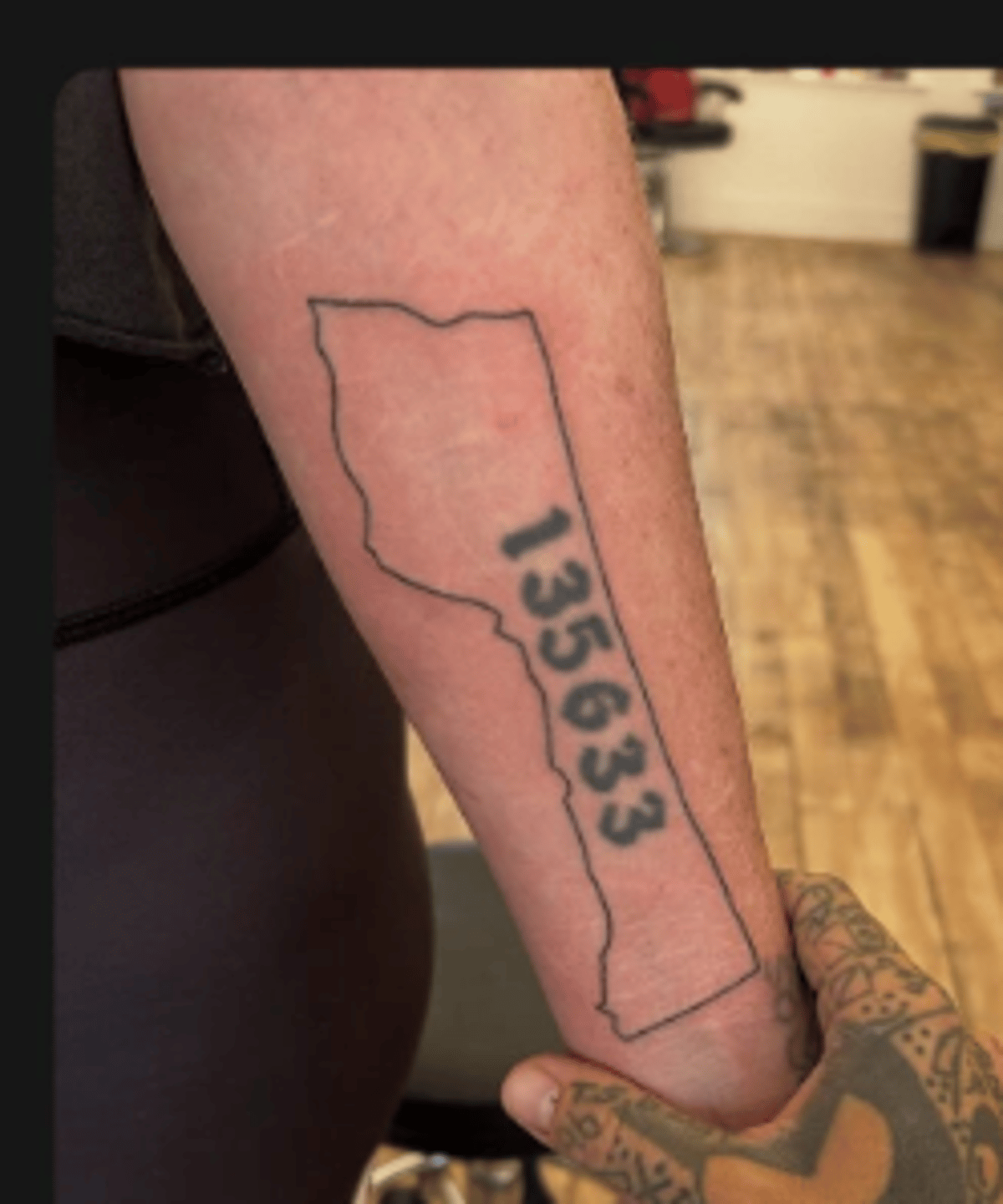
A controversial tattoo merging the Gaza Strip with Auschwitz survivor Yehiel De-Nur’s prisoner number 135633 has sparked outrage online, with critics denouncing it as Holocaust distortion and a politicized appropriation of Jewish suffering amid the ongoing Gaza conflict.

A provocative tattoo design featuring the outline of the Gaza Strip encircling the Auschwitz prisoner number 135633 has ignited fierce backlash online, with critics decrying it as a blatant distortion of Holocaust history for political activism. The image, which surfaced on social media earlier this week, depicts the infamous concentration camp identification number, originally inked on Jewish survivor and author Yehiel De-Nur, integrated into a map-like silhouette of the Gaza enclave, drawing accusations of equating Nazi atrocities with Israel's ongoing military operations in the region.
The tattoo belongs to an unnamed individual who already had the number 135633 etched on their arm as a personal tribute to De-Nur, known by his pen name Ka-Tzetnik 135633. De-Nur, a prominent Holocaust chronicler whose works like House of Dolls exposed the horrors of Auschwitz, collapsed during his 1961 testimony at Adolf Eichmann's trial in Jerusalem, overwhelmed by the weight of his memories.
The tattoo artist, whose shop has been fundraising for Gaza aid, added the Gaza outline around the existing number, framing it as a "statement piece" in solidarity with Palestinians amid the war.
The design quickly went viral after being shared on Instagram recently prompting widespread condemnation from Jewish advocates and historians. Israeli commentator Hen Mazzig labeled it "beyond outrageous," arguing it exploits indelible symbols of Jewish suffering to advance an anti-Israel narrative. In a blistering op-ed for The Times of Israel* published September 23, Michael Kuenne described the tattoo as "a desecration beyond words," noting how it trivializes De-Nur's dehumanization, where the number signified impending death in the gas chambers, for "activist body art."

Kuenne invoked the International Holocaust Remembrance Alliance (IHRA) definition of Holocaust distortion, which encompasses any misappropriation of the genocide for political ends. "It takes the sacred memory of Jewish suffering and twists it into a propaganda tool, placing Hamas-controlled Gaza in the role of Auschwitz’s victims and casting Israel as Nazi Germany," he wrote. The piece highlighted De-Nur's Zionist legacy and his role in bearing witness to the murder of six million Jews, underscoring the tattoo's failure to grapple with the historical specificity of the Shoah.
Defenders of the tattoo, including some Palestinian supporters, have (stupidly) argued that the number was a pre-existing memorial unrelated to Nazi branding and that the Gaza addition symbolizes shared themes of displacement and resilience. However, these claims have done little to quell the uproar, with social media flooded by posts calling for the artist's accountability and broader reflection on the ethics of symbolic activism.
This incident is not isolated; it echoes past controversies over Holocaust imagery in the Israel-Palestine discourse, from distorted comparisons in protests to debates over educational tools mimicking Auschwitz tattoos. As the Gaza war grinds on, the tattoo serves as a stark reminder of how raw historical wounds are wielded in contemporary battles.
This tattoo cynically hijacks the eternal scar of Auschwitz, a mark of systematic extermination inflicted on innocents, to score points in a modern geopolitical feud. By grafting Gaza's outline onto 135633, it doesn't honor suffering; it cheapens the unparalleled evil of the Holocaust, reducing six million murdered souls to a disposable prop in a propaganda stunt that dishonors both De-Nur's legacy and the imperative to confront history without distortion.