Miracle in the Snow: Jerusalem Yeshiva Students Revive Ancient Polish Mikvah
Jerusalem yeshiva students and emissaries of the Kozienice Rebbe successfully koshered an ancient Mikvah in Poland using heavy snowfall. The dramatic operation involved manual labor and local tractors to transport snow before a thaw, reviving a ritual bath that had been dry for decades.

In a race against rising temperatures, students from the Chedvas HaTorah Yeshiva in Jerusalem successfully restored and koshered an ancient ritual bath (Mikvah) in the historic town of Kozienice, Poland, this past weekend.
The Mikvah, located within the historic courtyard of the Kozienice Hasidic dynasty, had stood dry and abandoned for decades. Despite thousands of pilgrims visiting the holy sites in the area annually, the technical challenge of supplying "Kosher water" (rainwater not carried in vessels) had left the site unusable, until a heavy snowstorm provided a rare halakhic window of opportunity.
Led by their Rosh Yeshiva, Rabbi Meshulam Zusha Brandwein, the students identified that the heavy snowfall could serve as the perfect source for the Mikvah’s "Otzar" (collection pool). However, the mission became a high-stakes race against time: if the snow melted and flowed into the pool via standard pipes or pavement before being properly placed, the Mikvah would remain ritually invalid.


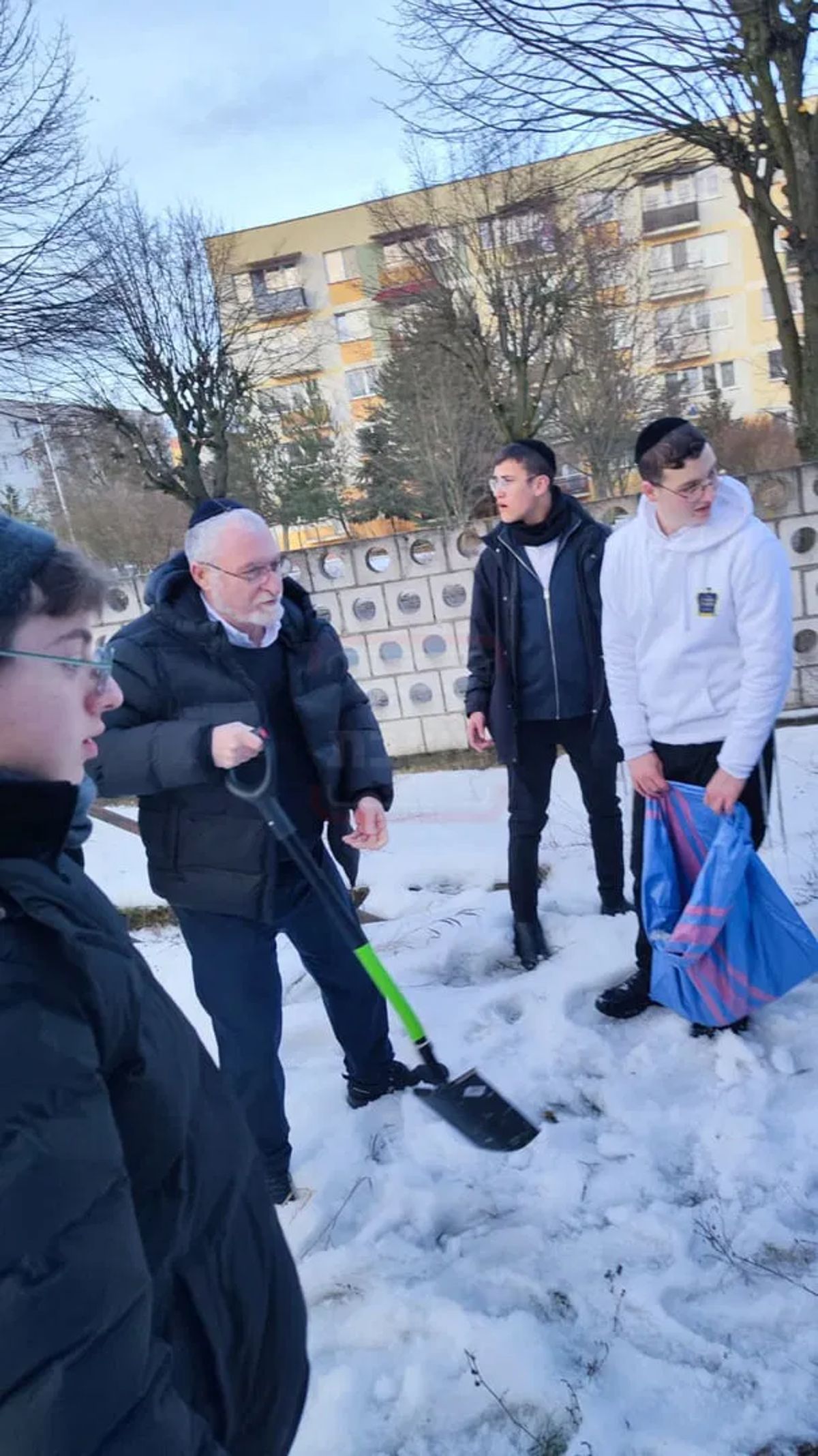
Students worked for hours in freezing temperatures, manually transporting massive blocks of pristine snow. A local tractor was recruited to move larger drifts of clean snow toward the facility. Two emissaries of the Kozienice Rebbe from Tel Aviv, who happened to be visiting the town, joined the students to assist in the heavy lifting.
The process was carried out under the strict halakhic supervision of Rabbi Brandwein, ensuring every handful of snow met the rigorous requirements of Jewish law. Local elders expressed awe at the sight of young Jerusalemites working alongside Tel Aviv Hasidim to restore a piece of pre-war Jewish life in the Polish winter.
Once the "Otzar" was filled with the required amount of snow to eventually melt into "living water," the students broke into a Hasidic dance in the deep snow, celebrating the spiritual rebirth of a site that had been silent since the Holocaust.