The Golem from Metropolis

The Jewish Secret Behind Superman That Terrified the Nazis

 During World War II, two American Jews, far from the front lines, decided to take on the Nazi war machine in their own way, by creating a fictional character who’d shake up the world.

Article image

About a month ago, on a regular morning in Northern California, three brothers were clearing out their late mom’s attic. Tucked away among old newspapers, they stumbled on a forgotten cardboard box. Inside? A rare, well-preserved copy of Superman #1 from 1939. This historical gem scored a 9.0 out of 10 on the auction scale and sold for a mind-blowing $9.12 million, the highest ever paid for a comic book. But why would someone shell out that kind of cash?

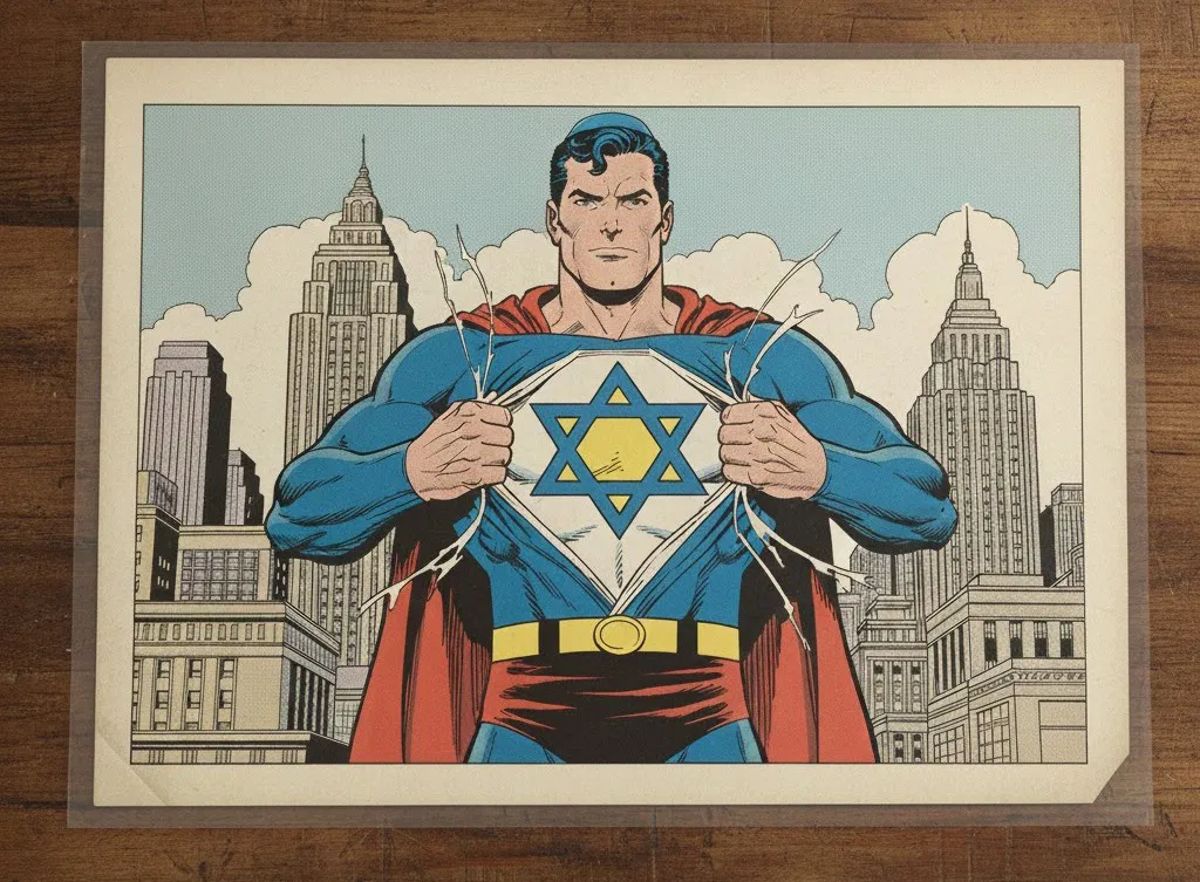
The Jewish story behind Superman is not that familiar, and it’s super relevant right now. If Hanukkah is about the few against the many, Superman has that Jewish hero vibe, one guy against the world, just waiting for a miracle.

Superman - The Early Lines

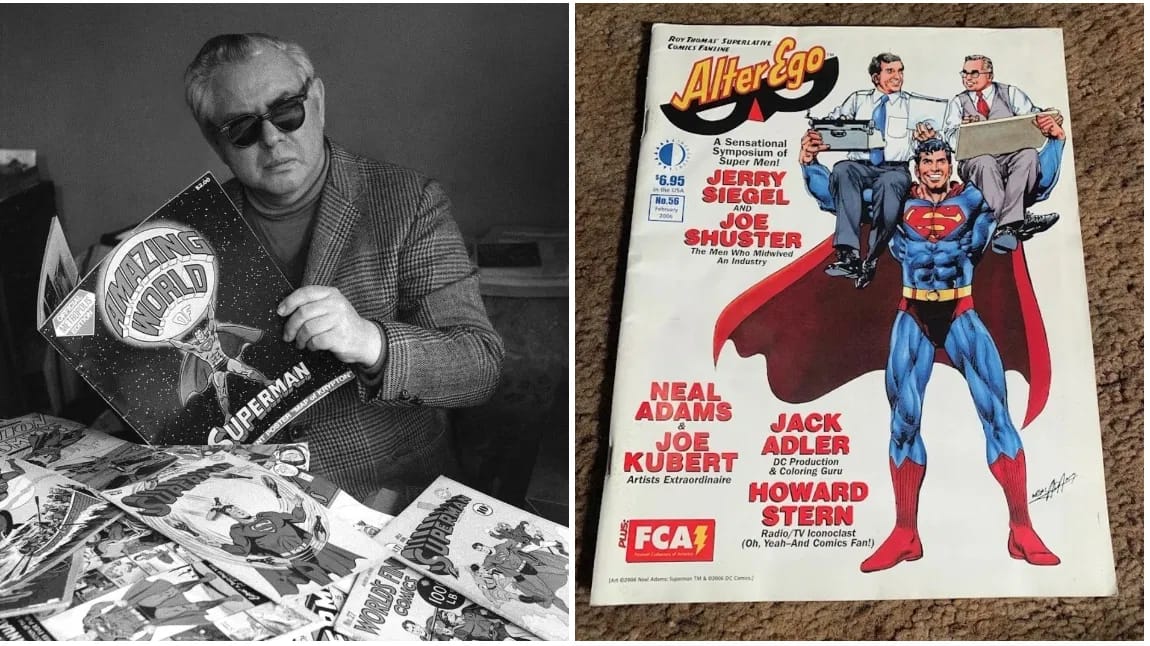
“Man of Steel,” first appearing in June 1938, was the brainchild of two Jewish teens from Cleveland, Ohio: Jerry Siegel and Joe Shuster. Both were sons of Jewish immigrants from Europe, growing up during a time when antisemitism was running rampant in the U.S.This debut came just five months before Kristallnacht (November 1938), when nearly 100 Jews were murdered in Germany and dozens of synagogues burned.
Loading...
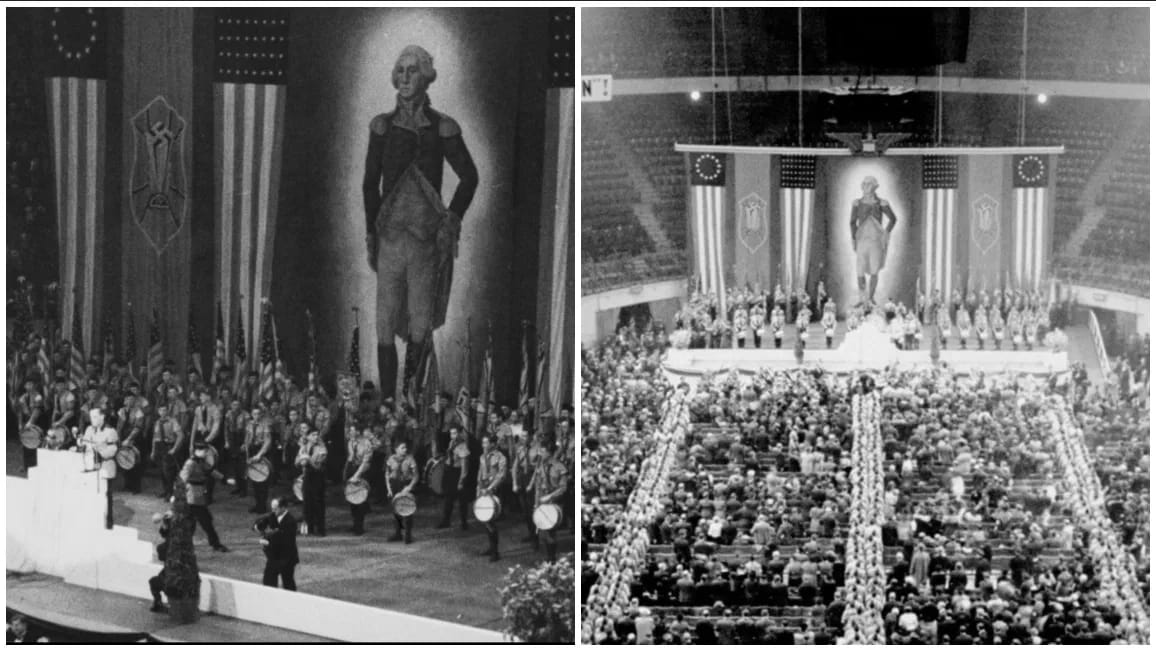
Pro-Nazi event in USA, prior to WW2

A Chilling Historical Moment: Nazi Rally at Madison Square Garden

On February 20, 1939, a creepy Nazi rally took place at Madison Square Garden in New York. Organized by the German-American Bund, a pro-Nazi group active in the U.S. before the war, it showed how real the threat was.

Ready for more?

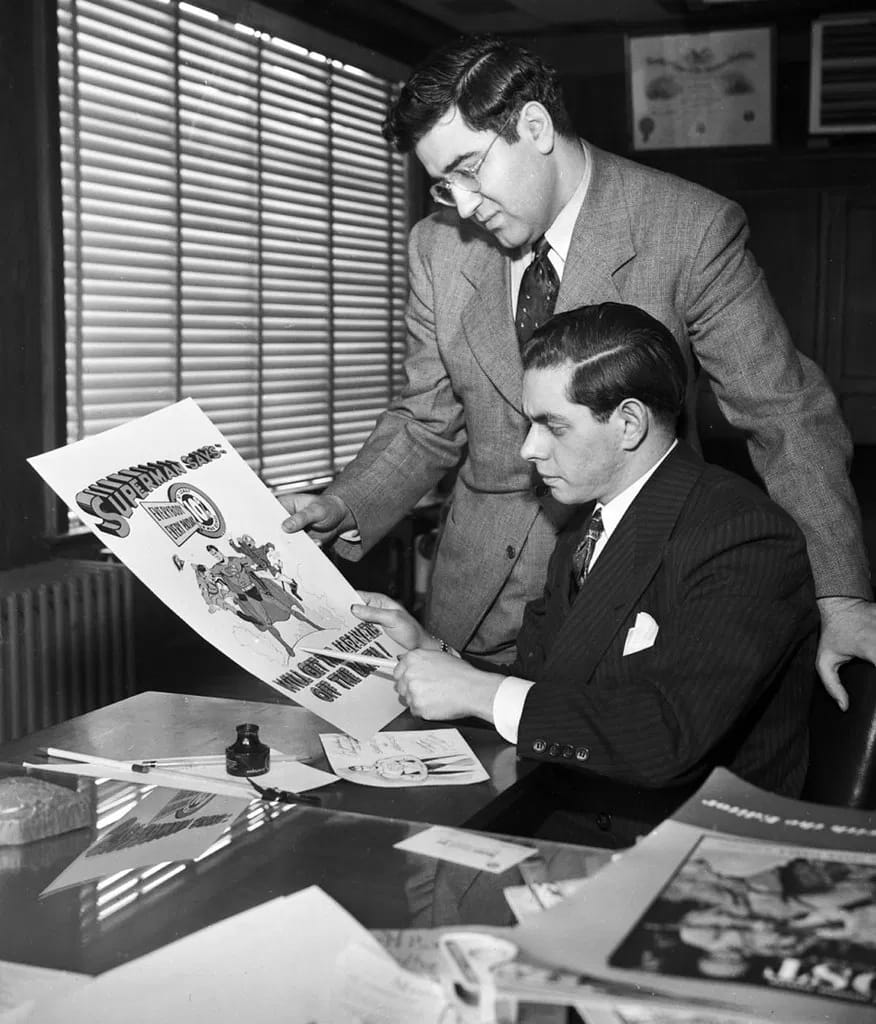
Siegel and Shuster were just kids who became close childhood friends. They met at Glenville High School in Cleveland, Ohio. Both were shy and wore glasses. Siegel described their first meeting like the perfect chemical reaction clicking into place.They shared a love for science fiction, even publishing together in an amateur magazine called Science Fiction: The Advance Guard of Future Civilization. Siegel, who dreamed of being a writer, found in Shuster the perfect artist for his stories.

Economic hardship hit Shuster hard. Born in Toronto, Canada, his father was a tailor, and the family struggled to make ends meet, forcing Joe to work as a newspaper delivery boy for the Toronto Daily Star. Because of this, Shuster would roam around looking for scrap paper, drawing whenever he could on cheap brown wrapping paper or the backs of wallpaper rolls he picked up off the street. He later said he went store to store in Toronto collecting “anything thrown out,” scoring some unused wallpaper rolls. Even the Toronto Star accepted his early work drawn on scraps. When he submitted his first comic strips (with Siegel) to DC Comics, some were sketched on the back of peeling wallpaper.

For Siegel, the writer, the trauma that birthed the hero was personal and raw. In 1932, his father, Michel Siegel, a Jewish immigrant from Lithuania, died during a robbery at his clothing store in Cleveland. The official cause was a heart attack from the shock, but young Jerry was left with deep anger and a thirst for revenge. Months later, he began crafting a hero “no bullet could pierce,” a psychological outlet for his helplessness over his father’s murder.

Siegel admitted his ultimate drive came from hearing and reading about the “oppression and slaughter of helpless, downtrodden Jews in Nazi Germany.” He saw Superman as their “avatar,” fighting Nazis through words and art.

Loading...

Moses, Samson, and the Golem: Ancient Myths Shaping “Champion of the Oppressed”

The Jewish creators wove deep layers of culture and tradition into “Man of Steel,” turning him into a modern tale of exile, salvation, and protection. The origin of Kal-El (Superman’s birth name), a baby sent in a spaceship from a dying planet to save humanity from cruel oppressors, was inspired by the story of Moses in the bulrushes, as the creators often noted (with vast differences, of course). He was saved and sent to witness his people’s suffering.

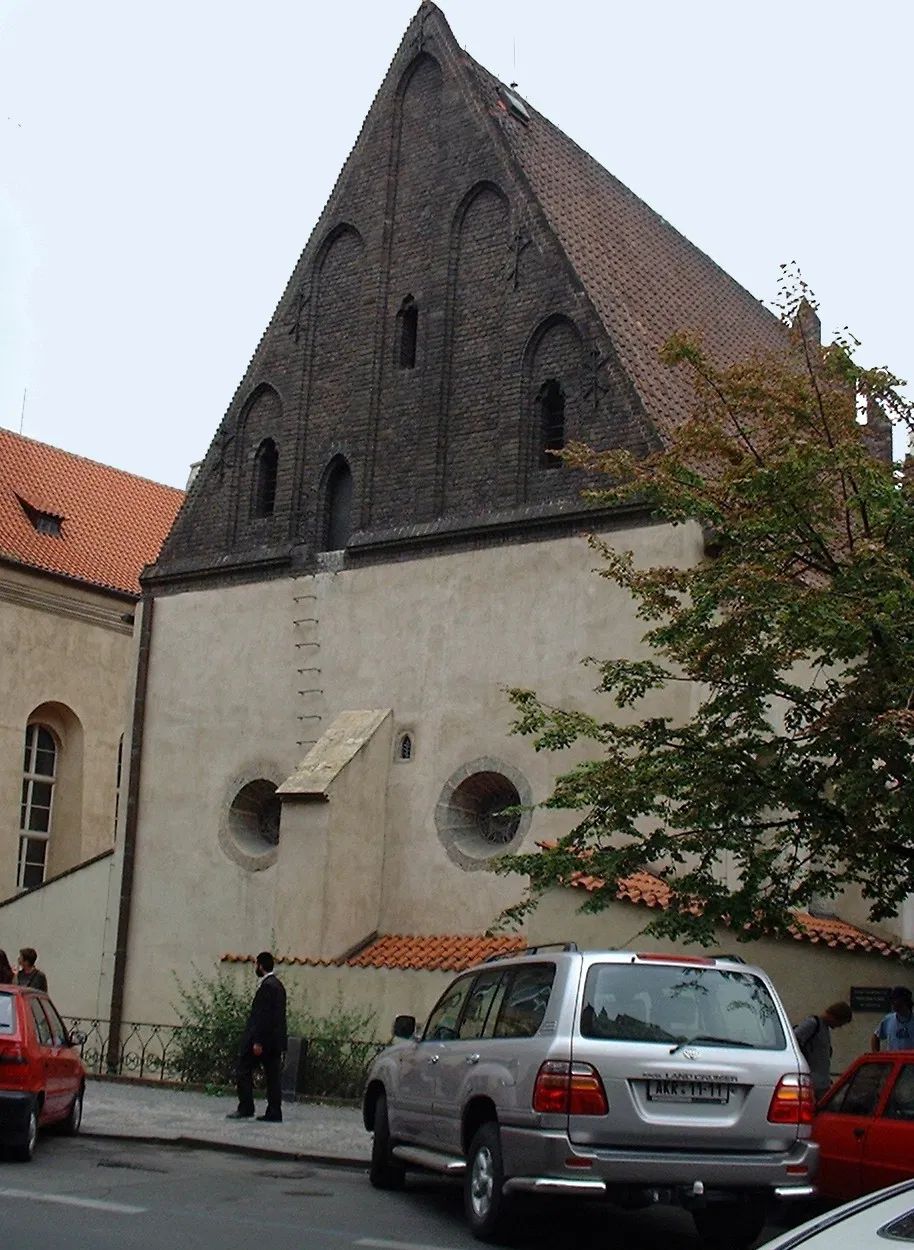
In early interviews, Shuster and Siegel said Superman was also heavily influenced by the Golem of Prague, the mythical entity created to protect the Jewish community from its persecutors. They were especially inspired by the silent film The Golem (1920), imagining a hero built not from clay but from “ink and paper.” Thus, Superman became the “Champion of the Oppressed”: a tireless defender of the weak and helpless.

Another inspiration was Samson the Mighty. Siegel himself noted that Samson, with his superhuman strength and ability to leap great distances, was a direct model. In early comics, Superman was described as having “the strength of a dozen Samsons.” In Superman #2 (September 1939), he topples heavy stone columns, quipping, “Even Samson the Mighty had that thought once.

Loading...
Altneu Shul in Prague (Photo: Wikipedia)

Frontline Assault and Nazi Fury

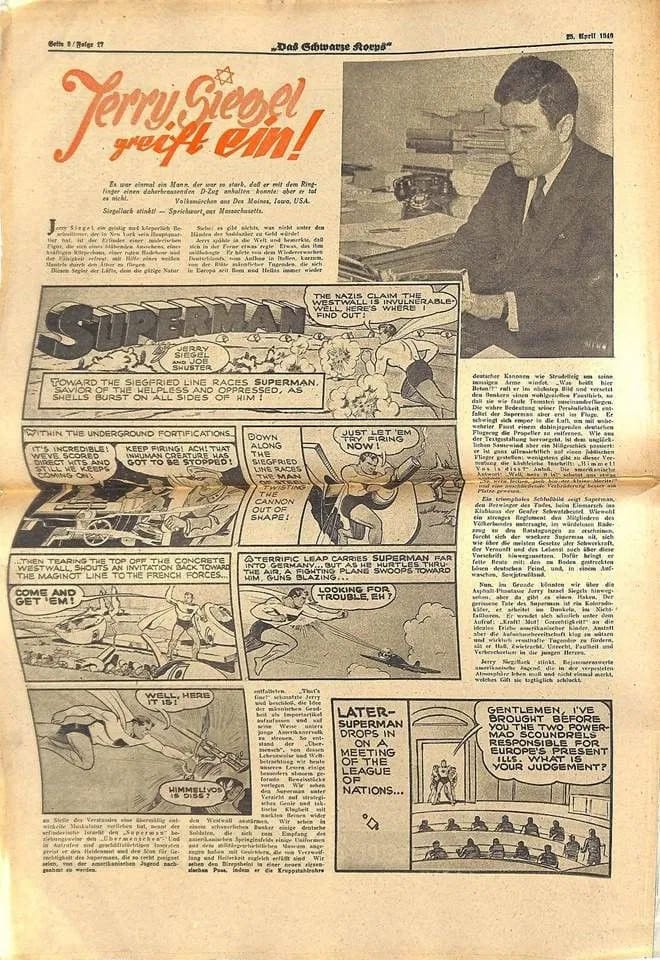
Aware of the Nazi threat, Siegel and Shuster didn’t wait for the U.S. to enter World War II to aim their hero at the enemy. In February 1940, two years before Pearl Harbor, they published a two-page comic in Look magazine titled “How Superman Would End the War.”

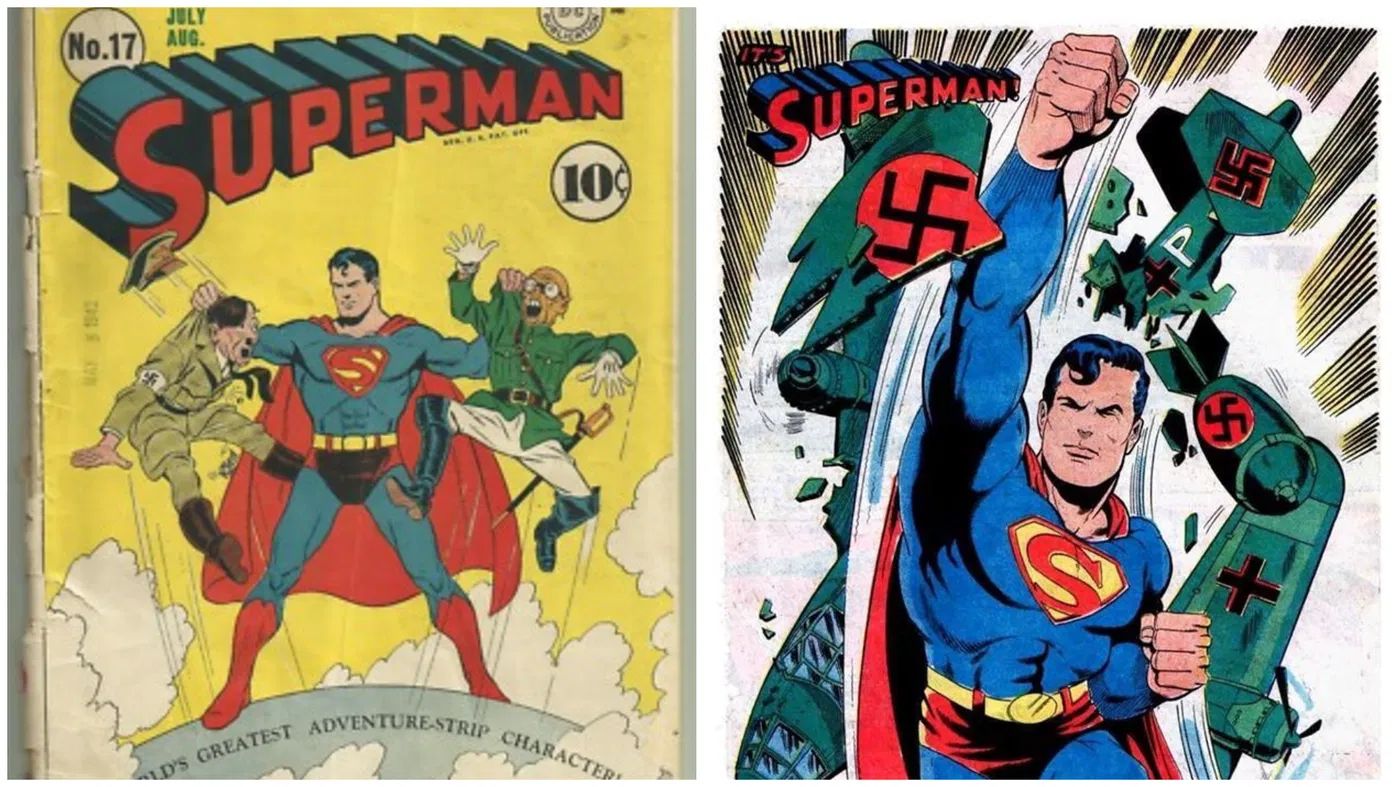
In this story, Superman breaches the Siegfried Line, destroys Nazi cannons, and grabs Adolf Hitler and Hideki Tojo, Japan’s general and prime minister, by the necks to face trial before the League of Nations. This made “Man of Steel” a powerful propaganda tool against the totalitarian regime.As Superman’s popularity soared, selling millions of copies, he became a potent patriotic symbol for Americans. Known as the “Champion of the Oppressed,” he stood as the complete opposite of the Nazi threat.

Loading...
Photo: Social media

SS Rage: “A Jewish Conspiracy”

The Nazi response was swift and vicious, revealing how much they saw Superman as an ideological threat. The Nazis had twisted Nietzsche’s philosophical term Übermensch (“Superman”) to promote their “Aryan race” ideology, but a Jewish-created, all-American hero turned their use of the term ironic and laughable.

On April 25, 1940, Das Schwarze Korps (The Black Corps), the official SS newspaper, ran a furious full-page editorial. It branded Superman a “Jewish conspiracy to poison American youth” and personally attacked Jerry Siegel, opening with a description of him as a “spiritually and physically inferior Jew” operating from New York. They mocked a “skinny Jew” inventing a strong hero, calling Superman a “well-built but dim-witted guy” spreading “hatred, suspicion, malice, laziness, and crime” among American youth. The article ended by dismissing him as a “children’s hero” and ridiculing the idea that a man in blue tights could destroy German fortifications.

The Nazis included Siegel’s original comic strips, adding mocking captions like Superman “ignoring the laws of physics” and representing a “Jewish fantasy detached from reality.” Some reports attribute this harsh reaction to Nazi Propaganda Minister Joseph Goebbels, who reportedly had a “rage fit” over the character. Following the article, Superman was officially banned in Nazi Germany and occupied territories.

Loading...

Artistic Warfare and Frontline Impact

This blunt Nazi backlash made headlines in the U.S., prompting the German-American Bund to send hate mail to Siegel and Shuster and stage protests outside DC Comics’ offices. Though the duo didn’t publicly respond to the SS article, they slipped Nazi satire into Superman #25, released in December 1943.

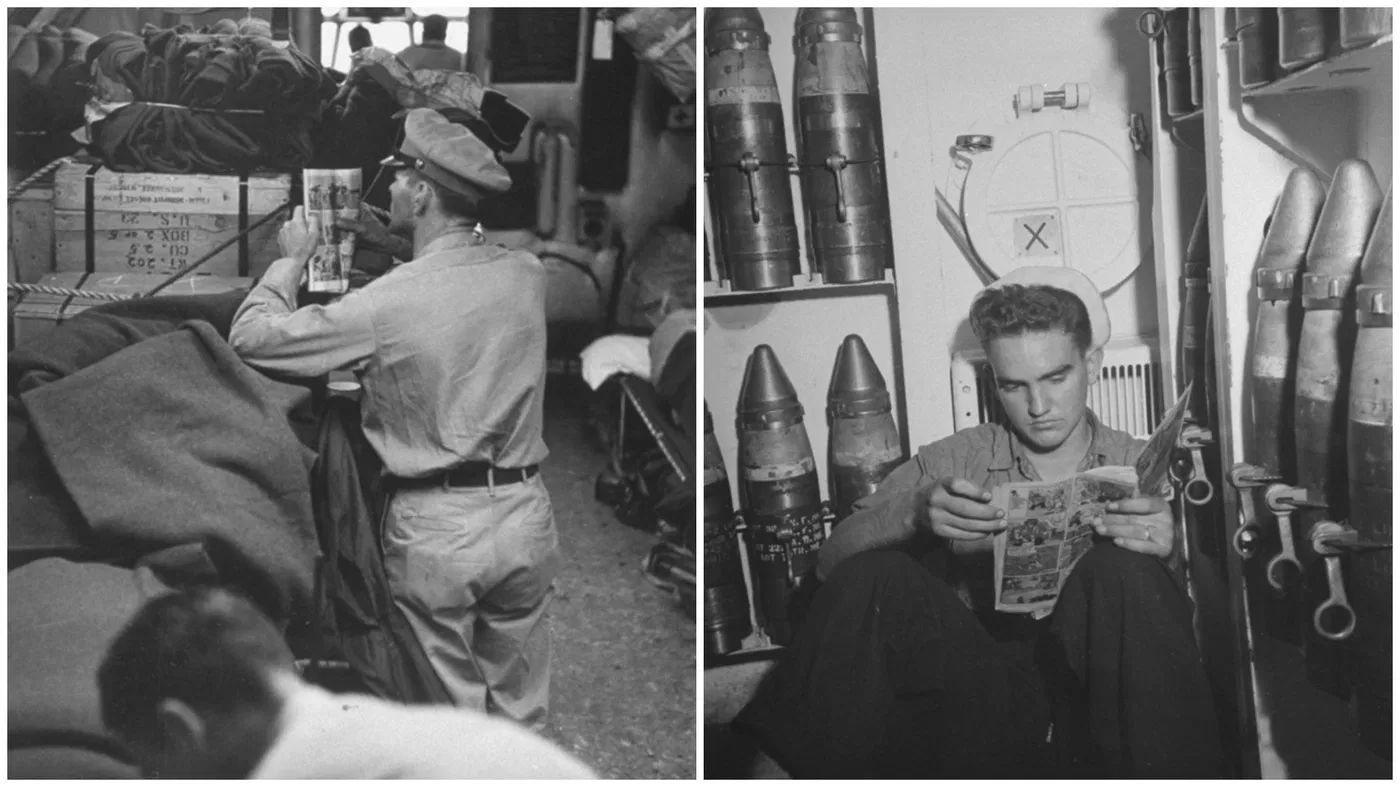
Despite his limitless power, Superman wasn’t sent to the front lines in the comics to avoid ending the war in five minutes, which might have disrespected U.S. soldiers. Instead, he fought Nazis differently. In early comics, before the U.S. joined the war, he battled “generic soldiers” with Nazi-like helmets. Later covers showed him facing soldiers with swastika armbands.The Nazi fury and personal attacks on Siegel not only confirmed Superman’s hidden Jewish identity but also highlighted the cartoon hero’s power as a propaganda weapon against Germany’s absolute evil.

Loading...

Jews Against Themselves - The Fight for Credit

Despite their meteoric success, Siegel and Shuster sold the character’s rights to their publishers for just $130. They spent decades in failed legal battles over ownership and credit.The comic creators were cut off from all ancillary profits while their publishers, Harry Donenfeld and Jack Liebowitz, also Jewish immigrantsm amassed a fortune. When Superman became a radio hit and a film loomed, the duo demanded their share, but Liebowitz, a ruthless businessman and accounting expert, cited the original contract to refuse. When they persisted, they were fired.

Ready for more?

Joe Shuster, suffering from worsening vision that nearly blinded him, had to leave the field. Later, he was found on a park bench, penniless and hungry. A comic artist who recognized him bought him a sandwich, and Shuster tearfully recounted how the legal battles destroyed his life.Things got worse; in the 1970s, he worked as a delivery boy. In one painful anecdote, he was sent with a package to DC Comics’ building, where employees recognized him, causing great embarrassment. He was called to the CEO, given $100, told to buy a coat, and find another job.

Loading...

Gratitude and Justice

However, Donenfeld and Liebowitz used some of their Superman wealth to help establish Albert Einstein College of Medicine in the Bronx and institutions like Long Island Jewish Hospital. So, the money Superman earned in fiction “helped save lives in reality.”

Ready for more?

In 1975, after a widespread public campaign involving Warner Bros.’ lawyers, artists, and intellectuals, their plight gained attention. DC’s parent company, Warner, was forced to grant the duo a lifetime annuity, full medical coverage, and, most importantly, restored credit on all works: “Created by Jerry Siegel and Joe Shuster.”

This victory of art over corporations and memory over oblivion is seen as a landmark in copyright rights. Superman, born from the pain and dreams of Jewish creators facing unimaginable evil, has spawned countless comic companies for over 85 years. He remains a powerful symbol of heroism, though he didn’t much help his own creators.Still, Siegel and Shuster likely saw the Jew as a symbol of the world’s goodness. Even as Superman leapt from comic pages to the screen, in one iconic moment after saving a child, an elderly woman shouts, “Superman, what a nice man… of course he’s Jewish!”

Ready for more?

Join our newsletter to receive updates on new articles and exclusive content.

We respect your privacy and will never share your information.

Enjoyed this article?

Yes (11)
No (0)
Follow Us:

Loading comments...