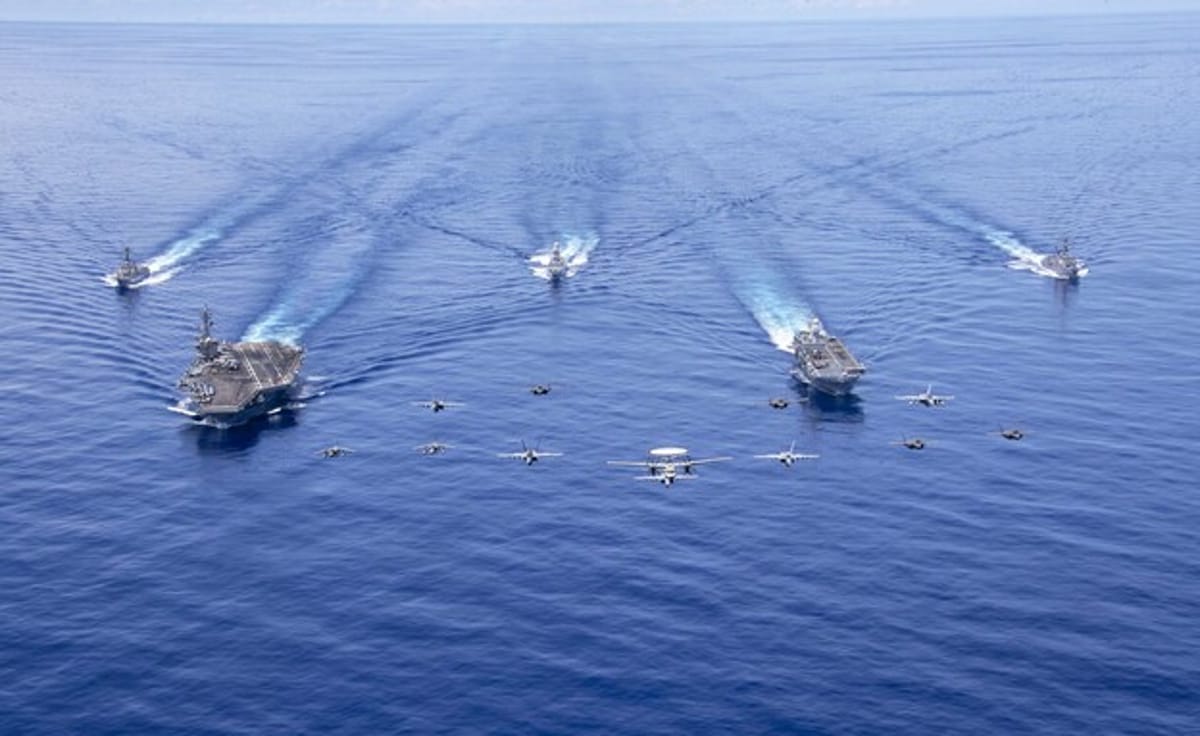
As the clock ticks down to a planned summit between U.S. envoy Steve Witkoff and Iranian Foreign Minister Abbas Araghchi, President Donald Trump finds himself at a critical crossroads between a historic nuclear deal and the largest aerial bombardment campaign in recent history. Despite recent maritime provocations in the Gulf and Tehran's attempt to change the location of the talks, Trump remains publicly committed to a diplomatic breakthrough, insisting that "Iran wants to negotiate, and that’s what we’re doing." However, the shadow of the June war, during which Trump authorized direct strikes on Iranian nuclear sites, looms large over the proceedings. While the President is currently emphasizing his "big ships" as a tool for leverage rather than an immediate instrument of war, senior officials warn that this diplomatic window is exceptionally narrow and could slam shut if Friday’s meeting fails to produce immediate, tangible results.
Leverage and the Lessons of June
Trump enters these negotiations with significantly more leverage than during previous attempts. The Iranian regime has been weakened by massive domestic protests and international isolation, and the presence of a credible American military threat in the Persian Gulf has created a sense of urgency in Tehran. White House officials, including Jared Kushner and Steve Witkoff, have been tasked with securing a deal that sees Iran permanently surrender its highly enriched uranium. This effort follows a failed attempt last fall when the U.S. tried to use the threat of United Nations "snap-back" sanctions to force a concession, only to be met with Iranian defiance.
The mistrust between the two nations is at an all-time high. The Iranian leadership still feels the sting of the "deception" from last June, when diplomatic overtures were followed by U.S. backed strikes. Nevertheless, the White House insists that the current mission is not a cover for a surprise attack. "The President truly does not want to do this right now," one senior official remarked, noting that unlike in June, Trump does not currently view Iran’s nuclear activity as an "imminent threat" that requires immediate kinetic action. This skepticism toward war is reportedly shared by several of Trump's closest advisers, who fear that a massive military operation would derail the President’s broader global agenda.
The Israeli Pressure and the Military Alternative
While Trump pursues a deal, the Israeli security establishment is preparing for the alternative. IDF Chief of Staff Eyal Zamir recently visited Washington to brief General Dan Kane, the Chairman of the Joint Chiefs of Staff, on Israel’s comprehensive plans for both offensive and defensive operations. Israel has historically opposed "symbolic" strikes, such as the ones Trump considered three weeks ago after the regime killed thousands of protesters. Instead, the Israeli military is advocating for a decisive blow that would permanently dismantle the nuclear infrastructure.
The current dynamic in Washington is a "split screen" reality. On one side, intensive diplomatic efforts are being led by Turkey, Qatar, and Egypt to de-escalate the situation. On the other side, the military plans being discussed have become much more ambitious and far-reaching. "If Iran does not arrive at Friday's talks with tangible concessions, it could very quickly find itself in a very bad situation," warned a senior official from a mediating country. Tehran has insisted that it will only discuss nuclear issues and will refuse to negotiate on its ballistic missile program or its support for regional proxies, a stance that may be the ultimate deal-breaker for the American delegation. As the fleet sits in wait, the world is watching to see if Trump’s diplomacy is a genuine path to peace or merely the final count-down to a regional war.