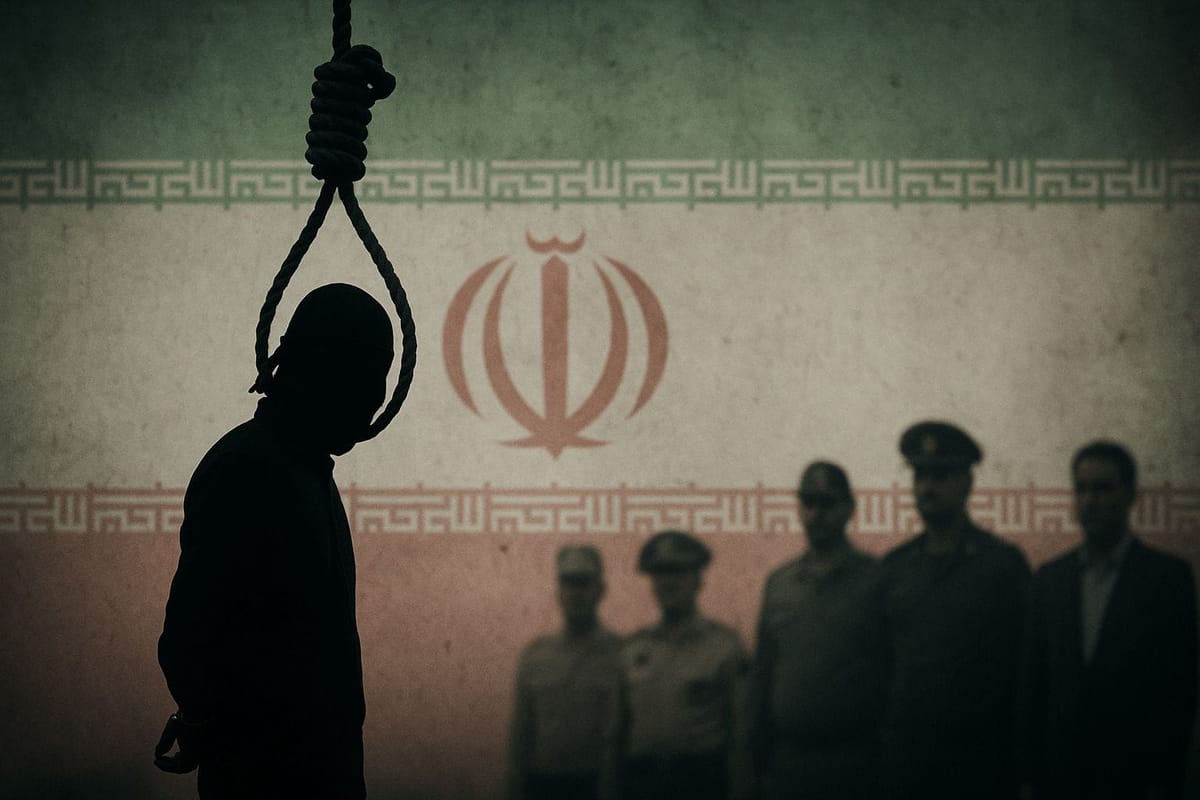
As the Iranian regime struggles to project an image of control to the world, a far more sinister reality is unfolding within the walls of its detention centers and hospitals. Mounting evidence and eyewitness accounts suggest that the state’s crackdown on dissent has moved from the streets into a "silent massacre" occurring in secret. Reports provided by opposition networks and former political prisoners indicate a systematic pattern of extrajudicial killings, including the forced injection of lethal, unidentified substances into detainees. This transition to hidden executions appears designed to eliminate survivors of the recent uprisings without the public outcry associated with street shootings. While the world’s attention is focused on the potential for a regional war, the families of the disappeared describe a landscape of terror where hospitals have become hunting grounds and prisons have become death chambers from which few return alive.
The Mystery Injections and Prison Deaths
Shiva Mahbubi, a former political prisoner and spokesperson for the Campaign to Free Political Prisoners in Iran, has been collecting testimonies that paint a gruesome picture of state-sponsored poisoning. According to Mahbubi, protesters who are swept up in arrests, particularly those already wounded, are frequently denied medical care and instead subjected to injections of unknown substances. "One massacre took place in the streets, and another massacre may be taking place quietly inside prisons and detention centers," Mahbubi warned. She noted that the regime tightly restricts access to these facilities, leaving no room for independent forensic investigations while families are threatened into silence.
The cases are becoming increasingly frequent. In one recent instance, a 16-year-old girl was detained and fell into a coma immediately after receiving a suspicious injection in custody. Doctors found signs of poisoning, yet the girl was only released to an intensive care unit after her family paid an exorbitant ransom. In the city of Isfahan, a young woman died just one day after being released on bail following a similar unexplained treatment. Another family in Shahinshahr reported that the authorities conditioned a relative's release on him receiving what they called a "vaccine." When the man resisted, he was beaten and injected by force, shortly after which his health plummeted. Witnesses have even reported hearing desperate cries for help coming from within morgues, suggesting that some victims may still be alive when they are moved to body bags.
Executions in the Wards
The horror extends beyond the prison system and into medical facilities. Reports from medical professionals and bereaved families indicate that security forces have implemented a policy of "finishing the job" on wounded protesters. In one documented case, a teenager named Sam was taken from a hospital by security forces while being treated for a single gunshot wound to the head. A medic told his family he was in critical condition but stable, yet days later, Sam's body was found in a body bag with a second, devastating gunshot wound to the face, suggesting an execution at close range.
In Karaj, west of Tehran, armed forces reportedly surrounded hospitals and carried out a "cleansing" operation, snatching wounded activists from their beds. Witnesses described security forces using silenced weapons to execute those too injured to move, a practice designed to ensure no witnesses to the state's brutality survive. One taxi driver in the area recalled seeing trucks loaded "indiscriminately" with both corpses and the living. Photographs have also emerged of bodies in the Kahrizak forensic institute showing victims with their hands still bound inside black body bags, a clear indicator that they died while in the absolute control of the state. Mahbubi emphasized that "executions will not look like they did in the past, they will be hidden," and called for immediate international pressure to force the regime to reveal the location and condition of the thousands who remain missing.