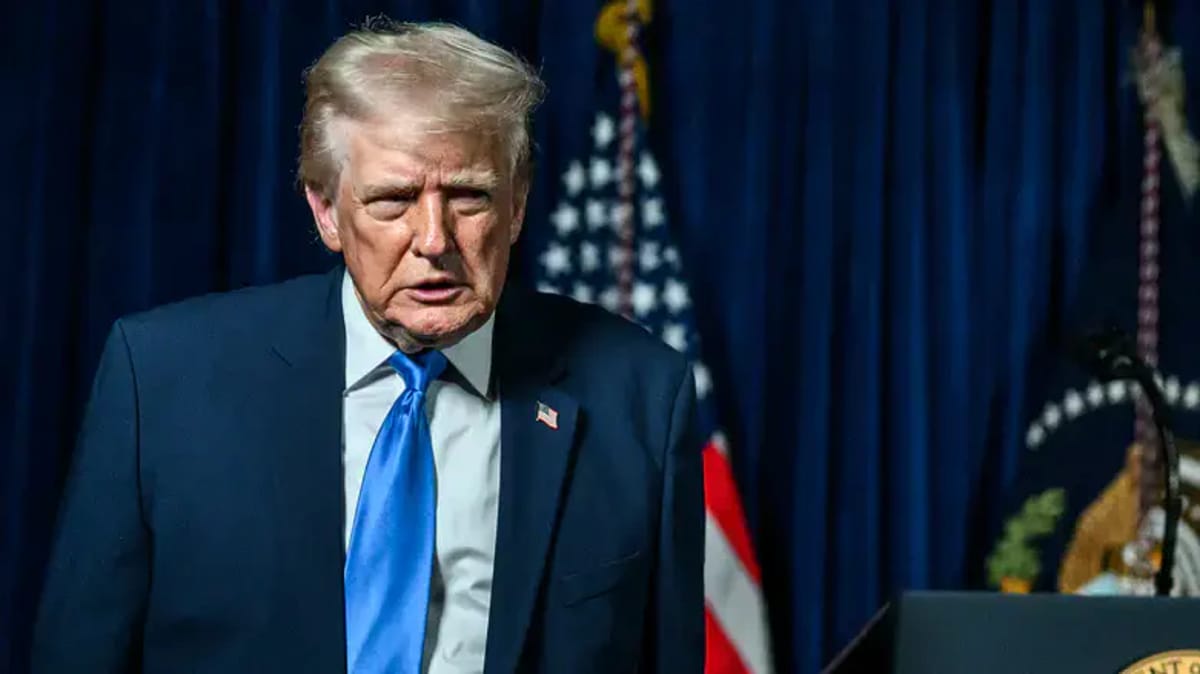
As White House Special Envoy Steve Witkoff prepares for a critical series of meetings in Jerusalem, President Donald Trump has launched a calculated media blitz to set the stage for potential negotiations with Iran. Utilizing his Truth Social platform to amplify specific messages from Fox News, the President is signaling a classic "carrot and stick" approach: a massive military buildup paired with an open door for a "fair and equitable" deal. The diplomatic activity is reaching a fever pitch as Witkoff is set to meet with Prime Minister Benjamin Netanyahu, the Defense Minister, and the heads of the Mossad and IDF to establish non-negotiable red lines. This coordination is viewed as a prerequisite for a planned summit in Istanbul this Friday between Witkoff and Iranian Foreign Minister Abbas Araghchi, a meeting that currently exists "on paper" but remains subject to the volatile security situation on the ground.
Orchestrated Pressure and the Israeli Directive
Trump’s recent activity on social media is not seen as random, but as a deliberate attempt to dominate the narrative. By sharing commentary from close allies like Mark Levin, who characterized Iran as the "North Korea of the Middle East," Trump is framing the Islamic Republic as a long-term strategic threat that requires immediate resolution. At the same time, he has highlighted reports of his own willingness to strike a deal, placing the burden of choice squarely on Tehran. This psychological warfare is designed to ensure that the Iranian leadership understands that the "big powerful ships" currently heading toward their coast are a direct consequence of their refusal to negotiate.
For the Israeli government, Witkoff’s arrival is a "critical junction" in the war. Prime Minister Netanyahu has reportedly demanded a detailed, face-to-face briefing to ensure that Witkoff carries Israel's specific security requirements into the room with Araghchi. The Israeli defense establishment wants to ensure that any potential framework addresses not only the nuclear threat but also the ballistic missile program and the regional support for terrorists. While the U.S. is signaling openness, the prevailing sentiment in Jerusalem is one of caution, fearing that Iran may use the negotiations as a stalling tactic while they continue to arm themselves with Russian and Chinese assistance.
Defensive Postures and Regional Warnings
The mood in Tehran remains defiant and deeply skeptical. Ebrahim Rezaei, spokesperson for the Iranian Parliament's National Security Committee, warned that Iran will not negotiate from a position of weakness. He emphasized that any dialogue must lead to the immediate lifting of economic sanctions and a tangible improvement in the lives of the Iranian people. Crucially, Rezaei issued a sharp warning to neighboring countries, stating that any nation allowing its territory to be used for American strikes must "accept the responsibility and costs of this decision." As the "war room" of the IRGC remains active, the upcoming Friday meeting in Istanbul is being described by diplomats as the "most optimistic scenario," yet many acknowledge that the path from the battlefield to the negotiating table is fraught with the risk of a sudden and massive escalation.