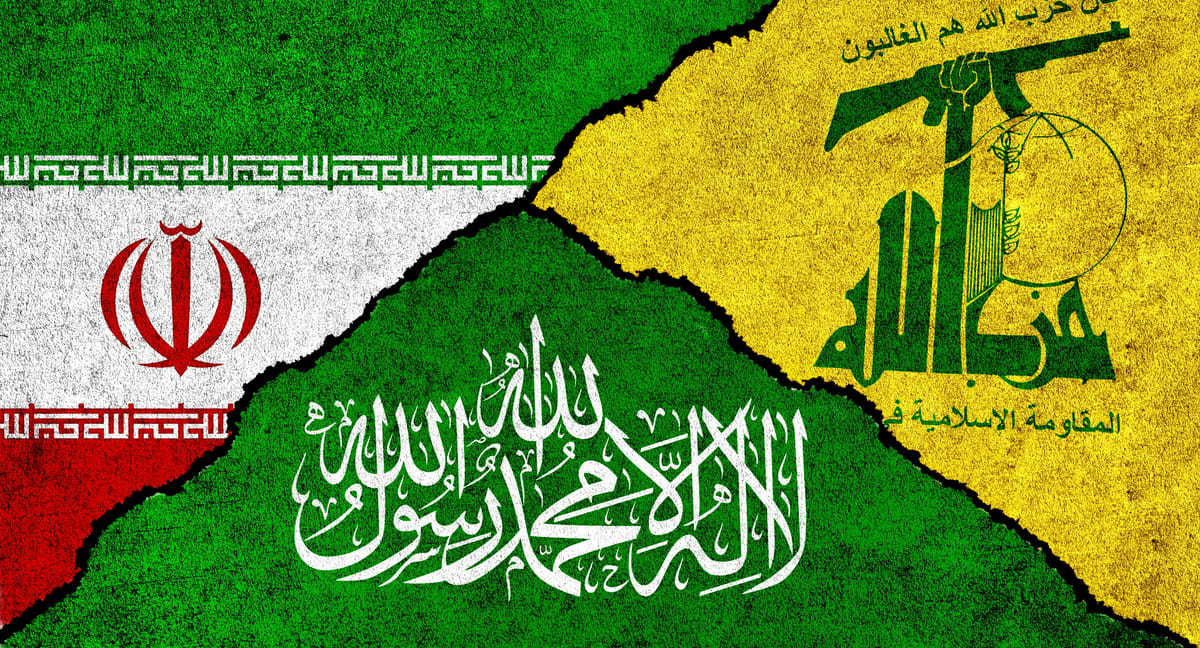
Tehran is flat-out refusing to cut the purse strings on its infamous "Axis of Resistance" proxy network, even as President Trump's "massive armada" looms like a storm cloud over the Persian Gulf. With nationwide protests raging inside Iran (where folks are literally chanting to ditch the proxies and fix the economy), US demands for a nuclear deal that includes zeroing out proxy support, and Iran's top brass snarling back with vows of defiance, this saga has all the makings of a geopolitical thriller.
The Proxy Playbook: Who's Getting the Cash and Why?
Iran's been bankrolling armed groups across the region since the 1979 Islamic Revolution, viewing it as a holy mission to "export the revolution" and counter foes like the US, Israel, and Saudi Arabia. It's cheap warfare, arm others to fight your battles, keep enemies bogged down, and maintain deniability. Estimates peg Iran's annual spending at billions, funneled through the Islamic Revolutionary Guard Corps (IRGC), despite crippling sanctions and a tanking economy at home.
These are the rogue's gallery of key proxies (think of them as Tehran's outsourced muscle):
- Hezbollah (Lebanon): The crown jewel, Iran's most capable ally, armed to the teeth with missiles and fighters. They've clashed with Israel repeatedly, but after heavy losses in the 2025 Israel-Iran War, they're licking wounds and focusing on rebuilding rather than jumping to Iran's defense.
- Houthis (Yemen): These rebels disrupt Red Sea shipping with drone attacks on behalf of "Palestine" (read: Iran's anti-Israel agenda). But a fragile ceasefire with the US has them sitting tight, no heroics for Tehran if bombs start falling.
- Hamas and Palestinian Islamic Jihad (Gaza): Foot soldiers in the anti-Israel fight. Iran supplies rockets and cash, but post-2025 conflicts, they're decimated and isolated.
- Iraqi Militias (e.g., Kata'ib Hezbollah): They harass US troops and keep Iraq unstable. Weakened by strikes, they're offering Iran "lip service" at best now.
- Others: Syrian regime forces, smaller groups in Iraq and beyond. Even Russia gets a nod as an opportunistic ally.
Why fund them?
Proxies keep rivals like Israel and the US tied up without Iran getting its hands dirty. But many Iranians call it a "waste" that's bled the country dry, fueling inflation and shortages while the regime prioritizes "resistance" over roads and rice.
The Big Refusal: "No Negotiations on Our Missiles or Mates!"
Fast-forward to 2026: Iran's in turmoil. Protests erupted in December 2025 over economic woes, with death tolls soaring (estimates from 36,000+ killed, though regime denies it).
Chants like "Neither Gaza nor Lebanon, my life for Iran!" slam the proxy spending.
Enter Trump 2.0, who's parked an "armada" (USS Abraham Lincoln leading the charge) off Iran's coast, demanding a "fair deal": End nuclear enrichment, ship out uranium stockpiles, cap missiles, and, crucially, stop funding proxies.
Tehran's response? A hard no. Foreign Minister Abbas Araghchi declared talks are possible on nukes, but "Iran’s defensive and missile capabilities will never be subject to negotiation."
Supreme Leader Khamenei echoed this, rejecting US proposals and vowing to keep uranium enrichment humming.
Officials insist proxies act "independently," but that's code for "we're not backing down." As one regime insider put it, the "Axis of Resistance" is generational, no surrender.
Why refuse?
Pride, ideology, and survival. Cutting proxies would dismantle Iran's regional clout, seen as capitulation to the "Great Satan" (US) and "Little Satan" (Israel). Plus, proxies help suppress Iranian protests , some even kill demonstrators back home. But with proxies weakened (thanks to Israeli strikes), Iran might quietly trim funding without admitting it.
Global Backlash: Sanctions, Strikes, and Shaky Allies
The world isn't buying Iran's defiance:
- US Stance: Trump's envoy Steve Witkoff is pushing hard – no deal without proxy cuts.
- Sanctions rain down on IRGC bosses and financiers; Treasury's hit "architects of crackdowns."
- The EU has just designated IRGC a terrorist org, prompting Iran to warn of "hazardous consequences." Meanwhile, Gulf states like Saudi Arabia and Türkiye urge de-escalation, offering Iran security pacts if it dials back proxies, but no help for a US strike.
- Israel is obviously eager to finish off the "Axis," having already hammered proxies.
As for the proxies themselves, no one's riding to Iran's rescue. Hezbollah prioritizes Lebanon; others are too battered.
What Happens Next? Doomsday Scenarios and Silver Linings
If Iran sticks to its guns (literally), experts game out chaos:
- US Strike: Could target nukes/missiles, or go full regime-change. Iran vows retaliation, maybe via proxies attacking US forces or neighbors. But proxies are "crumbling," so blowback might fizzle.
- Regime Cracks: Protests could topple it, especially if US supports demonstrators (Crown Prince Reza Pahlavi's urging that).
Although a deal is highly unlikely (experts call Trump's asks "capitulation)," mediators are trying to diffuse the tensions.