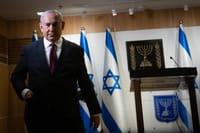
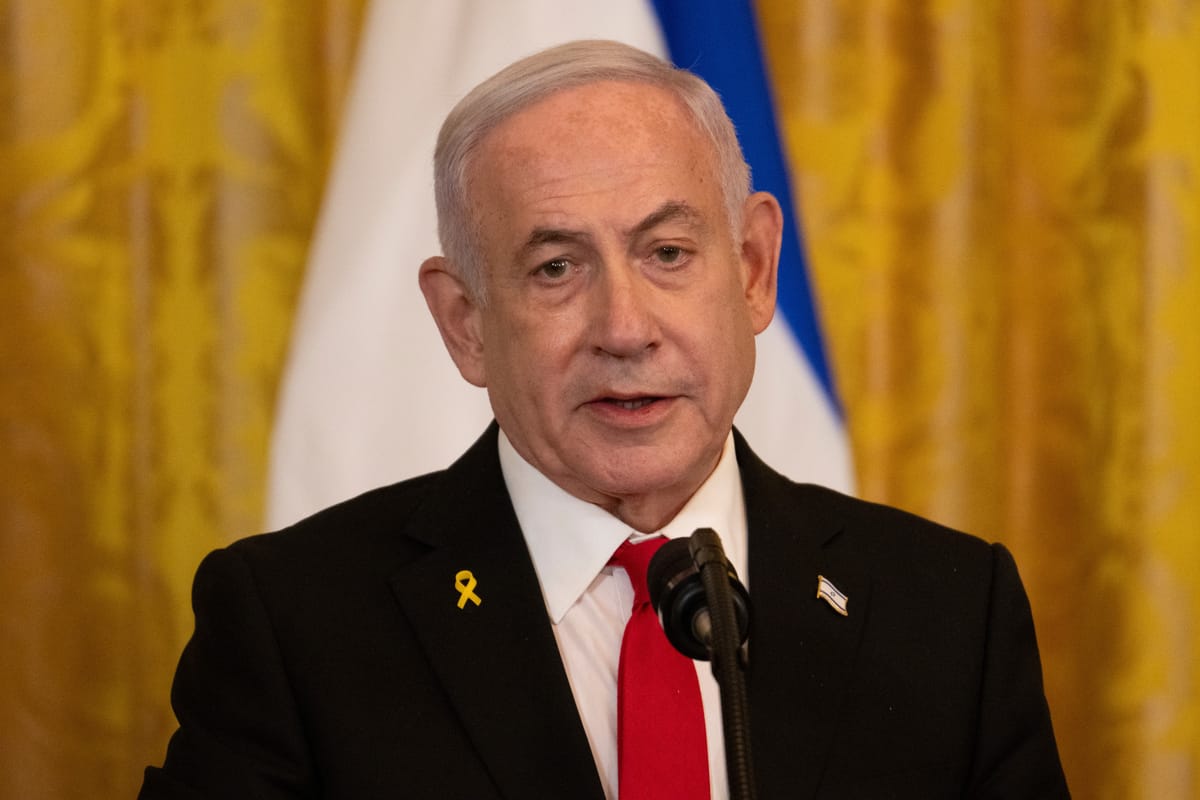
Senior officials in Israel's security establishment describe Benjamin Netanyahu in starkly different terms depending on the setting. In underground bunkers during active warfare, they say, he channels a version of the past, the decisive leader his supporters recall. But on the surface, in the daylight world where courts convene and elections loom, Netanyahu operates as a fractured figure, fighting multiple battles simultaneously, as reported by Maariv today.
The contrast is jarring. In closed rooms, security chiefs describe a prime minister seemingly transformed by the burdens of war, focused, commanding, absorbed in operational detail. The moment he surfaces, though, that version vanishes. Above ground, they explain, he divides his energy across personal crisis management: his ongoing trial, the gathering pressure for early elections, Supreme Court battles, and what appears to be an institutional vendetta against nearly every state institution still capable of restraining him.
These observations come not from political adversaries but from military officers and security establishment veterans now watching Netanyahu navigate the most consequential period of his political life.
Netanyahu's defense ministry colleagues note the shift is both psychological and practical. During the Iran war, when operational decisions carry immediate military consequences, his attention sharpens. The moment discussions turn toward his government's legitimacy, his position on elections, or his legal exposure, a different quality enters the room, calculation, defensiveness, distraction. Some security officials suggest the prime minister cannot fully exhale from wartime mode long enough to address the civilian crises mounting around him.
The family's absence during these extended underground periods only sharpens the isolation. Without Sara Netanyahu's presence or his children close by, colleagues report observing a leader stripped of domestic anchors, left alone with only the architecture of power and the machinery of survival.
This split between Netanyahu's wartime persona and his political one is reshaping how the security establishment itself functions. Some senior officials have begun compartmentalizing their advice, aware that the prime minister experiencing one reality in a bunker may be entirely different from the one making civilian governance decisions. The practical consequence is a government where military strategy and state institutions operate almost independently of one another, a dangerous precedent in the middle of active war.
What makes this dynamic particularly volatile is timing. Historically, Israel's security establishment has tolerated leadership eccentricity during war. But as this conflict extends, the institutional strain of having a prime minister fighting his own government simultaneously, even beneath the surface, is testing the limits of that tolerance.
According to Maariv, some officials now privately acknowledge what was once unthinkable: the possibility that the pressure to manage two entirely different wars at once may be degrading Netanyahu's capacity to manage either one effectively.
Trump seems to realize this, though and that's the likely reason for his pushing Herzog to pardon Netanyahu.