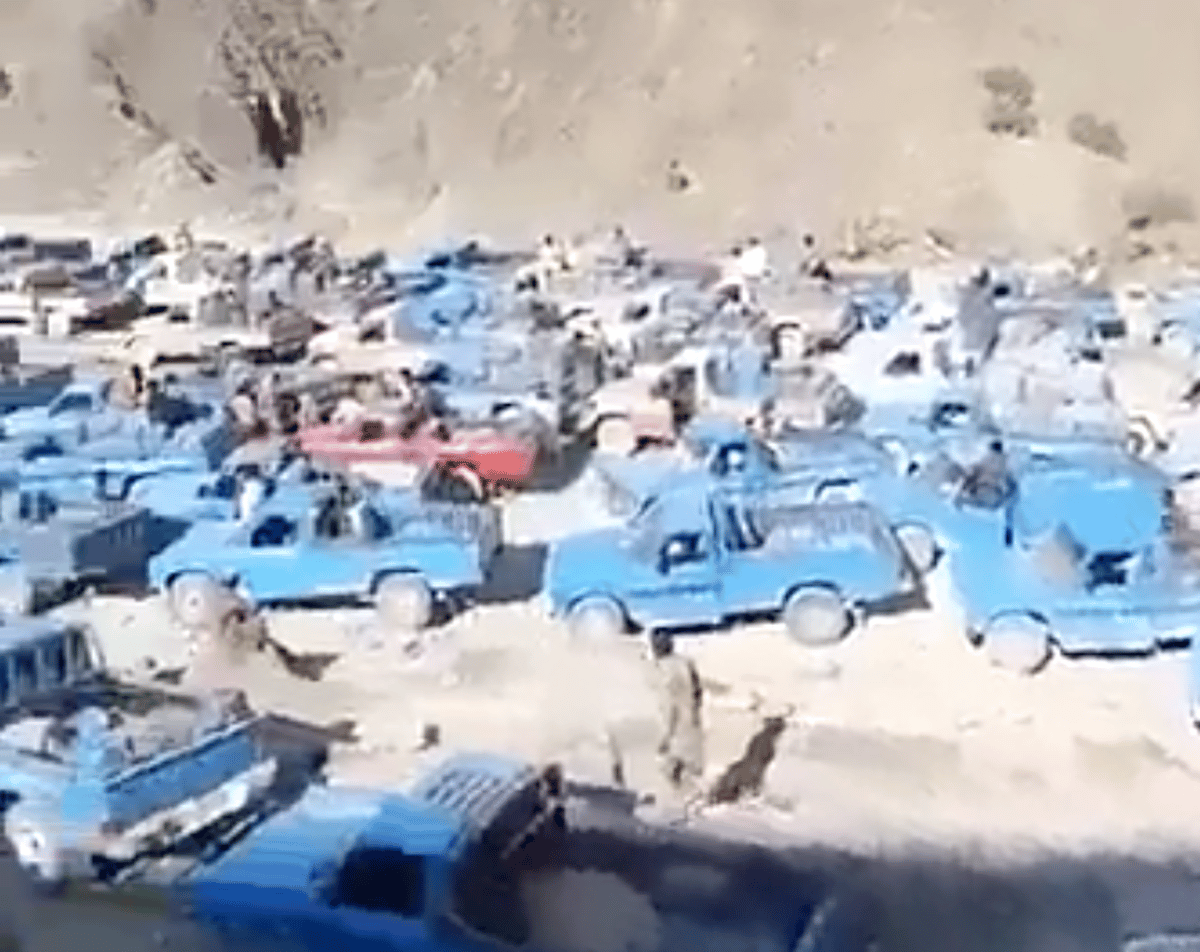
With its onshore oil storage facilities nearly full and tanker exports largely frozen by the U.S. naval blockade, Iran has turned to a large-scale land smuggling network to move subsidized fuel into Pakistan.
According to multiple reports and viral footage from the border region in Balochistan, hundreds of pickup trucks and other vehicles are crossing daily at informal points, including the Pir Kor area and Taftan border crossing. The fuel is heavily subsidized inside Iran, allowing smugglers to sell it at a profit in Pakistan.
Pakistani authorities have not cracked down significantly on the operation, which provides a lifeline to border communities facing high fuel prices amid the regional crisis.
The U.S. blockade, imposed in response to Iranian actions in the Strait of Hormuz, has severely restricted Iran’s ability to export crude oil by sea. As a result:
- Onshore storage tanks are reaching capacity.
- Many tankers are stuck or being used as floating storage.
- Iran is losing billions in revenue from halted exports
Smuggling via land routes into Pakistan (and to a lesser extent other neighbors) has become one of Tehran’s stopgap measures to offload excess fuel and generate some cash flow, even if the volumes are far smaller than sea exports.