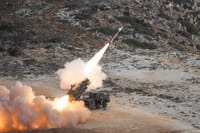
Hezbollah terrorists have revealed the strategic motivations behind their decision to launch a new offensive against Israel on March 2, just two days after the start of Israel's "Operation Lion’s Roar." In interviews with Reuters, members of the group explained that the move was not a mistake or a spur of the moment reaction, but a long-term strategy designed to leverage Iranian pressure on Washington. The terror organization hoped that by entering a prolonged war, they could force their specific interests into the broader negotiations between the United States and Iran, ensuring a ceasefire that would be more favorable to them than the agreements reached under the Trump administration.
Ibrahim al-Moussawi, a Hezbollah member of parliament, justified the violence by claiming it was necessary to stop Israel from acting without consequence. "The activity was intended to break this vicious circle, where the Israelis can aim, assassinate, bomb, and kill without any revenge," al-Moussawi stated. He went on to emphasize that the group does not see itself as a mere "contractor" for Tehran, but rather acts out of "pride, sovereignty, and independence." In a chilling admission of the group's disregard for civilian life, he added that for these goals, "we do not enter into calculations of how many will be killed."
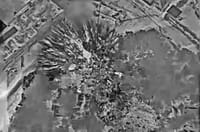
Despite these claims of strategic foresight, the reality on the ground suggests a massive miscalculation. Since the start of the "Arrows of the North" campaign, Israel has successfully dismantled the group's senior leadership, including the killing of long-time leader Hassan Nasrallah. Internal estimates within the organization, which have not been officially released, indicate that approximately 5,000 terrorists have been killed in this current round of fighting. Furthermore, the IDF has established and deepened its hold on a 10-kilometer wide security zone inside Lebanese territory, destroying villages that were being used as military outposts.
Politically, the group is facing unprecedented domestic resistance. For the first time in decades, the Lebanese government has moved to ban Hezbollah's military activities and has engaged in direct, American-backed talks with Israel to secure a withdrawal. While al-Moussawi insists the group has "full confidence" that Iran will not "sell out their friends" in a regional deal, the ongoing destruction of Hezbollah's infrastructure suggests they have been left to face the consequences alone. For now, the war in South Lebanon continues as both sides exchange heavy blows despite international efforts to find a permanent solution.