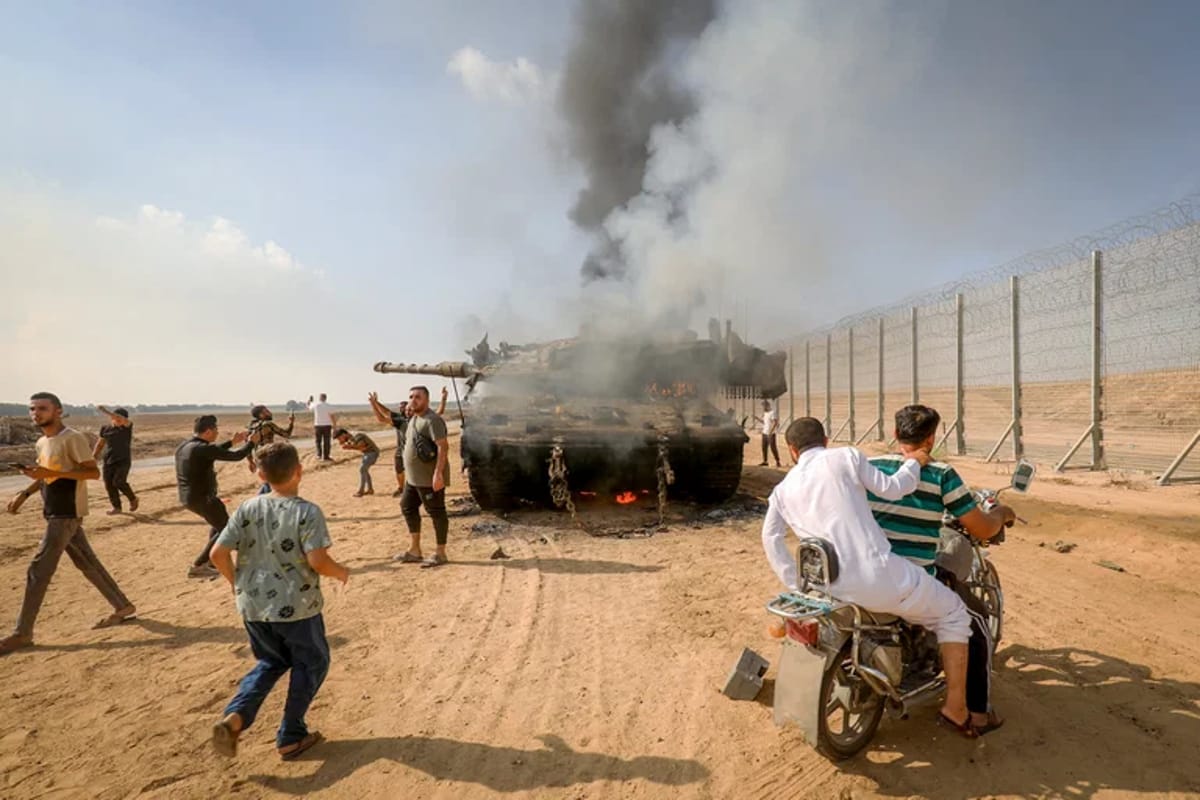
The Israel Defense Forces presented the conclusions of its internal investigations into the October 7 attack on Sunday, at a special conference held three years after the massacre. The army also set out the steps it is taking to prevent a repeat.
The investigation is continuing. Under the plan presented at the conference, dedicated teams will examine different aspects of the failure, and Chief of Staff Lt. Gen. Eyal Zamir will lead special study sessions in the coming months.
The army has divided its lessons into four areas: overall readiness, deployment of forces in the field, equipment and organization, and intelligence.
Capabilities, not intentions
On readiness, the army has concluded that it must be prepared at all times for a surprise attack on several fronts simultaneously, including when its warning and deterrence systems are not functioning.
Preparedness will now be based on the enemy's actual capabilities and not on assessments of its intentions. The army will also take preventive action to stop threats from establishing themselves near the border. Ground forces and command centers are to be strengthened to improve performance in emergencies and under uncertainty, and critical thinking is to be reinforced at command levels.
Double the forces on standby
Defense and readiness plans have been updated to reflect changes in the enemy and now integrate ground, air and naval forces.
The number of soldiers on standby and of forces available for immediate deployment has more than doubled in all sectors. The plans will be reviewed and updated every six months. The chief of staff will conduct more surprise drills and inspections to practice a rapid transition from routine to emergency. Field commanders have been given greater autonomy.
The community as the main target for defense
The territorial units and brigades stationed on the borders will be reinforced and given independent capability to activate fire from the air and from the ground.
According to the new defense doctrine, the community itself is the main target for defense, which requires forces to arrive and engage quickly. Army posts will be located closer to communities and are meant to remain resilient against small forces and infiltration scenarios. Standby squads and defense forces in the communities will be expanded, and each community will have a single, clear military address in an emergency. Collection systems and cameras along the borders will be expanded, and a response to drones and unmanned aerial vehicles is being developed.
Intelligence: warning in real time
The intelligence branches are to focus on producing a clear picture of the reality on the ground and on issuing warnings in real time.
The army has defined a division of responsibility among the intelligence bodies at sea, in the air and on land, and improved the sharing between them. Each level's ability to provide an independent assessment is being strengthened. A distinction is being drawn between long-term research and research on immediate threats, and critical thinking and questioning are being encouraged.
In sum, the army is required to be prepared for a surprise attack in several arenas without advance warning. The core of the lessons is the defense of communities, rapid arrival at any incident, stronger forces on the borders, and intelligence focused on warning and on reflecting reality.