Hamas released a subdued response Tuesday to Israel's dramatic capture of Mu'in al-Arabid, the organization's Head of General Security Apparatus, marking a stark contrast to the group's typical bellicose rhetoric following Israeli operations.
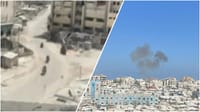
Hamas official Ismail Al-Thawabta, director of the Hamas-run Gaza government media office, said an Israeli special force had tried to carry out an operation in Gaza City before being detected, and that Israel then launched heavy airstrikes, killing and wounding several people.
Rather than threatening military reprisals or rocket fire, responses that have typically followed Israeli military actions, Hamas's initial statements focused on condemning the operation and calling for international intervention.
Defense Minister Israel Katz confirmed that the IDF had successfully captured a senior Hamas terrorist while carrying out strikes on several targets in the Gaza Strip in response to threats against Israeli forces, stating: "A short time ago, a senior Hamas terrorist was arrested, and this is our policy: We do not wait for threats. Instead, we pursue Hamas terrorists, thwart them, and destroy their terrorist infrastructure."
The capture of al-Arabid, who oversees Hamas's internal intelligence and security operations, represents a significant intelligence windfall for Israel. The operation ended with the arrest of a senior Hamas figure, which could shed light on the organization's covert activities and its methods of operation in the Gaza Strip.
The raid also highlights the growing effectiveness of Israeli-backed Palestinian militias operating in Gaza. Reports indicate that over the past year, members of various militias have carried out operations that directly damaged Hamas's military capabilities in the Gaza Strip.
Hamas's inability to mount a strong response signals their weakened operational capacity and internal instability.