Get our mobile app
Download on the App StoreGet it on Google Play

Marine Life

Where Did the Jellyfish Go?

Extreme heat drove jellyfish away from Israeli beaches in early August, while some of the world's most dangerous species lurk in waters from Florida to Australia

Jellyfish

Jellyfish, the perennial nemesis of beachgoers, vanished from Mediterranean shores earlier than usual this summer in what amounts to a mass exodus from Israeli beaches. The culprit behind this rare reprieve was an extreme heat wave that made coastal waters uncomfortably hot even for these resilient creatures.

Jellyfish avoid being "cooked" in overheated water, and the mystery of their early departure this year stems from a combination of exceptional heat and their unusually early arrival in May and early June, well before the peak swimming season typically brings them to shore.
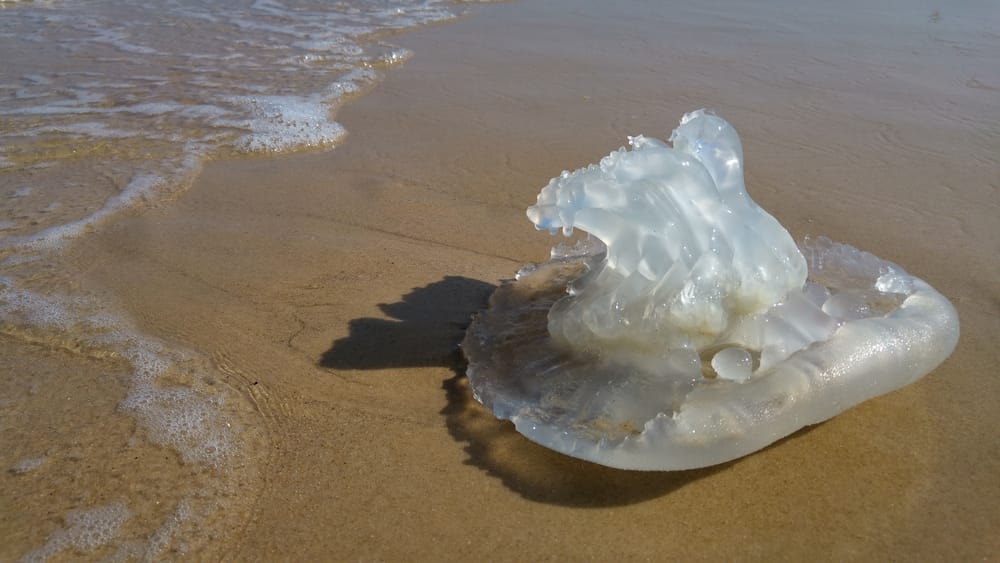
Jellyfish on an Israeli beach
Jellyfish on an Israeli beach (Shutterstock)

Understanding the Enemy

The nomadic ribbon jellyfish, considered the most common species in Israeli waters, originates primarily from the Indian Ocean and Red Sea. These creatures begin their relatively short life cycle as polyps attached to the seafloor.

When water temperatures rise above 22 degrees Celsius (72°F), massive swarms of young jellyfish hatch from these polyps and swim or drift toward shore.

But when waters heat beyond 28 degrees Celsius (82°F), the jellyfish reverse course, seeking cooler temperatures in the deeper ocean.

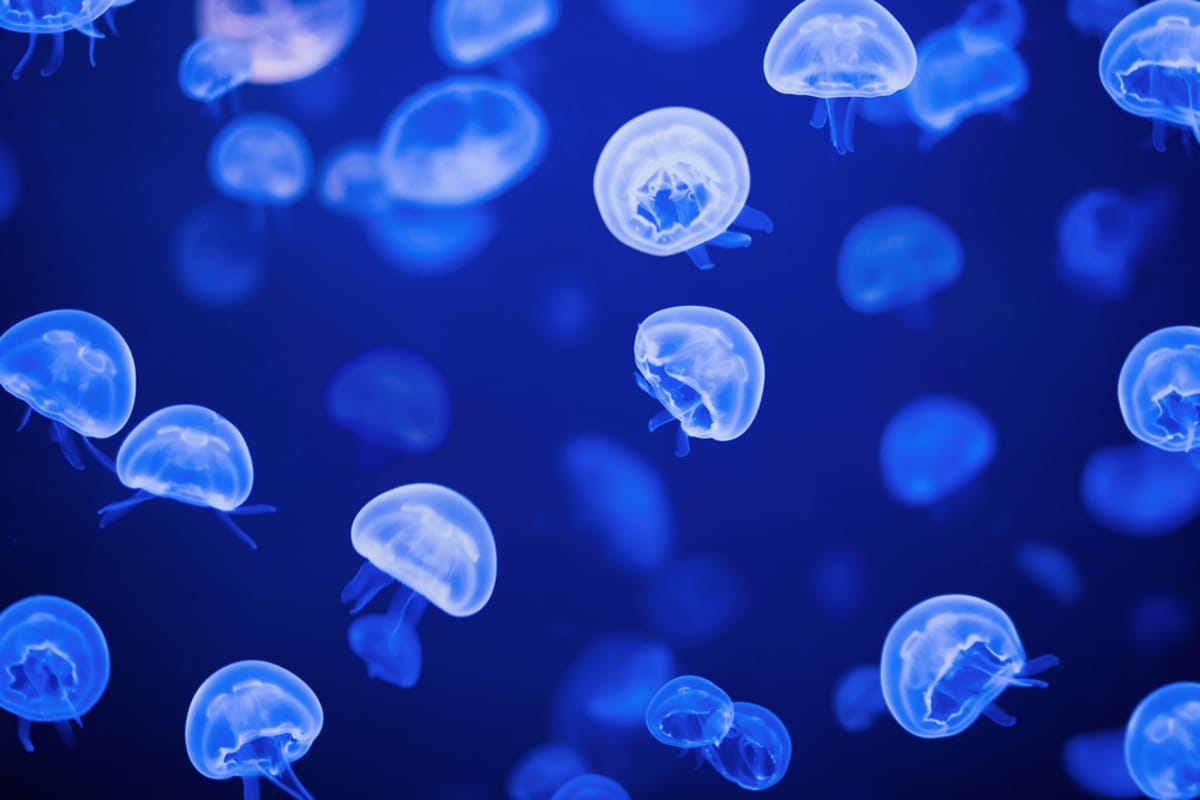
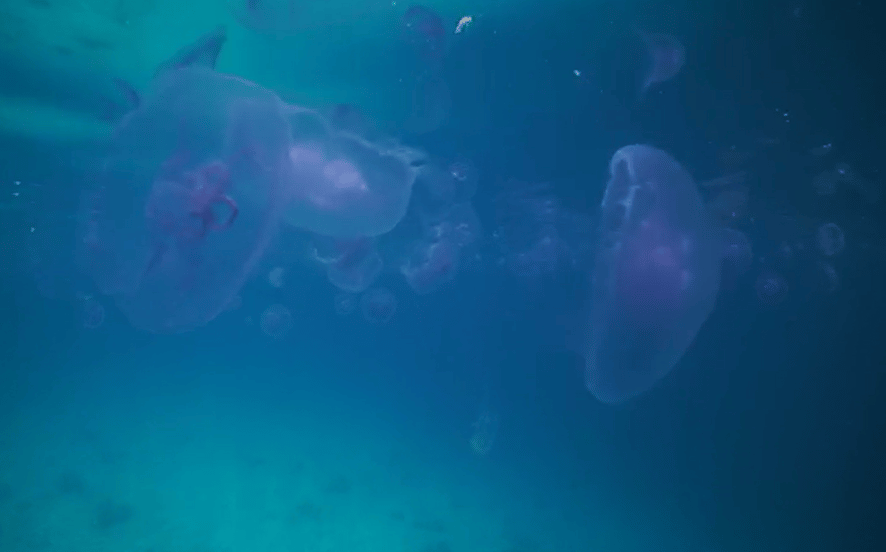
Jellyfish deep in the sea

Strong underwater currents sweep these swarms of troublesome creatures far beyond the zones where humans swim and bathe. Yet like many organic materials that decompose in heat, jellyfish leave behind stinging body fragments, a phenomenon far more common than dangerous encounters with intact jellyfish.

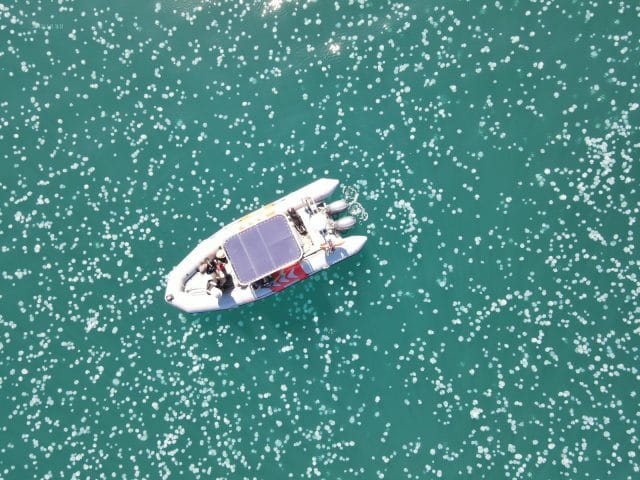
Water containing jellyfish fragments
Water containing jellyfish fragments (Rotem Sadeh - Ministry of)

When "Stinging Water" Penetrates the Skin

The marine phenomenon known as "stinging water"—colloquially called "jellyfish soup"—occurs when intense heat causes the jellyfish body (composed of 95 percent water held together by a slimy upper tissue layer with threads beneath) to break apart and release a repulsive, transparent mucus that drifts freely in open water.

Stinging cells called cnidocytes store venom from the jellyfish body, and anyone who contacts them experiences burning pain that in extreme cases requires immediate medical attention. The situation can worsen if the sting occurs over a scratch or exposed dry wound, which is why dermatologists recommend avoiding rubbing salt into wounds.

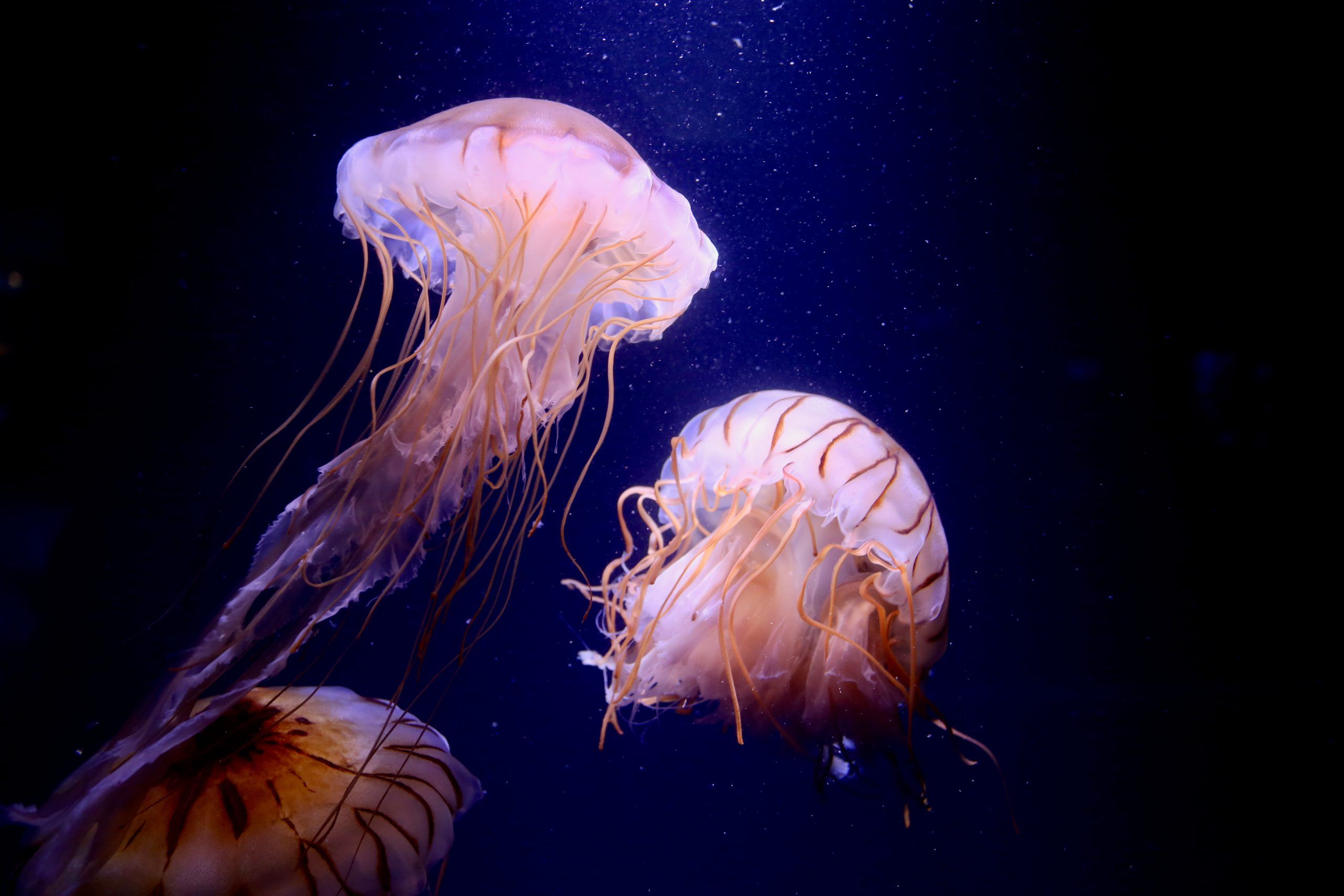
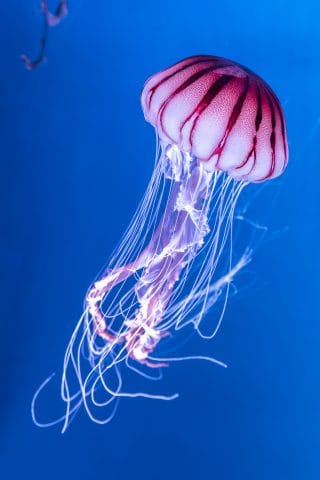
Dangerous jellyfish
Dangerous jellyfish (Shutterstock)

The World's Most Infested Beaches

Despite Israeli complaints about summer jellyfish, other parts of the world suffer far worse. Beaches considered plagued by this "sea curse" include the Chesapeake Bay area in Maryland, where approximately 500,000 stings from sea nettle jellyfish are recorded on average in a single summer. Daytona Beach and New Smyrna Beach in Florida, with its large Jewish population, have documented around 200,000 jellyfish sting cases annually.

These regions have revealed luminescent but particularly painful jellyfish species that are better viewed on National Geographic than encountered in person.

shutterstock
shutterstock

The most dangerous swimming area lies along the Queensland coast in northern Australia, where the waters harbor box jellyfish known as "sea wasps" and the Irukandji jellyfish species.

These two deadly jellyfish are almost completely transparent, and contact with them can kill a person within seconds. Consequently, this coastal stretch remains closed most of the year, and entry into the water at parts of Queensland's Australian beaches is permitted only in full diving suits and for research purposes exclusively.

Ready for more?

Join our newsletter to receive updates on new articles and exclusive content.

We respect your privacy and will never share your information.

Enjoyed this article?

Yes (26)
No (1)
Follow Us:

Unmissable content


Loading comments...

Also of Interest