A classified CIA assessment has sparked a major debate in Washington today, contradicting President Trump’s optimistic outlook on the war. While the administration claims the "maximum pressure" blockade is bringing Tehran to its knees, intelligence officials warn the regime has a much longer fuse than previously thought.
The Three-Month Window
The confidential report, first revealed by The Washington Post today, concludes that Iran’s economy possesses enough internal resilience to withstand the total U.S. naval blockade for at least three to four more months.
Only after this window passes does the CIA anticipate a "significant collapse" of the Iranian financial and logistical systems. This timeline poses a challenge to the White House's strategy, which relies on a quick economic surrender to force Iran into a final nuclear agreement.
Hidden Assets and Missile Inventories
Beyond the economic data, the CIA analysis provided a sobering look at Iran's remaining military strength after weeks of intense U.S. and Israeli bombardment:
- Missile Stockpiles: Contrary to President Trump’s claim yesterday that Iran’s missiles are "mostly decimated" (reduced to 18–19%), the CIA estimates Tehran retains 70% of its pre-war missile stockpile.
- Mobile Launchers: Approximately 75% of Iran’s mobile launch platforms remain operational and hidden.
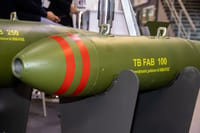
- Underground Recovery: Intelligence suggests the regime has successfully reopened almost all of its damaged underground storage facilities and is even continuing to assemble new missiles that were near completion when the war began.
The "Dual Blockade" Reality
The report comes as the Persian Gulf remains in a state of "dual blockade":
- The U.S. Siege: Since April 13, the U.S. Navy has successfully blocked all Iranian exports, costing the regime an estimated $500 million daily.
- The Iranian Chokehold: Iran continues to threaten the Strait of Hormuz, with over 800 ships (at a very low estimate) and some 20,000 mariners currently stranded as "Project Freedom" escort missions is paused.
The Islamabad Deadline
With Pakistan acting as a mediator, a 48-hour window has opened for a possible framework agreement. However, the CIA’s assessment suggests that Tehran may feel it has enough "breath" left to hold out for better terms, rather than folding under the current pressure.